
Last updated on August 25th, 2026 at 01:37 pm
The powertrain control module (PCM) in your 2000 Ford F-Series manages engine and transmission functions. Failures may cause erratic operation, no-start conditions, or persistent warning lights without obvious mechanical problems.
If your 2000 Ford F-Series suddenly refuses to start, stalls unexpectedly, or triggers the check engine light without clear mechanical issues, the powertrain control module (PCM) may be the culprit. This critical computer manages everything from fuel injection to transmission behavior, and its failure can disrupt multiple systems simultaneously. Replacing it involves more than swapping hardware—proper programming and system synchronization are essential to restore reliable operation. Understanding the process helps you anticipate labor time, avoid unnecessary steps, and recognize when a pre-configured replacement can simplify the job.
In your 2000 Ford F-Series, the PCM acts as the central brain for engine and transmission functions. It continuously adjusts fuel delivery, ignition timing, and shift points based on sensor inputs, ensuring optimal performance and emissions compliance. When this module malfunctions, you may experience rough idling, poor acceleration, or even a complete no-start condition. The PCM also stores diagnostic trouble codes (DTCs) that help pinpoint issues, though its own failure can sometimes prevent scan tools from communicating. For drivers needing a replacement, replacement engine computers for the F-Series are available to match the vehicle’s original specifications without requiring extensive reprogramming.
2000 Ford F-Series
OEM programmed replacements — plug & play, no dealer visit.
Find yours by year, make & model →
Free shipping · Lifetime warranty
The PCM in your 2000 Ford F-Series is located behind the cowl side trim panel, requiring removal of interior components to access it. Labor time for replacement varies by drivetrain: 0.4 hours for rear-wheel-drive models and 0.6 hours for four-wheel-drive versions. After installation, the module must undergo a relearn procedure, which adds another 0.5 hours to the process. This step ensures the PCM properly synchronizes with the engine, transmission, and other vehicle systems. No special tools are specified for removal, but care should be taken to avoid damaging electrical connectors during disassembly.
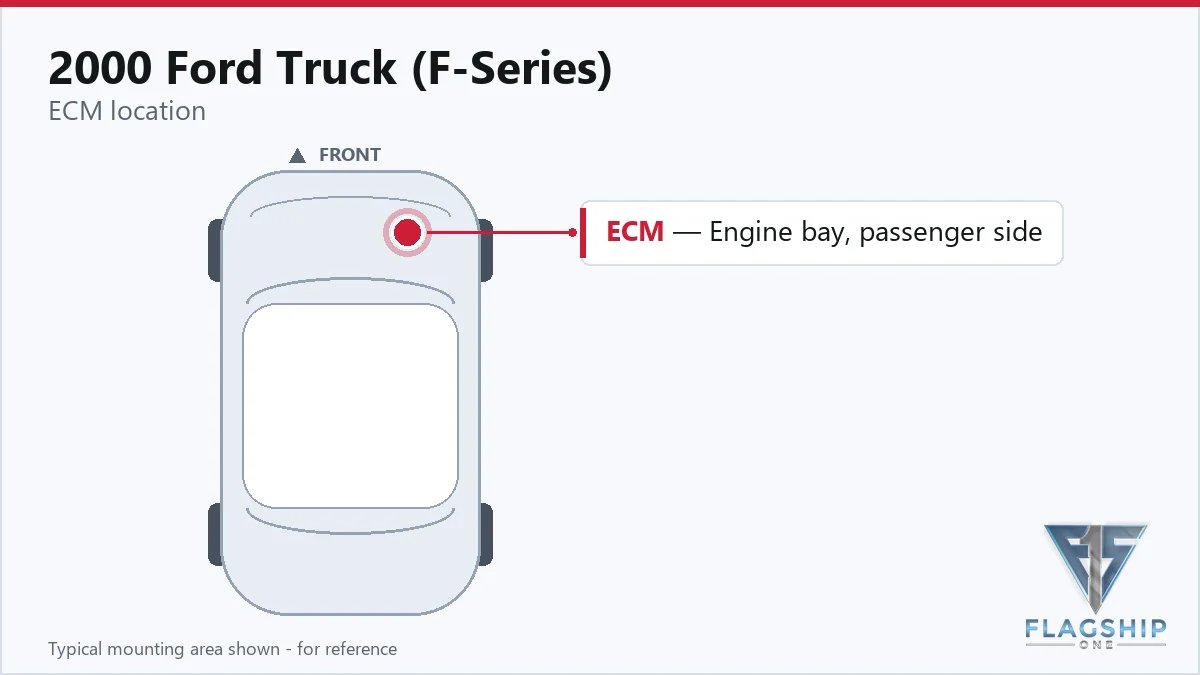
Work with the ignition off, and treat the module as static-sensitive: avoid touching the connector pins at any point.
| Operation | Configuration | Book Time |
|---|---|---|
| Powertrain Control Module R&R | RWD | 0.4 hr |
| Powertrain Control Module R&R | 4WD | 0.6 hr |
| Powertrain Control Module Relearn | All configurations | 0.5 hr |
| Engine Control Module Relearn | All configurations | 0.5 hr |
| Engine Control Module R&R | RWD | 0.4 hr |
| Engine Control Module R&R | 4WD | 0.6 hr |
After replacing the PCM in your 2000 Ford F-Series, the factory procedure requires a 0.5-hour relearn process to calibrate the module to the vehicle’s systems. This step ensures proper communication with sensors, the transmission, and emissions controls. However, if you install a VIN-programmed replacement unit, these programming steps are already completed, reducing labor time and eliminating the need for on-site flashing equipment. This approach minimizes downtime while ensuring the module operates as intended from the first start.
A failing PCM in your 2000 Ford F-Series may cause a range of symptoms, from intermittent stalling to complete no-start conditions. You might notice rough idling, poor fuel economy, or erratic transmission shifts, even if no mechanical issues are present. The check engine light may illuminate, often accompanied by codes related to sensor performance or internal module faults. In some cases, scan tools fail to communicate with the vehicle entirely. One common code associated with PCM failure is an internal control module memory check error, which typically indicates the module’s self-test has detected a fault.
Ford issued service bulletins addressing PCM-related issues in similar vehicles, though not all apply directly to the 4.6L F-Series. TSB 99-25-03 covers reprogramming procedures for 5.4L engines experiencing specific oxygen sensor codes (P0135, P0141, P0155, P0161, P0455) with no drivability concerns. Another bulletin, TSB 02-23-04, addresses 4×4 indicator lights illuminating after PCM or instrument cluster replacement in gasoline engines, often accompanied by codes P1635 or P1639 and speedometer inaccuracies. While these bulletins target different configurations, they highlight the importance of proper module programming and system synchronization.
| Bulletin | Subject | What It Addresses |
|---|---|---|
| 99-25-03 | DIAGNOSTIC TROUBLE CODES (DTCS) P0135, P0141, P0155, P0161, AND P0455 – LAMP – MALFUNCTION INDI | — |
| 02-23-04 | 4X4 LAMP ILLUMINATED AFTER POWERTRAIN CONTROL MODULE (PCM) OR INSTRUMENT CLUSTER REPLACEMENT – | — |
Stalling after PCM replacement often occurs if the module isn’t properly synchronized with the vehicle’s systems. A relearn procedure is required to calibrate the PCM to the engine, transmission, and sensors. Skipping this step may cause erratic operation, including stalling or poor acceleration.
Driving with a failing PCM may lead to unpredictable behavior, such as stalling, misfires, or transmission shifting issues. In some cases, the vehicle may not start at all. Addressing the problem promptly helps avoid further complications or potential safety risks.
Common signs include a no-start condition, persistent check engine light, or scan tool communication failures. Codes like P0601 (internal module fault) often indicate PCM issues. If basic diagnostics rule out sensors or wiring, the module itself may be the problem.
If your 2000 Ford F-Series requires a PCM replacement, you have options beyond a dealership visit. A new or refurbished module can restore functionality, but programming is critical for proper operation. Pre-configured units eliminate the need for on-site flashing, reducing labor time and ensuring a smoother installation process. Consider your vehicle’s specific needs when choosing a replacement approach.
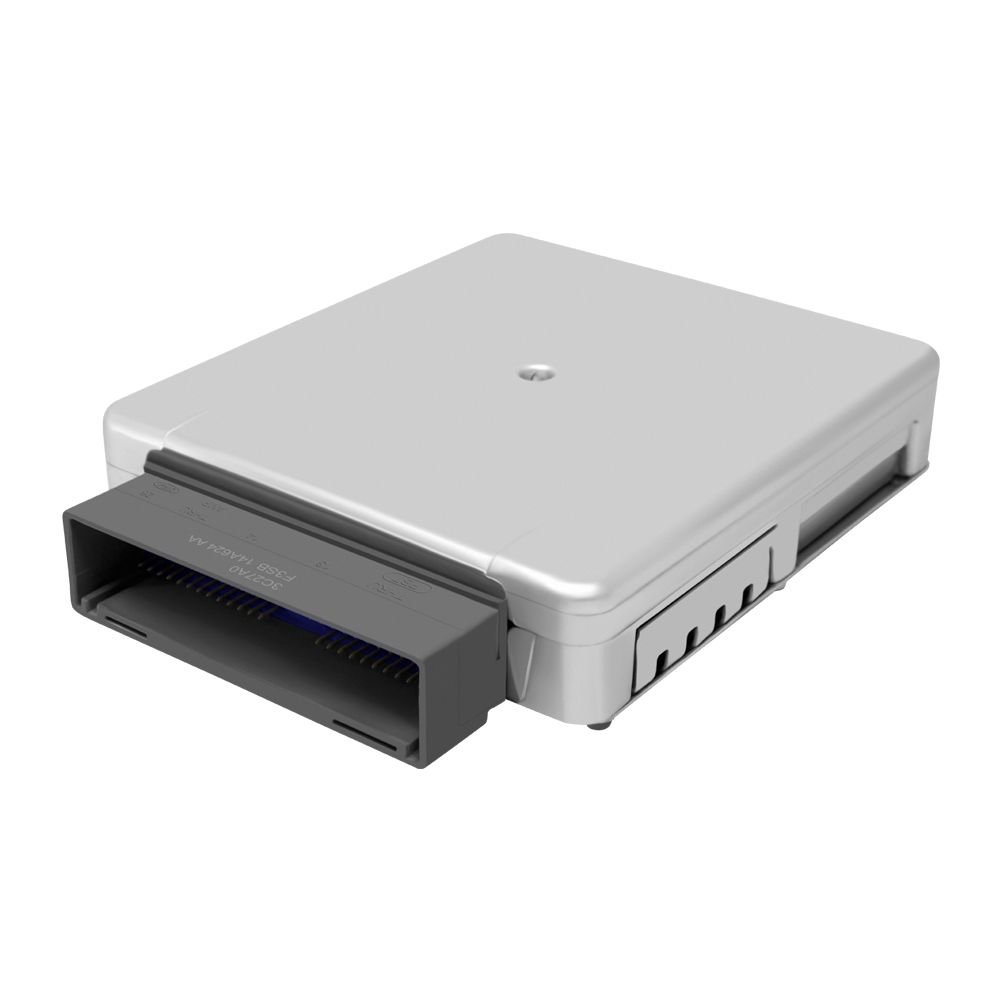
Flagship One stocks a refurbished, VIN-programmed PCM for the 2000 Ford Truck (F-Series) with a lifetime warranty, free shipping and no core charge. The full Ford Truck (F-Series) module lineup covers other engine configurations as well.
The PCM in your 2000 Ford F-Series plays a vital role in engine and transmission performance. Recognizing failure symptoms early and understanding the replacement process can save time and frustration. Whether you opt for a dealership solution or a pre-programmed replacement, ensuring proper installation and synchronization will keep your truck running reliably.