
Last updated on August 25th, 2026 at 01:04 pm
The Powertrain Control Module (PCM) in your 1997 Mercury Cougar manages engine and transmission functions. Failures may cause erratic operation, poor fuel economy, or complete no-start conditions due to corrupted data or electrical faults.
If your 1997 Mercury Cougar is experiencing unexplained stalling, rough idling, or failure to start, the Powertrain Control Module (PCM) may be the culprit. This critical component acts as the brain for your vehicle’s engine and transmission, processing sensor data to optimize performance. Over time, electrical issues, corrosion, or software corruption can disrupt its function, leading to noticeable driveability problems. Understanding the PCM’s role, location, and replacement process helps you make informed decisions about repairs. Whether you’re diagnosing symptoms or preparing for a replacement, knowing the factory procedures and labor expectations ensures a smoother experience.
In your 1997 Mercury Cougar, the Powertrain Control Module (PCM) integrates engine and transmission control into a single unit. It monitors inputs from sensors like the oxygen sensor, throttle position sensor, and crankshaft position sensor to adjust fuel delivery, ignition timing, and shift points in real time. A failing PCM may cause erratic shifting, poor acceleration, or even prevent the engine from starting. Because it governs so many systems, a malfunction often triggers multiple trouble codes. When replacement becomes necessary, replacement powertrain control modules for the Cougar are available to restore proper function without the need for extensive reprogramming on your part.
1997 Mercury Cougar
OEM programmed ECM for your 1997 Mercury Cougar — plug & play, no dealer visit.
Free shipping · Lifetime warranty
The PCM in your 1997 Mercury Cougar is mounted behind the cowl side trim panel on the passenger side. Accessing it requires removing the interior trim to expose the module’s mounting location. According to factory labor estimates, replacing the PCM on the 3.8L engine typically takes 1.0 hours. The process involves disconnecting the battery, unplugging the electrical connectors, removing the retaining bolts, and installing the new unit. Torque specifications for the mounting hardware should be followed to prevent damage or misalignment. Once installed, the module must be reconnected, and the battery restored to complete the physical replacement.
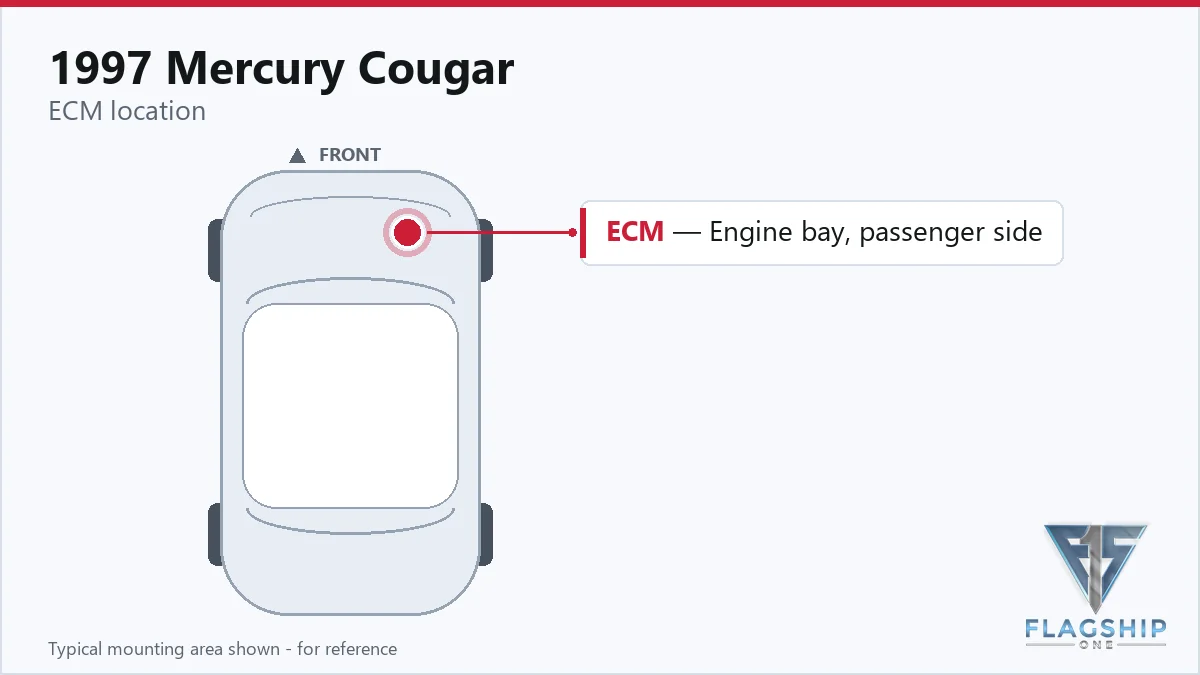
Work with the ignition off, and treat the module as static-sensitive: avoid touching the connector pins at any point.
| Operation | Configuration | Book Time |
|---|---|---|
| Engine Control Module R&R | 4.6L | 1.1 hr |
| Engine Control Module R&R | 3.8L | 1.1 hr |
| Powertrain Control Module R&R | 4.6L | 1.1 hr |
| Powertrain Control Module R&R | 3.8L | 1.0 hr |
| Powertrain Control Module Relearn | All configurations | 0.5 hr |
After installing a new PCM in your 1997 Mercury Cougar, the factory procedure requires a 0.5-hour relearn process to synchronize the module with the vehicle’s systems. This step ensures proper communication with sensors and actuators, preventing issues like poor shifting or erratic engine behavior. However, a VIN-programmed replacement unit arrives pre-configured to your vehicle’s specifications, eliminating the need for this additional labor. This saves time and reduces the risk of incomplete initialization, allowing you to drive the vehicle immediately after installation without further calibration.
A failing PCM in your 1997 Mercury Cougar may cause a range of symptoms, from subtle driveability issues to complete no-start conditions. Common signs include intermittent stalling, rough idling, or hesitation during acceleration. You might also notice the transmission shifting erratically or failing to engage gears properly. Onboard diagnostics often set codes related to sensor performance or internal module faults. For example, a memory integrity error could indicate corruption within the PCM’s internal programming. If your scan tool fails to communicate with the module, it may suggest a complete failure or poor electrical connection.
Ford issued service bulletins addressing Powertrain Control Module (PCM) reprogramming for the 1997 Mercury Cougar. TSB #97-09-08 outlines procedures for updating the PCM to resolve driveability concerns, while TSB #99-04-03 focuses on out-of-vehicle reprogramming for EEC V-equipped models. These bulletins provide guidance for technicians to ensure the module operates with the latest calibration, potentially improving performance or addressing known issues. Following the recommended procedures may help prevent recurring symptoms after replacement.
| Bulletin | Subject | What It Addresses |
|---|---|---|
| 97-09-08 | POWERTRAIN CONTROL MODULE – REPROGRAM POWERTRAIN CONTROL MODULE (PCM) – SERVICE PROCEDURES – SE | — |
| 99-04-03 | EEC V VEHICLES ONLY – OUT-OF-VEHICLE – REPROGRAMMING POWERTRAIN CONTROL MODULES (PCMS) | — |
Yes, the factory procedure includes a 0.5-hour relearn process to synchronize the new PCM with the vehicle’s systems. However, a pre-programmed replacement unit eliminates this step, allowing immediate use after installation.
A failing PCM often triggers multiple trouble codes across different systems, such as engine and transmission. If sensor-related codes persist after replacing sensors, the PCM may be the root cause. A scan tool can help verify communication with the module.
Replacement is possible if you’re comfortable with basic mechanical work, as it involves removing interior trim and disconnecting electrical connectors. However, proper handling of the module and adherence to torque specifications are critical to avoid damage.
If your 1997 Mercury Cougar is exhibiting symptoms of PCM failure, you have options for repair or replacement. A refurbished or new module can restore proper function, especially if pre-programmed to your vehicle’s VIN. Given the labor time and potential for additional relearn procedures, choosing a ready-to-install unit may save time and reduce diagnostic uncertainty.
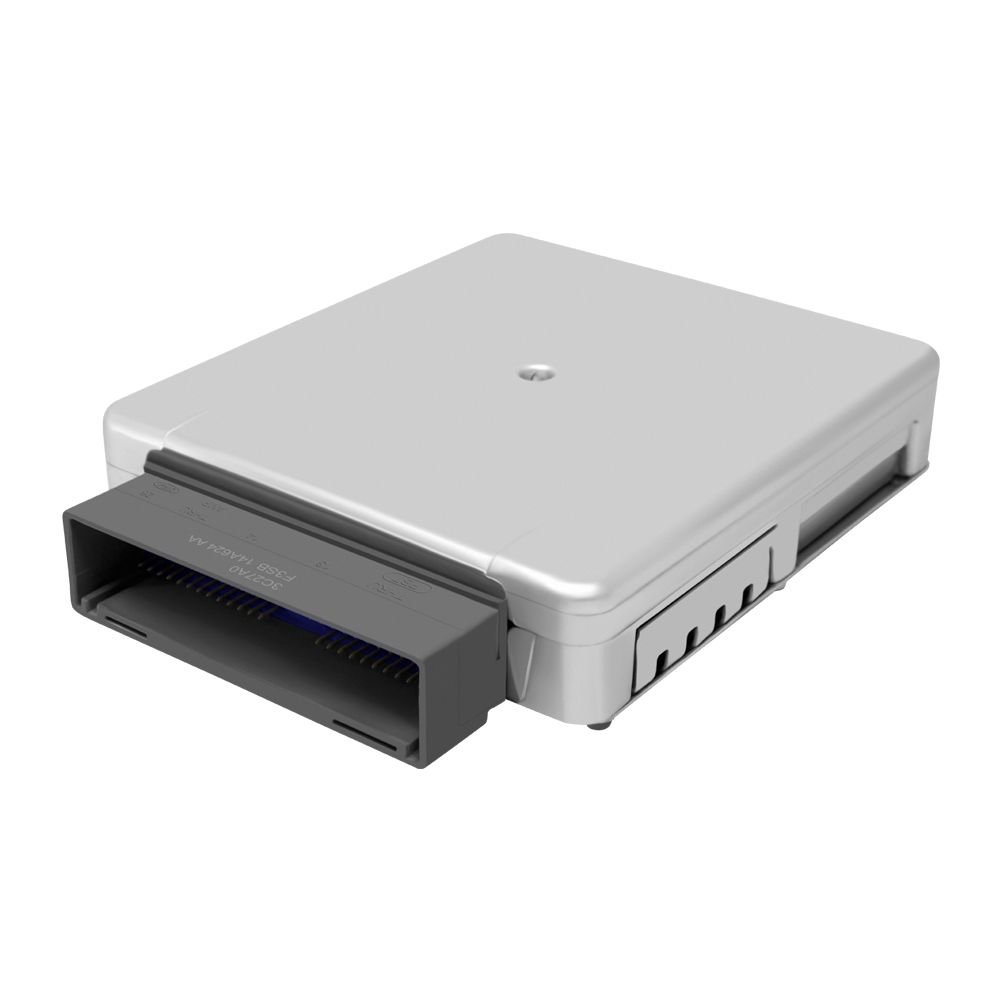
Flagship One stocks a refurbished, VIN-programmed PCM for the 1997 Mercury Cougar with a lifetime warranty, free shipping and no core charge. The full Mercury Cougar module lineup covers other engine configurations as well.
The Powertrain Control Module plays a vital role in your 1997 Mercury Cougar’s performance, and recognizing its failure symptoms early can prevent further issues. Whether you opt for a factory replacement or a pre-programmed unit, understanding the process ensures a smoother repair. Addressing PCM concerns promptly helps maintain your vehicle’s reliability and drivability.