
Last updated on August 25th, 2026 at 12:20 pm
The powertrain control module monitors engine and transmission functions through sensor inputs. On your 1997 Mazda B2300, this unit manages fuel delivery, ignition timing, and emissions controls. When internal circuits fail, the module may produce driveability symptoms or illuminate the check engine light without storing external sensor fault codes.
When your 1997 Mazda B2300 develops driveability concerns, the powertrain control module often comes under suspicion. This unit serves as the electronic brain for your 2.3L engine, processing data from numerous sensors to maintain proper operation. You may notice symptoms ranging from rough idle to illumination of the check engine light. Understanding what this module does, where it lives, and what replacement involves helps you make informed decisions about repair versus replacement options. This guide covers the factory-specified procedures, common failure modes, and what you should know before proceeding with any work on your vehicle. We will walk through the technical details in plain language so you understand exactly what is happening under the hood.
The powertrain control module in your 1997 Mazda B2300 functions as the central computer responsible for managing engine and transmission operations. This device continuously monitors inputs from the oxygen sensors, mass airflow meter, throttle position sensor, and numerous other measurement points throughout the powertrain. Based on this incoming data, the module calculates and adjusts fuel injector pulse width, spark advance, exhaust gas recirculation flow, and other critical parameters to maintain optimal combustion under all operating conditions.
Your vehicle may be equipped with what Mazda officially designates as either a Powertrain Control Module or an Engine Control Module depending on production specifications. These terms refer to functionally equivalent units that manage slightly different subsets of vehicle operations. The distinction matters when sourcing replacement units because the correct part number must match your specific application.
Internal failures within these replacement engine computers for the B2300 often manifest as complete communication loss with diagnostic equipment or the onset of module-specific fault codes that do not correspond to external sensor or actuator problems. The module also maintains adaptive memory that stores learned corrections for fuel delivery and idle speed control based on your driving patterns. This adaptive memory requires a relearn procedure following replacement to restore the vehicle to proper driveability characteristics.
Flagship One keeps Mazda B2300 replacement engine computers in stock for exactly this failure pattern.
Engine computer (ECM/PCM)
OEM programmed replacements — plug & play, no dealer visit.
Find yours by year, make & model →
Free shipping · Lifetime warranty
| Operation | Configuration | Book Time |
|---|---|---|
| Powertrain Control Module R&R | B2300 | 0.5 hr |
| Powertrain Control Module R&R | B4000 | 0.5 hr |
| Powertrain Control Module Relearn | B2300 | 0.5 hr |
| Powertrain Control Module Relearn | B4000 | 0.5 hr |
| Engine Control Module R&R | B2300 | 0.5 hr |
| Engine Control Module R&R | B4000 | 0.5 hr |
| Engine Control Module Relearn | B2300 | 0.5 hr |
| Engine Control Module Relearn | B4000 | 0.5 hr |
Following installation of a replacement module in your 1997 Mazda B2300, the factory service procedure requires execution of a relearn cycle to restore proper operation. This process allows the new module to establish baseline communications with all vehicle sensors and to begin learning your engine’s specific characteristics. Mazda’s specification allocates 0.5 hours for the PCM relearn procedure and another 0.5 hours for the ECM relearn procedure if your vehicle uses separate modules.
The relearn process typically involves operating the vehicle through specific driving sequences that expose the engine to varying loads, temperatures, and throttle positions. This enables the module to populate its adaptive fuel and idle speed correction tables with appropriate values. Without completing this procedure, you may experience lingering driveability concerns such as elevated idle speed, poor throttle response, or elevated fuel consumption.
When you purchase a replacement module from Flagship One, the unit arrives pre-configured with your specific vehicle identification number already programmed into its memory. This means the time-consuming VIN programming step that would otherwise be required at a dealership or specialty shop has already been completed before the module reaches you.
Every VIN-programmed replacement unit from Flagship One arrives with these steps already completed.
Powertrain control module failures on your 1997 Mazda B2300 typically announce themselves through a combination of drivability complaints and diagnostic trouble code patterns. You may experience a no-start condition where the engine cranks normally but fails to fire, often accompanied by an absence of injector pulse or spark at the plugs. Alternatively, the engine may start but run poorly, exhibiting symptoms such as stumbling acceleration, rough idle, or unexpected stalling.
Diagnostic trouble codes commonly associated with module internal faults include P0600-series designations indicating general serial communication problems, P0601 signaling internal memory checksum failures, and P0605 related to read-only memory errors. You might also encounter codes that suggest multiple system failures simultaneously, which often points toward a common source such as the module itself rather than numerous independent component failures.
Scan tool communication may be interrupted or intermittent when module electronics fail, preventing you from accessing live data streams or reading stored codes. Transmission shifting may become erratic or default to a limp-home mode that limits gear selection. MIL illumination frequently occurs without accompanying sensor fault codes that would explain the light through conventional diagnostics.
Internal module faults like CODE:P0601:memory checksum failure] may illuminate the check engine light while leaving other systems seemingly unaffected. This pattern often misleads technicians into replacing sensors and actuators that are actually functioning correctly.
Factory documentation for your 1997 Mazda B2300 addresses several powertrain control module concerns that may assist diagnosis. Mazda Tips publication covers driveability problems stemming from loose ECU ground connections, which may produce rough idle or poor overall performance even when the module itself functions correctly. This bulletin reminds technicians to verify ground circuit integrity before condemning the control unit.
Additional Mazda Tips documentation addresses MIL illumination with DTC P0340, a camshaft position sensor circuit code that may or may not relate to actual module health depending on circuit conditions. Service bulletin F028/97 covers MIL illumination accompanied by DTC P1405, with emphasis that no driveability concerns may accompany this combination. This bulletin suggests that the fault may exist within the module’s internal processing without affecting engine operation.
| Bulletin | Subject | What It Addresses |
|---|---|---|
| — | Mazda Tips: Driveability Problems: Ecu Ground Loose | s If a customer complains of rough idle, or poor |
| — | Mazda Tips: MIL On With DTC P0340 | — |
| — | F028/97 MIL Illumination With DTC P1405 No Driveability Concerns | — |
Your vehicle requires a module programmed for the B2300 application with the correct Mazda part number designation. Using an incorrectly specified unit may result in communication failures or improper engine management.
Without completing the factory relearn cycle, your 1997 Mazda B2300 may exhibit elevated idle speed, poor throttle response, elevated fuel consumption, or hesitation under acceleration until adaptive tables populate through normal driving.
According to Mazda service documentation, loose ECU grounds may produce rough idle and driveability concerns that mimic module failure. Verifying ground circuit integrity should precede module replacement decisions.
Bulletin F028/97 specifically addresses MIL illumination with DTC P1405 occurring without accompanying driveability concerns in your model year vehicle. This pattern may indicate an internal module processing fault that has not yet progressed to affecting engine operation.
Module internal failures often trigger multiple seemingly unrelated codes across different vehicle systems because the controlling processor can no longer reliably manage communications with sensors and actuators throughout the powertrain.
Deciding between repair and replacement for your 1997 Mazda B2300 powertrain control module depends on diagnostic findings and your budget priorities. Rebuilt units offer cost savings but may arrive requiring programming before installation. New or certified refurbished replacements from reputable suppliers typically include the necessary vehicle-specific programming pre-loaded. Given the factory relearn requirement that follows any module installation, professional installation ensures all procedures complete correctly and your vehicle returns to proper operation without trial and error on your part.
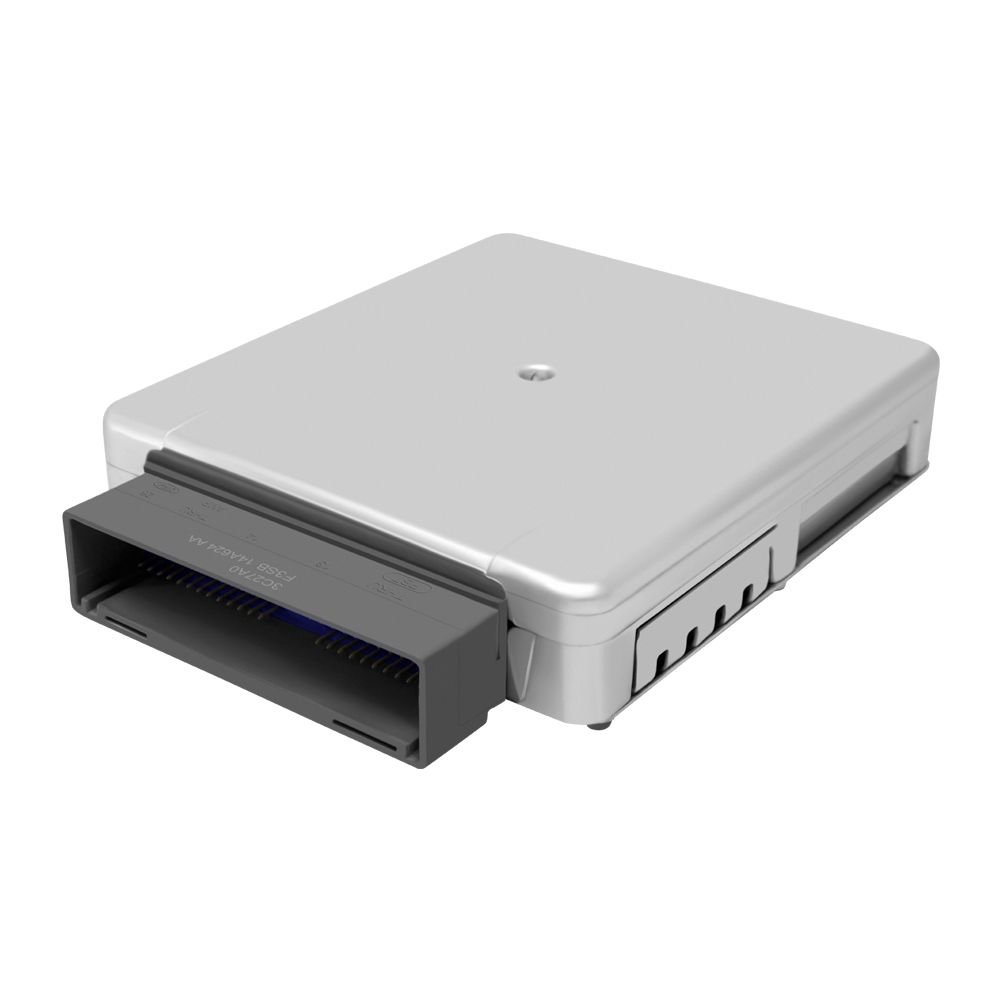
Flagship One stocks a refurbished, VIN-programmed PCM for the 1997 Mazda B2300 with a lifetime warranty, free shipping and no core charge. The full Mazda B2300 module lineup covers other engine configurations as well.
Your 1997 Mazda B2300 relies on its powertrain control module to manage the complex interactions between engine sensors and actuators that keep your vehicle running smoothly. Understanding the module’s role, recognizing failure symptoms, and knowing what replacement involves prepares you for informed repair decisions. Whether you pursue dealership service or independent repair, the information in this guide helps you communicate effectively about your vehicle’s needs.