
Last updated on August 25th, 2026 at 01:38 pm
The Powertrain Control Module (PCM) in your 1997 Ford Ranger 2.3L acts as the vehicle’s central computer, managing engine timing, fuel delivery, and emissions systems. A faulty PCM may cause erratic performance, no-start conditions, or persistent trouble codes.
If your 1997 Ford Ranger 2.3L has been running poorly—stalling, misfiring, or refusing to start—it may be time to consider the Powertrain Control Module (PCM). This small but critical component acts as the brain of your vehicle, coordinating fuel injection, ignition timing, and emissions controls. When it fails, symptoms can range from subtle driveability issues to complete engine shutdown. Replacing the PCM isn’t just about swapping a part; it involves precise labor steps and a mandatory relearn procedure to ensure the engine runs smoothly afterward. Understanding the process helps you avoid unnecessary delays and ensures your Ranger returns to reliable operation. Whether you’re diagnosing a persistent trouble code or preparing for a replacement, knowing what to expect can save time and frustration.
The Powertrain Control Module (PCM) in your 1997 Ford Ranger 2.3L is a combined engine and transmission control unit. It monitors sensor inputs—like throttle position, oxygen levels, and engine speed—to adjust fuel delivery, ignition timing, and idle control. This ensures optimal performance, fuel efficiency, and emissions compliance. Without a functioning PCM, your Ranger may struggle to start, run roughly, or even enter a fail-safe mode that limits power. The module also communicates with the transmission to manage shift points, which is why failures can sometimes mimic transmission issues. If the PCM becomes corrupted or damaged, the vehicle may store trouble codes or refuse to communicate with diagnostic tools. Replacing it involves more than just physical installation; the new unit must be programmed to your vehicle’s specific configuration. For the 1997 Ranger, replacement engine computers for the Ranger are designed to match the original equipment, but proper installation and programming are critical to restoring full functionality.
1997 Ford Ranger
OEM programmed ECM for your 1997 Ford Ranger — plug & play, no dealer visit.
Free shipping · Lifetime warranty
In the 1997 Ford Ranger 2.3L, the PCM is mounted inside the engine bay, typically secured to the passenger-side fender well or firewall. Accessing it requires removing a protective cover or air intake duct, depending on the vehicle’s configuration. The replacement process involves disconnecting the battery, unplugging the wiring harness, and removing the mounting bolts. Labor time for removal and reinstallation is typically 0.6 hours, according to factory estimates. Once the old module is out, the new unit is bolted into place, and the wiring harness is reconnected. It’s important to ensure the connectors are clean and free of corrosion to prevent future communication issues. After installation, the battery is reconnected, and the vehicle enters the relearn phase, which is necessary for the PCM to adapt to your Ranger’s specific operating conditions.
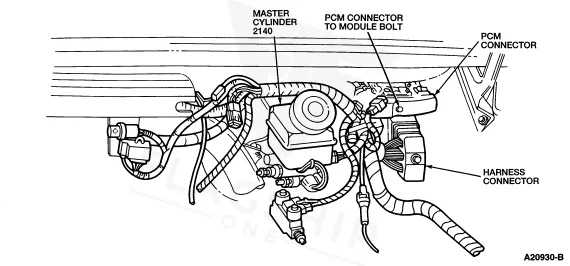
Work with the ignition off, and treat the module as static-sensitive: avoid touching the connector pins at any point.
| Operation | Configuration | Book Time |
|---|---|---|
| Powertrain Control Module R&R | All configurations | 0.6 hr |
| Powertrain Control Module Relearn | All configurations | 0.5 hr |
| Engine Control Module Relearn | All configurations | 0.5 hr |
| Engine Control Module R&R | All configurations | 0.6 hr |
After replacing the PCM in your 1997 Ford Ranger 2.3L, the factory procedure requires a relearn process to calibrate the module to your vehicle’s specific parameters. This typically involves a 0.5-hour labor step, followed by a drive cycle to allow the PCM to relearn values for optimal performance. During this drive, the vehicle must reach specific speeds and operating conditions to complete the adaptation. However, if you install a VIN-programmed replacement unit, the initial programming is already completed, reducing the time and complexity of the repair. While the drive cycle is still necessary to fine-tune the module, the pre-programmed unit eliminates the need for on-vehicle reprogramming, streamlining the process and minimizing the risk of errors. This ensures your Ranger’s engine and transmission operate as intended without extended downtime.
A failing PCM in your 1997 Ford Ranger 2.3L can manifest in several ways, often mimicking other mechanical or electrical issues. One of the most common signs is a no-start condition, where the engine cranks but refuses to fire. This may occur intermittently or become persistent as the module deteriorates. Stalling or rough idling is another frequent symptom, particularly when the PCM loses its ability to regulate fuel or ignition timing. You might also notice poor acceleration, hesitation, or misfires, which can feel like a lack of power or uneven engine operation. In some cases, the vehicle may enter a fail-safe mode, limiting RPMs or disabling certain functions to prevent damage. Communication errors are another red flag; if a scan tool fails to connect or retrieves incomplete data, the PCM may be at fault. Trouble codes related to internal module failures, such as an exhaust pressure sensor circuit fault, can also appear, though these may not always indicate a PCM issue. If your Ranger exhibits multiple symptoms—like stalling combined with misfire codes—it’s worth investigating the PCM as a potential cause.
Ford issued several service bulletins addressing PCM-related concerns for the 1997 Ranger and similar models. Bulletin #97-09-08 outlines procedures for reprogramming the Powertrain Control Module to address driveability issues or software glitches. Another bulletin, #99-04-03, focuses on out-of-vehicle reprogramming for EEC V-equipped vehicles, which includes the 2.3L Ranger. This bulletin provides guidance for updating the PCM’s software without requiring the module to remain installed in the vehicle. Additionally, #97-11-16 addresses Diagnostic Trouble Code P1405, which may trigger the Malfunction Indicator Lamp (MIL) without causing noticeable driveability problems. While this code is often associated with the 3.0L engine, it can occasionally appear in the 2.3L due to shared diagnostic protocols. These bulletins highlight the importance of proper PCM programming and calibration to maintain optimal performance in your Ranger.
| Bulletin | Subject | What It Addresses |
|---|---|---|
| 97-09-08 | POWERTRAIN CONTROL MODULE – REPROGRAM POWERTRAIN CONTROL MODULE (PCM) – SERVICE PROCEDURES – SE | — |
| 99-04-03 | EEC V VEHICLES ONLY – OUT-OF-VEHICLE – REPROGRAMMING POWERTRAIN CONTROL MODULES (PCMS) | — |
| 97-11-16 | DIAGNOSTIC TROUBLE CODE (DTC) P1405 – LAMP – MALFUNCTION INDICATOR LAMP (MIL) ILLUMINATION – NO | — |
Diagnosing a PCM failure can be tricky, as symptoms often overlap with other problems like fuel pump or sensor failures. Start by checking for trouble codes with a scan tool. If the PCM isn’t communicating at all, or if you see codes related to internal module faults, the PCM is likely the culprit. Persistent issues like stalling, misfires, or no-start conditions—especially after ruling out fuel, spark, and compression problems—also point to the PCM.
Replacing the PCM is a straightforward process, but it requires attention to detail. If you’re comfortable disconnecting the battery, removing the module, and ensuring clean connections, you can do it yourself. However, the factory requires a relearn procedure afterward, which involves a drive cycle. If you’re unsure about the programming steps, a shop can handle the entire process, including the relearn, to ensure everything works correctly.
Skipping the relearn procedure may result in poor driveability, such as rough idling, hesitation, or incorrect shift points. The PCM relies on learned values to adapt to your vehicle’s specific conditions, like engine wear and sensor variations. Without this calibration, the module may default to generic settings, leading to suboptimal performance. In some cases, the vehicle may even enter a fail-safe mode, limiting power or disabling certain functions until the relearn is completed.
The PCM in your Ranger is programmed with specific parameters tied to your vehicle’s VIN, including engine calibration, transmission type, and emissions settings. This ensures the module operates correctly for your exact configuration. Installing a generic or mismatched PCM can lead to performance issues, incorrect shift points, or even emissions failures. A VIN-programmed unit matches your vehicle’s original settings, reducing the risk of compatibility problems and simplifying the installation process.
Yes, electrical system issues can damage the PCM over time. A weak battery or failing alternator may cause voltage fluctuations, which can stress the module’s circuits. Low voltage can also lead to incomplete programming or corruption of the PCM’s memory. If you suspect electrical problems, address them promptly to avoid potential PCM damage. Regularly checking your battery’s health and ensuring the alternator is charging correctly can help protect the module.
If your 1997 Ford Ranger 2.3L is experiencing PCM-related issues, you have a few options for repair. A dealership or independent shop can replace and reprogram the module, though this may involve higher labor costs and potential delays. Alternatively, a refurbished or new replacement unit, pre-programmed to your VIN, can simplify the process and reduce downtime. Flagship One provides these units, ensuring compatibility and eliminating the need for on-vehicle reprogramming. Whether you choose a shop or a DIY approach, addressing the PCM promptly can restore your Ranger’s performance and reliability.
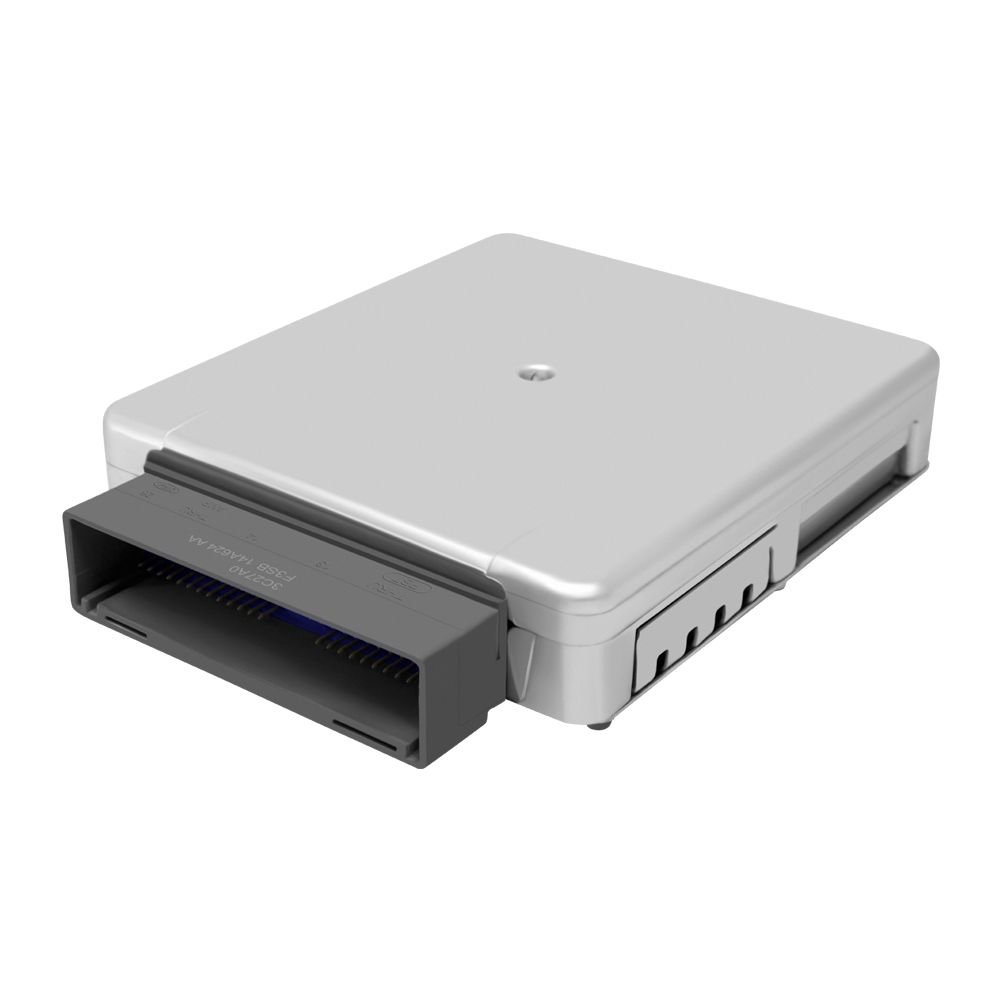
Flagship One stocks a refurbished, VIN-programmed PCM for the 1997 Ford Ranger with a lifetime warranty, free shipping and no core charge. The full Ford Ranger module lineup covers other engine configurations as well.
The Powertrain Control Module in your 1997 Ford Ranger 2.3L plays a critical role in managing engine and transmission functions. When it fails, symptoms like stalling, misfires, or no-start conditions can leave you stranded. Replacing the PCM involves careful installation and a mandatory relearn procedure to ensure optimal performance. By understanding the process and using a pre-programmed replacement unit, you can minimize downtime and get your Ranger back on the road. If you’re experiencing persistent issues, addressing the PCM may be the key to restoring reliable operation.