
Last updated on August 25th, 2026 at 12:07 pm
The engine control module (ECM) in your 1996 Toyota T100 manages fuel injection, ignition timing, and emissions systems. Failures may cause erratic engine behavior, stalling, or a complete no-start condition, often triggered by voltage spikes or corrosion.
If your 1996 Toyota T100 is experiencing unexplained stalling, rough idling, or a no-start condition, the engine control module (ECM) may be the culprit. This critical component acts as the brain of your vehicle’s engine management system, regulating fuel delivery, ignition timing, and emissions controls. When it fails, symptoms can range from subtle performance issues to complete engine shutdown. Replacing the ECM involves accessing a hidden location behind the cowl side trim, a process that typically requires removing interior panels. Understanding the role of this module, how to identify failure symptoms, and what replacement entails can help you make informed decisions about repairs. Whether you’re diagnosing an existing problem or preparing for potential future issues, knowing the steps involved ensures you’re ready to address ECM-related concerns efficiently.
1996 Toyota T100
OEM programmed replacements — plug & play, no dealer visit.
Find yours by year, make & model →
Free shipping · Lifetime warranty
The engine control module in your 1996 Toyota T100 is responsible for managing the engine’s most critical functions. It processes data from sensors throughout the vehicle to optimize fuel injection, ignition timing, and idle speed, ensuring smooth operation and compliance with emissions standards. Without a properly functioning ECM, your engine may run poorly or fail to start altogether. This module also interacts with the transmission control system, meaning issues here can sometimes affect shifting behavior. Over time, exposure to voltage spikes, moisture, or corrosion may lead to internal failures, resulting in erratic performance or stored trouble codes. When replacement becomes necessary, opting for replacement engine computers for the T100 ensures compatibility and reliability. The ECM’s role is central to your vehicle’s drivability, making it essential to address any suspected issues promptly to avoid further complications.
In the 1996 Toyota T100, the engine control module is positioned behind the cowl side trim, near the passenger-side firewall. To access it, you’ll need to remove the front door scuff plate and the cowl side trim panel, which typically requires basic hand tools. The factory removal procedure is straightforward but does involve careful handling of interior components to avoid damage. Once the trim is removed, the ECM can be unbolted and disconnected. Reinstallation follows the reverse process, with the new module secured in place before reassembling the interior panels. Labor estimates for this job are 0.7 hours for removal and replacement, reflecting the time needed to access and properly secure the module. Ensuring all electrical connections are clean and tight during reinstallation helps prevent future issues.
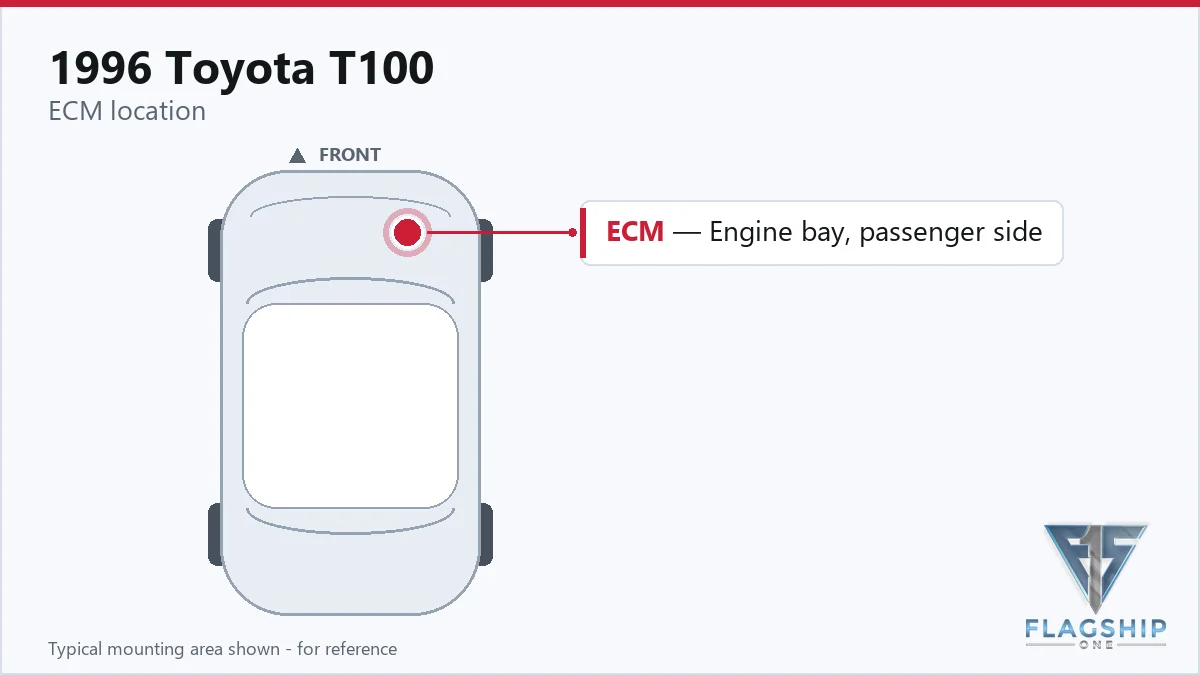
Work with the ignition off, and treat the module as static-sensitive: avoid touching the connector pins at any point.
| Operation | Configuration | Book Time |
|---|---|---|
| Engine Control Module Relearn | All configurations | 0.5 hr |
| Engine Control Module R&R | All configurations | 0.7 hr |
| Powertrain Control Module R&R | All configurations | 0.7 hr |
| Powertrain Control Module Relearn | All configurations | 0.5 hr |
After replacing the engine control module in your 1996 Toyota T100, the factory procedure typically requires a relearn process to synchronize the new unit with the vehicle’s systems. This step, which may take up to 0.5 hours, ensures the ECM recognizes sensor inputs and adapts to the engine’s operating parameters. However, if you install a VIN-programmed replacement unit, these relearn steps are unnecessary, as the module arrives pre-configured for your specific vehicle. This eliminates the need for additional programming tools or dealer visits, saving time and reducing the risk of incomplete synchronization. The pre-programmed unit is designed to integrate seamlessly with your T100’s existing systems, allowing for immediate operation once installed.
A failing engine control module in your 1996 Toyota T100 may produce a variety of symptoms, often mimicking other mechanical or electrical issues. Common signs include intermittent stalling, especially at idle or during deceleration, as the ECM struggles to maintain proper fuel and ignition timing. You might also notice rough idling, hesitation during acceleration, or a complete no-start condition if the module fails entirely. Some drivers report erratic shifting behavior, as the ECM communicates with the transmission control system. Onboard diagnostics may store trouble codes related to internal ECM faults, such as an internal control module memory check error, which can help pinpoint the issue. Additionally, a dead scan tool connection or repeated failure of other sensors to communicate may indicate ECM problems. Since these symptoms can overlap with fuel pump, ignition, or sensor failures, proper diagnosis is key to avoiding unnecessary repairs.
Common signs include stalling, rough idling, or a no-start condition. You may also see trouble codes like P0601 or experience communication issues with a scan tool. Since symptoms can overlap with other problems, a thorough diagnosis is recommended.
Replacement is possible if you’re comfortable removing interior trim panels and handling electrical connections. The process involves accessing the module behind the cowl side trim, which requires basic tools. However, proper installation and programming are critical for reliable operation.
The relearn process allows the new ECM to synchronize with the vehicle’s sensors and adapt to its specific operating conditions. Without it, the engine may run poorly or fail to start. A VIN-programmed unit eliminates this step, as it arrives pre-configured for your vehicle.
Common causes include voltage spikes from a failing alternator, corrosion in electrical connectors, or moisture intrusion. Age-related wear can also lead to internal failures. Keeping the charging system and connections in good condition helps prevent premature ECM issues.
A used ECM may physically fit, but it will require reprogramming to match your vehicle’s VIN and operating parameters. Without proper programming, it may not function correctly or could cause drivability issues. A VIN-programmed replacement unit is a more reliable option.
If your 1996 Toyota T100 is showing signs of ECM failure, you have options for repair or replacement. While a refurbished or used module might seem cost-effective, it often requires additional programming and may not address underlying issues. A VIN-programmed replacement unit ensures compatibility and eliminates the need for post-installation relearn procedures, saving time and reducing the risk of further complications. Consider your vehicle’s age, usage, and the reliability you need when deciding on the best approach.
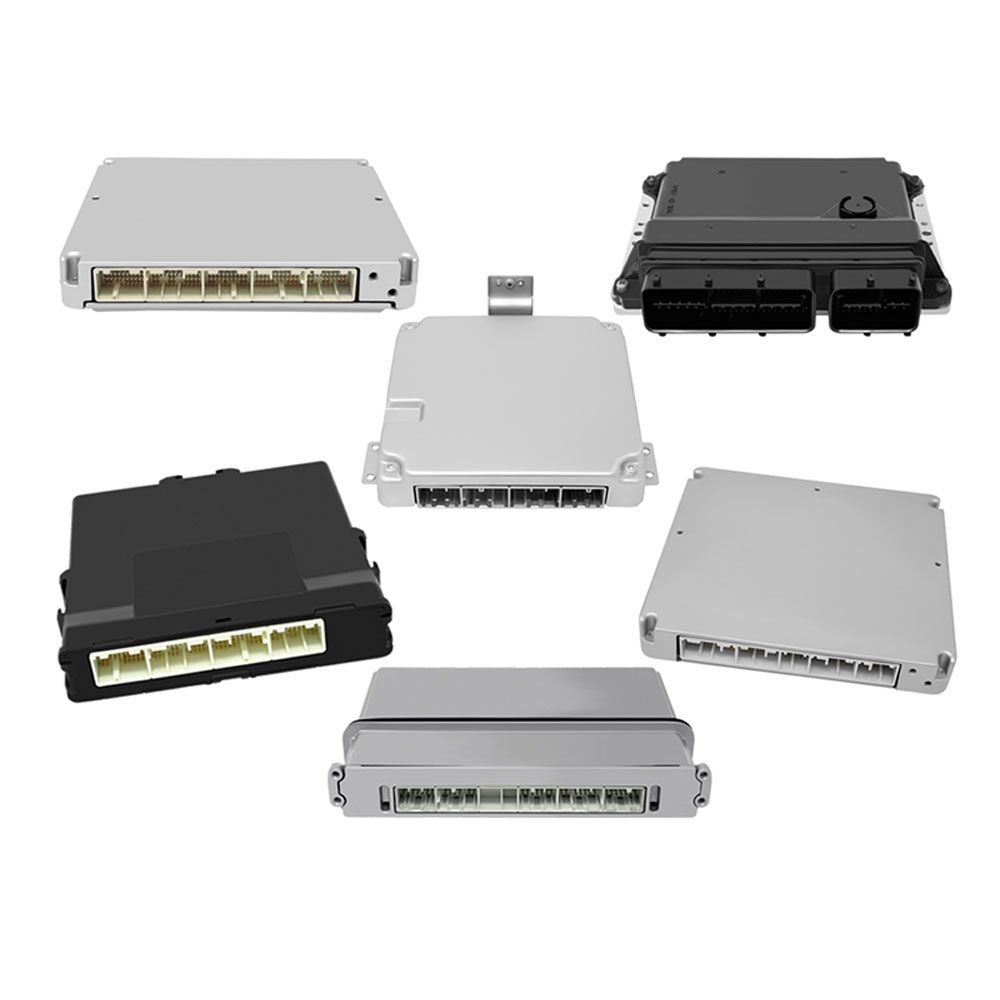
Flagship One stocks a refurbished, VIN-programmed PCM for the 1996 Toyota T100 with a lifetime warranty, free shipping and no core charge. The full Toyota T100 module lineup covers other engine configurations as well.
The engine control module in your 1996 Toyota T100 plays a vital role in maintaining smooth and reliable operation. Whether you’re dealing with stalling, a no-start condition, or stored trouble codes, understanding the symptoms and replacement process can help you make informed decisions. Opting for a VIN-programmed unit simplifies the repair, ensuring your T100 gets back on the road with minimal downtime. Regular maintenance and prompt attention to electrical issues can help extend the life of your new ECM.