
Last updated on August 25th, 2026 at 12:25 pm
The Engine Control Module (ECM) in your 1995 Toyota T100 manages fuel injection, ignition timing, and emissions systems. Failures may cause erratic idling, stalling, or a no-start condition, often due to internal corrosion or voltage spikes.
If your 1995 Toyota T100 is experiencing unexplained stalling, rough idling, or a refusal to start, the Engine Control Module (ECM) may be the culprit. This critical component acts as the brain of your vehicle’s engine management system, regulating fuel delivery and ignition timing. Replacing it involves more than just swapping parts—proper installation and programming are essential to restore smooth operation. Understanding the process helps you avoid unnecessary delays and ensures your pickup runs reliably. Whether you’re a DIY enthusiast or relying on a shop, knowing what to expect can save time and frustration.
1995 Toyota T100
OEM programmed replacements — plug & play, no dealer visit.
Find yours by year, make & model →
Free shipping · Lifetime warranty
In your 1995 Toyota T100, the ECM governs the engine’s air-fuel mixture and spark timing to optimize performance and emissions. It processes inputs from sensors like the oxygen and throttle position sensors, adjusting fuel injection and ignition accordingly. A faulty ECM may disrupt these functions, leading to poor drivability or even a complete no-start condition. When replacement becomes necessary, choosing replacement engine computers for the T100 ensures compatibility with your vehicle’s specific calibration. Without proper function, the engine may run inefficiently or fail to meet basic operational demands.
The ECM in your 1995 Toyota T100 is mounted behind the instrument panel, making it relatively accessible compared to some vehicles where the module is buried under the dashboard. Replacement involves disconnecting the battery, removing the necessary trim panels, and unplugging the wiring harness from the old unit. The new ECM is then installed in the same location, with connectors secured and panels reinstalled. Labor time for removal and replacement is typically 0.7 hours, while the factory relearn procedure adds another 0.5 hours to ensure proper communication with the engine’s sensors.
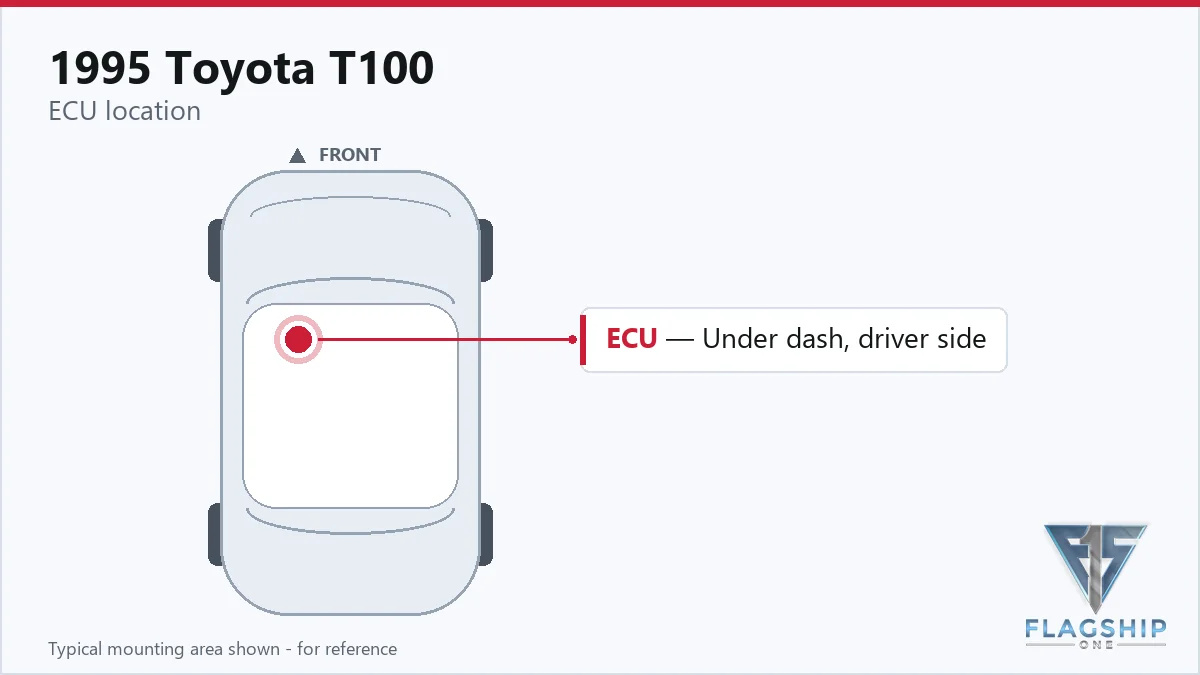
Work with the ignition off, and treat the module as static-sensitive: avoid touching the connector pins at any point.
| Operation | Configuration | Book Time |
|---|---|---|
| Engine Control Module Relearn | All configurations | 0.5 hr |
| Engine Control Module R&R | All configurations | 0.7 hr |
| Powertrain Control Module R&R | All configurations | 0.7 hr |
| Powertrain Control Module Relearn | All configurations | 0.5 hr |
After installing a new ECM in your 1995 Toyota T100, the factory procedure requires a relearn process to synchronize the module with the engine’s sensors. This step, which typically takes 0.5 hours, ensures the ECM adapts to your vehicle’s specific operating conditions. However, opting for a VIN-programmed replacement unit eliminates this step entirely, as the module arrives pre-configured for your T100. This not only saves time but also reduces the risk of calibration errors during the relearn process.
A failing ECM in your 1995 Toyota T100 may cause a range of symptoms, including intermittent stalling, rough idling, or difficulty starting. You might also notice poor fuel economy or erratic engine behavior, such as sudden surges or hesitation under acceleration. In some cases, the vehicle may enter a limp-home mode, limiting power to prevent damage. If the module loses communication with the scan tool, it could indicate internal failure. While no specific trouble codes were provided for this model, a common fault like internal control module memory checksum error may appear if the ECM’s memory integrity is compromised.
Replacing the ECM is possible for those with basic mechanical skills, but proper installation is critical. You’ll need to disconnect the battery, remove dashboard panels, and ensure secure connections. If you’re unfamiliar with electrical systems, professional installation is recommended to avoid potential issues.
The relearn procedure allows the new ECM to adapt to your vehicle’s specific sensor readings and operating conditions. This step ensures the engine runs smoothly and efficiently. Skipping it may result in poor performance or drivability issues.
Common signs include stalling, rough idling, or a no-start condition. You may also experience poor fuel economy or erratic engine behavior. If the scan tool cannot communicate with the ECM, it may indicate a complete failure.
If your 1995 Toyota T100’s ECM has failed, you have options for replacement. A new or refurbished unit can restore reliable operation, but ensure it’s compatible with your vehicle’s calibration. For a hassle-free solution, a pre-programmed ECM eliminates the need for post-install programming, saving time and reducing the risk of errors.
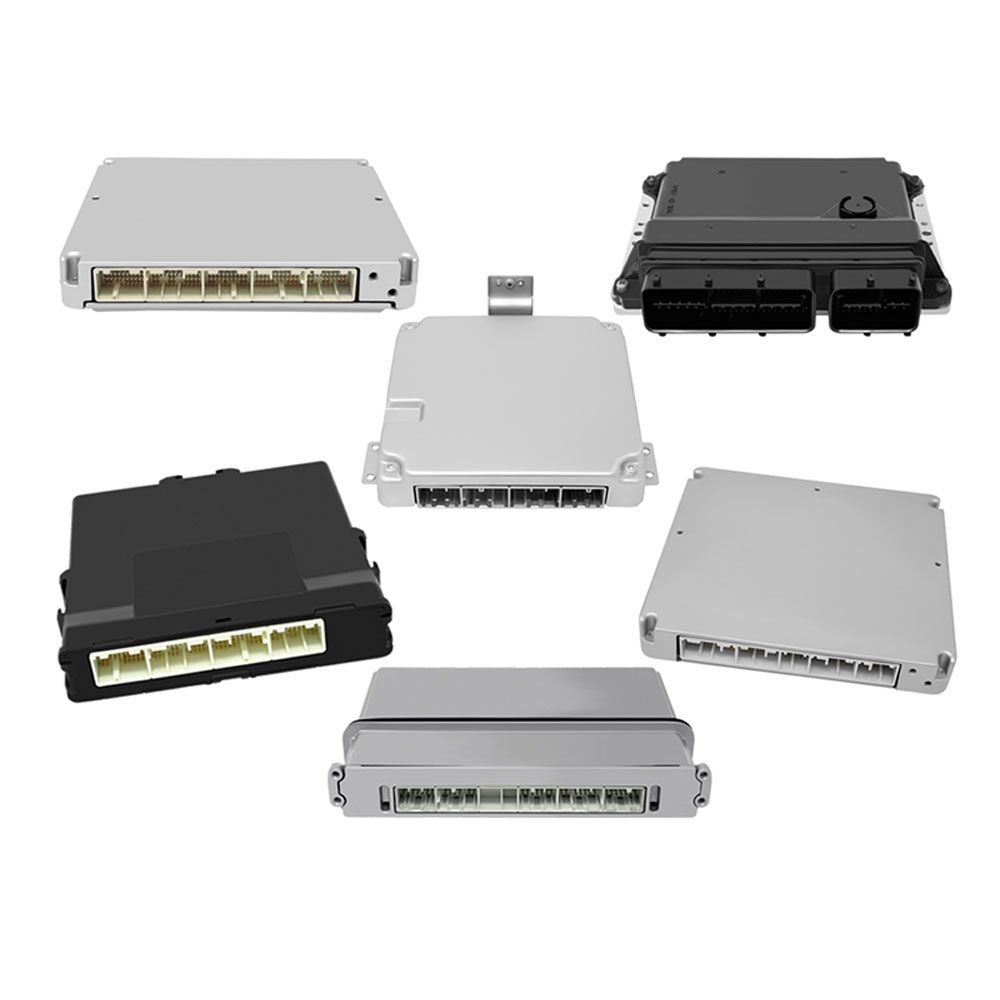
Flagship One stocks a refurbished, VIN-programmed PCM for the 1995 Toyota T100 with a lifetime warranty, free shipping and no core charge. The full Toyota T100 module lineup covers other engine configurations as well.
The ECM in your 1995 Toyota T100 plays a vital role in engine performance and drivability. If you’re experiencing symptoms of failure, replacement is often the most effective solution. Whether you choose to tackle the job yourself or rely on a professional, understanding the process ensures a smoother repair. Keep your pickup running reliably with the right parts and procedures.