
Last updated on August 25th, 2026 at 12:08 pm
The powertrain control module in the 1993 Plymouth Grand Voyager manages fuel delivery, ignition timing, and emissions functions for the 3.0L V6 engine. When this module fails, it may cause rough running, stalling, or a vehicle that will not start at all.
When a 1993 Plymouth Grand Voyager begins stalling unexpectedly or refusing to start altogether, the powertrain control module is one component worth evaluating carefully. This engine computer orchestrates fuel injection pulse width, ignition timing advance, and emissions system operation for the 3.0L V6 powerplant. A module that has developed internal electrical faults can disrupt any combination of those systems, leaving you stranded at home or dealing with unpredictable drivability problems that come and go without warning. Understanding what this component does, where it lives in your vehicle, and what the replacement process involves helps you make confident repair decisions rather than guessing. The Grand Voyager uses a specific calibration tied to its engine and transmission combination, meaning any replacement must carry the correct programming for your particular vehicle configuration. Factory service bulletins also document known issues with flash programming recovery and erroneous malfunction indicator lamp illumination on these vehicles, which is useful background information when diagnosing persistent or recurring problems. By reviewing the module location, published labor times, and post-installation requirements, you gain a clearer picture of what the repair entails and whether a pre-programmed replacement from Flagship One might simplify the process for you.
The powertrain control module serves as the central electronic brain for your 1993 Plymouth Grand Voyager, continuously processing input from sensors throughout the engine and drivetrain to regulate critical operating parameters. For the 3.0L V6 engine, this module controls fuel injector pulse timing and duration, ignition spark advance, idle speed regulation, and various emissions functions including the exhaust gas recirculation system. It receives signals from the throttle position sensor, coolant temperature sensor, manifold absolute pressure sensor, oxygen sensor, and crankshaft position sensor, then adjusts outputs in real time to maintain efficient combustion. The module also communicates with the transmission control system on models equipped with automatic transmissions, helping manage shift points and torque converter lockup based on engine load and vehicle speed. Because all of these functions depend on a single circuit board housed in one enclosure, a failure within the module can produce a wide range of symptoms that sometimes mimic other problems like bad sensors or wiring faults. This is why accurate diagnosis matters before replacing any parts. When you need Grand Voyager replacement engine computers, selecting a unit with the correct calibration for your specific engine and transmission pairing is essential. A mismatched module may fit physically but fail to communicate properly with your vehicle’s sensors and actuators. The internal software calibration must match the vehicle identification number and the factory equipment configuration to ensure proper fuel delivery, emissions compliance, and drivability under all operating conditions.
1993 Plymouth Grand Voyager
OEM programmed ECM for your 1993 Plymouth Grand Voyager — plug & play, no dealer visit.
Free shipping · Lifetime warranty
In the 1993 Plymouth Grand Voyager, the powertrain control module sits on the inner fender panel along the driver’s side of the engine compartment. This location places it in the engine bay, where it is exposed to underhood temperatures and vibration over years of service. Access typically requires opening the hood and reaching the inner fender area on the driver’s side, near the strut tower or fender sheet metal. Published labor time for powertrain control module removal and replacement is 0.5 hours, reflecting a straightforward swap that an experienced technician can complete relatively quickly. The same 0.5-hour figure applies whether the reference calls it a powertrain control module or an engine control module, and it applies to both the Grand Voyager and the standard Voyager. After the physical swap, a relearn procedure may be necessary so the new module adapts to your vehicle’s specific sensors and idle characteristics. Published labor time for that relearn is also 0.5 hours. The connector should be inspected for corrosion or bent terminals while the module is out, since a damaged connector can cause the same symptoms as a failed module.
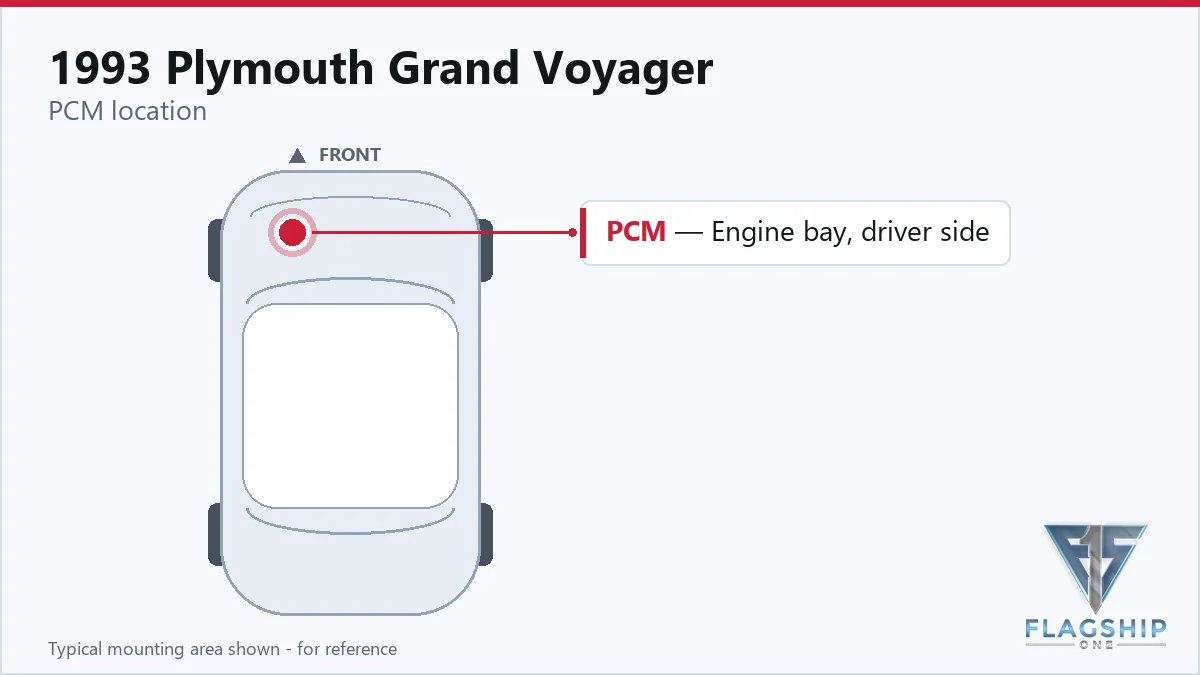
Work with the ignition off, and treat the module as static-sensitive: avoid touching the connector pins at any point.
| Operation | Configuration | Book Time |
|---|---|---|
| Powertrain Control Module R&R | Grand Voyager | 0.5 hr |
| Powertrain Control Module R&R | Voyager | 0.5 hr |
| Powertrain Control Module Relearn | Grand Voyager | 0.5 hr |
| Powertrain Control Module Relearn | Voyager | 0.5 hr |
| Engine Control Module Relearn | Grand Voyager | 0.5 hr |
| Engine Control Module Relearn | Voyager | 0.5 hr |
| Engine Control Module R&R | Grand Voyager | 0.5 hr |
| Engine Control Module R&R | Voyager | 0.5 hr |
After replacing the powertrain control module in a 1993 Plymouth Grand Voyager, the factory procedure typically requires a relearn step so the new module can adapt to your vehicle’s sensors, idle air control motor, and fuel trim parameters. Published labor time for this relearn is 0.5 hours, and it applies to both the Grand Voyager and the standard Voyager. The relearn allows the module to establish correct baseline values for idle speed, fuel delivery, and emissions control based on the actual components installed in your vehicle. A factory service bulletin also documents flash programming complications and recovery using the DRBIII diagnostic tool, indicating that programming these modules can encounter issues requiring specific recovery steps. When you choose a VIN-programmed replacement unit from Flagship One, the module arrives already loaded with the correct calibration for your vehicle identification number. This means the flash programming and the associated relearn adaptation are already completed before the part ships, so you can install the unit and drive without scheduling a separate dealership visit for programming. The pre-programmed approach eliminates the risk of a flash failure during the write process.
A failing powertrain control module in the 1993 Plymouth Grand Voyager can produce a variety of symptoms that often overlap with other engine problems, making diagnosis challenging. One common sign is a no-start condition where the engine cranks but does not fire, or fires briefly and immediately dies. This occurs when the module fails to deliver proper fuel injector pulses or ignition spark signals to the 3.0L V6 engine. Intermittent stalling is another frequent complaint, particularly at idle or when coming to a stop. The engine may run fine for a period and then suddenly quit without warning, restarting normally after sitting for a few minutes. Rough idle, hesitation during acceleration, and poor fuel economy can also point to module trouble if the internal processor is sending incorrect signals to the fuel injectors or ignition system. In some cases, the malfunction indicator lamp on the instrument cluster may illuminate without an obvious engine performance problem. A factory service bulletin specifically addresses erroneous MIL illumination related to the EGR system with a hex code $2e, which may indicate a module or sensor issue rather than an actual EGR failure. Dead or erratic scan-tool communication is another indicator, suggesting the module is not responding to diagnostic requests properly. Transmission shifting irregularities may also appear on models where the module interacts with the automatic transmission control system.
Two factory service bulletins pertain to the powertrain control module on this vehicle. Bulletin 18-037-05 addresses flash programming complications and recovery using the DRBIII diagnostic tool, providing technicians with a procedure to recover from interrupted or failed programming attempts. This is relevant when a module is being reprogrammed or flashed with updated calibration data and the process does not complete successfully. Bulletin 18-01-97 covers erroneous malfunction indicator lamp illumination associated with hex code $2e, which relates to the exhaust gas recirculation system. This bulletin indicates that the MIL may illuminate due to a module or sensor issue rather than an actual EGR failure, and technicians should follow the diagnostic procedure outlined in the bulletin before replacing EGR components. Both bulletins are useful reference material when diagnosing persistent warning lamp or programming issues on the Grand Voyager.
| Bulletin | Subject | What It Addresses |
|---|---|---|
| 18-037-05 | 18-037-05 Flash Programming Failure Recovery Using DRBIII® | — |
| 18-01-97 | 18-01-97 Erroneous MIL Illumination With Hex Code $2e-EGR System Failure | — |
The powertrain control module sits on the inner fender panel along the driver’s side of the engine compartment. It is accessible by opening the hood and locating the inner fender area on the driver’s side of the engine bay.
Published labor time for powertrain control module removal and replacement is 0.5 hours. A relearn procedure may also be required after installation, which carries an additional 0.5 hours of published labor time.
No, this vehicle predates the OBD-II standard and uses Chrysler’s earlier two-digit hex code diagnostic format. You will not find P-codes on this model. A compatible scan tool or the key cycle method can retrieve stored codes.
The relearn allows the new module to establish baseline values for idle speed, fuel delivery, and sensor adaptation. Published labor time is 0.5 hours. A VIN-programmed replacement from Flagship One arrives with this calibration already completed.
Yes, a failing powertrain control module can cause intermittent stalling, particularly at idle or when decelerating. The module may also cause no-start conditions, rough running, or erratic shift behavior if internal circuitry has degraded.
If your 1993 Plymouth Grand Voyager is showing symptoms consistent with a failing powertrain control module, you have two main paths. A repair shop can diagnose the issue and attempt to reprogram or recover the existing module, though flash programming carries some risk of complications. Alternatively, a pre-programmed replacement from Flagship One arrives calibrated to your vehicle identification number, eliminating the need for dealership programming and simplifying the installation process for your 3.0L Grand Voyager.
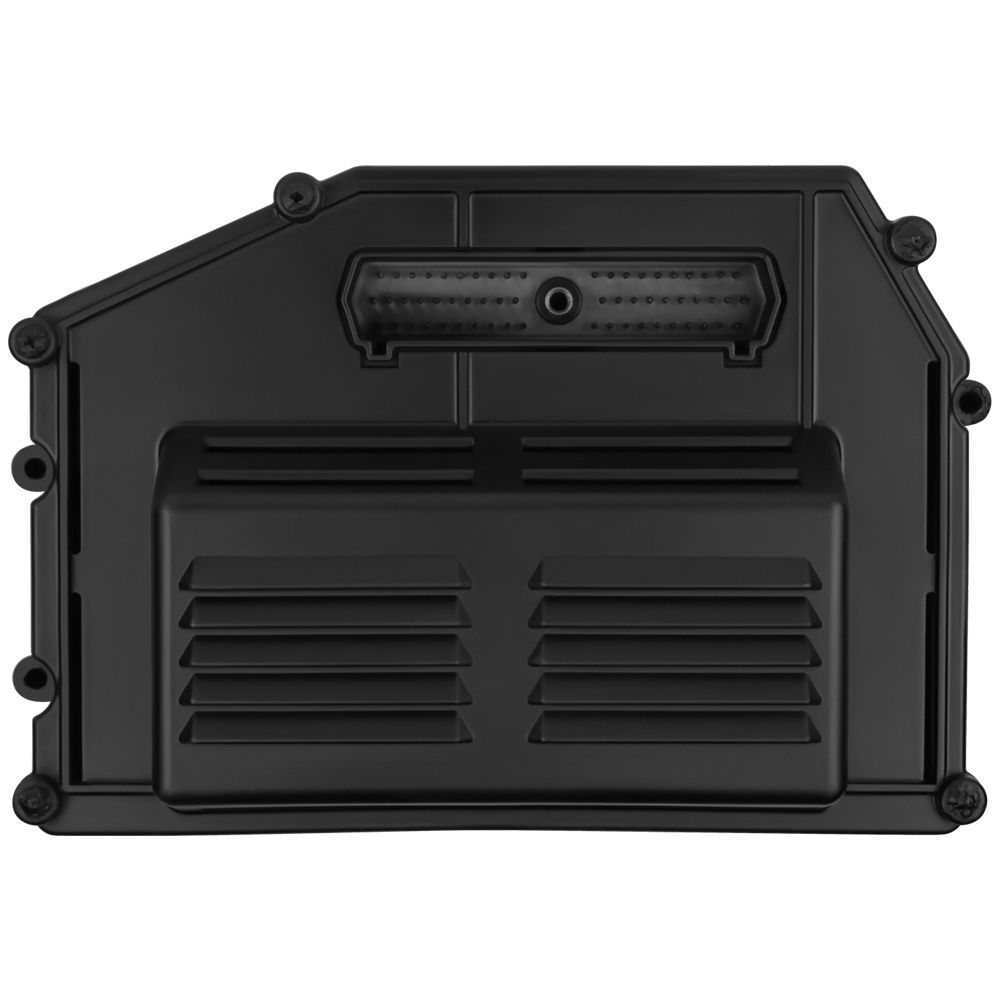
Flagship One stocks a refurbished, VIN-programmed PCM for the 1993 Plymouth Grand Voyager with a lifetime warranty, free shipping and no core charge. The full Plymouth Grand Voyager module lineup covers other engine configurations as well.
The 1993 Plymouth Grand Voyager relies on a properly functioning powertrain control module to keep the 3.0L engine running smoothly and efficiently. Whether you are dealing with stalling, no-start conditions, or persistent warning lamp issues, understanding the module’s role and replacement process helps you choose the right repair path. A VIN-programmed replacement from Flagship One can save time and eliminate programming complications, getting your Grand Voyager back on the road with confidence.