
Last updated on August 25th, 2026 at 12:24 pm
The Powertrain Control Module (PCM) in your 1995 Grand Voyager manages engine timing, fuel delivery, and transmission shifting. When this computer fails, the vehicle may not run properly or may display warning lights unexpectedly.
If your 1995 Plymouth Grand Voyager is experiencing hard-starting, stalling, or unexpected check engine illumination, the Powertrain Control Module may be the culprit. This guide explains what the PCM does in your specific vehicle, where it is mounted, and what the replacement process involves. You will learn the factory-recommended programming steps, common failure symptoms to watch for, and how a properly programmed replacement unit can restore reliable operation to your minivan.
The Powertrain Control Module serves as the primary computer for your 1995 Grand Voyager, governing engine fuel delivery, ignition timing, and automatic transmission shift points. Located underhood on the drivers side inner fender panel, this unit integrates multiple sensor inputs to maintain proper engine operation under all driving conditions. When the internal circuitry of the PCM degrades from heat cycles, voltage spikes, or component aging, the vehicle may exhibit running problems that do not respond to traditional repair procedures. Replacement engine computers for the Grand Voyager must be programmed with the vehicles specific identification data to communicate correctly with the instrument cluster, transmission, and onboard diagnostics.
Flagship One keeps Plymouth Grand Voyager replacement engine computers in stock for exactly this failure pattern.
1995 Plymouth Grand Voyager
OEM programmed ECM for your 1995 Plymouth Grand Voyager — plug & play, no dealer visit.
Free shipping · Lifetime warranty
Replacing the PCM on your 1995 Grand Voyager requires accessing the module mounted underhood on the drivers side inner fender panel. The replacement procedure involves disconnecting the battery, removing the mounting hardware, transferring the wiring harness connector, and installing the new unit. According to factory labor guidelines, the R&R procedure books at 0.5 hours, with an additional 0.5 hour allowance for the relearn procedure after installation. Proper torque specification should be followed when securing the new module to ensure reliable electrical connections.
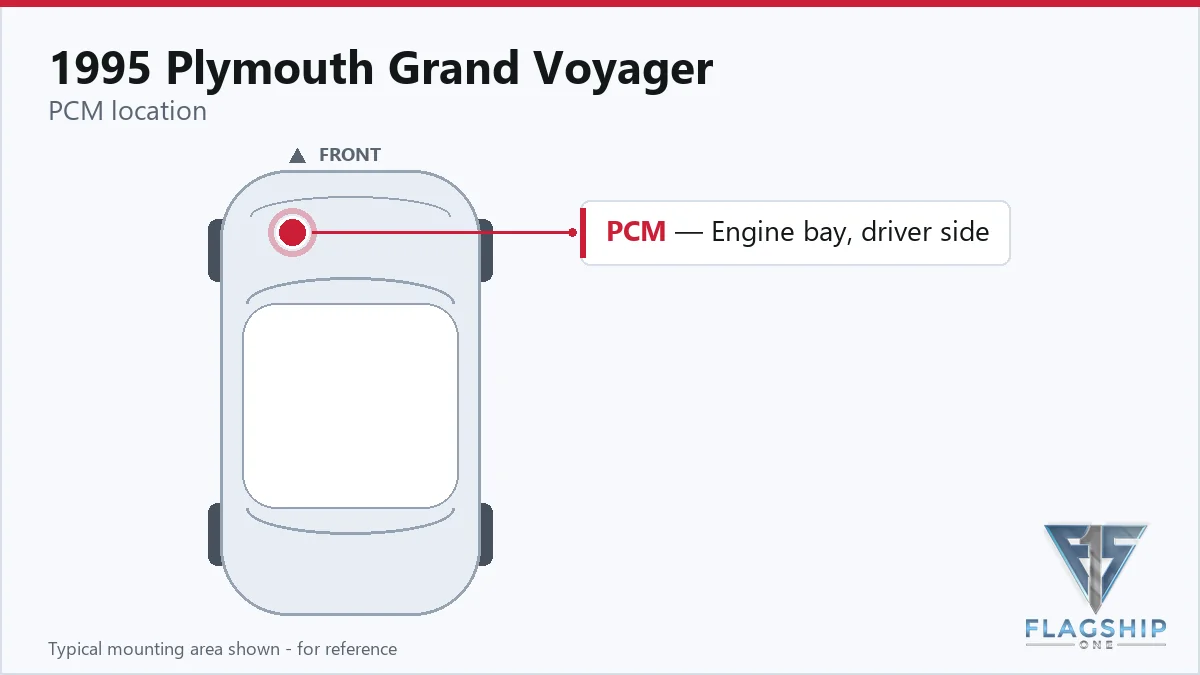
Work with the ignition off, and treat the module as static-sensitive: avoid touching the connector pins at any point.
| Operation | Configuration | Book Time |
|---|---|---|
| Engine Control Module Relearn | Grand Voyager | 0.5 hr |
| Engine Control Module Relearn | Voyager | 0.5 hr |
| Engine Control Module R&R | Grand Voyager | 0.5 hr |
| Engine Control Module R&R | Voyager | 0.5 hr |
| Powertrain Control Module R&R | Grand Voyager | 0.5 hr |
| Powertrain Control Module R&R | Voyager | 0.5 hr |
| Powertrain Control Module Relearn | Grand Voyager | 0.5 hr |
| Powertrain Control Module Relearn | Voyager | 0.5 hr |
After installing a replacement PCM in your 1995 Grand Voyager, the factory procedure requires a relearn process to calibrate the new module to your vehicles specific engine and transmission characteristics. This step ensures proper idle speed, fuel trim, and transmission shift adaptation. Flagship One units arrive pre-programmed with your vehicles VIN, meaning the relearn procedure may be shortened or eliminated depending on your specific situation. Always verify the replacement unit is compatible with the 3.0L engine in your Grand Voyager before installation.
Every VIN-programmed replacement unit from Flagship One arrives with these steps already completed.
Common symptoms of a failing PCM in this generation of minivan include hard starting or no-start conditions, intermittent stalling, and rough idle operation. The vehicle may run but exhibit hesitation under acceleration or display a persistent check engine light. In some cases, scan tool communication with the vehicle may fail entirely, preventing diagnosis. Fault codes related to EGR system monitoring have been documented in factory bulletins for this model year. When the internal memory of the PCM becomes corrupted, the vehicle may exhibit multiple unrelated trouble codes that clear temporarily after reset but return once the module attempts normal operation.
| Bulletin | Subject | What It Addresses |
|---|---|---|
| 18-037-05 | 18-037-05 Flash Programming Failure Recovery Using DRBIII® | — |
| 18-01-97 | 18-01-97 Erroneous MIL Illumination With Hex Code $2e-EGR System Failure | — |
No. The replacement PCM must be compatible with your specific 3.0L engine and transmission combination. Using an incorrect unit may cause running problems or prevent the vehicle from starting.
Not necessarily. Units that arrive pre-programmed with your VIN may not require dealer programming. However, some applications may still need a relearn procedure to establish proper communication with vehicle systems.
Yes. If the PCM loses proper signal from critical sensors or experiences internal processing failures, the engine may shut off without warning. However, many other issues can cause stalling, so proper diagnosis is recommended before replacement.
When your 1995 Plymouth Grand Voyager requires PCM replacement, you have two primary options: a new or refurbished unit from the dealer at higher cost, or a quality remanufactured replacement. The key is ensuring the unit is properly programmed for your specific vehicle identification number and engine combination. Consider your budget, warranty needs, and whether you have access to a scan tool for post-installation verification when making your decision.
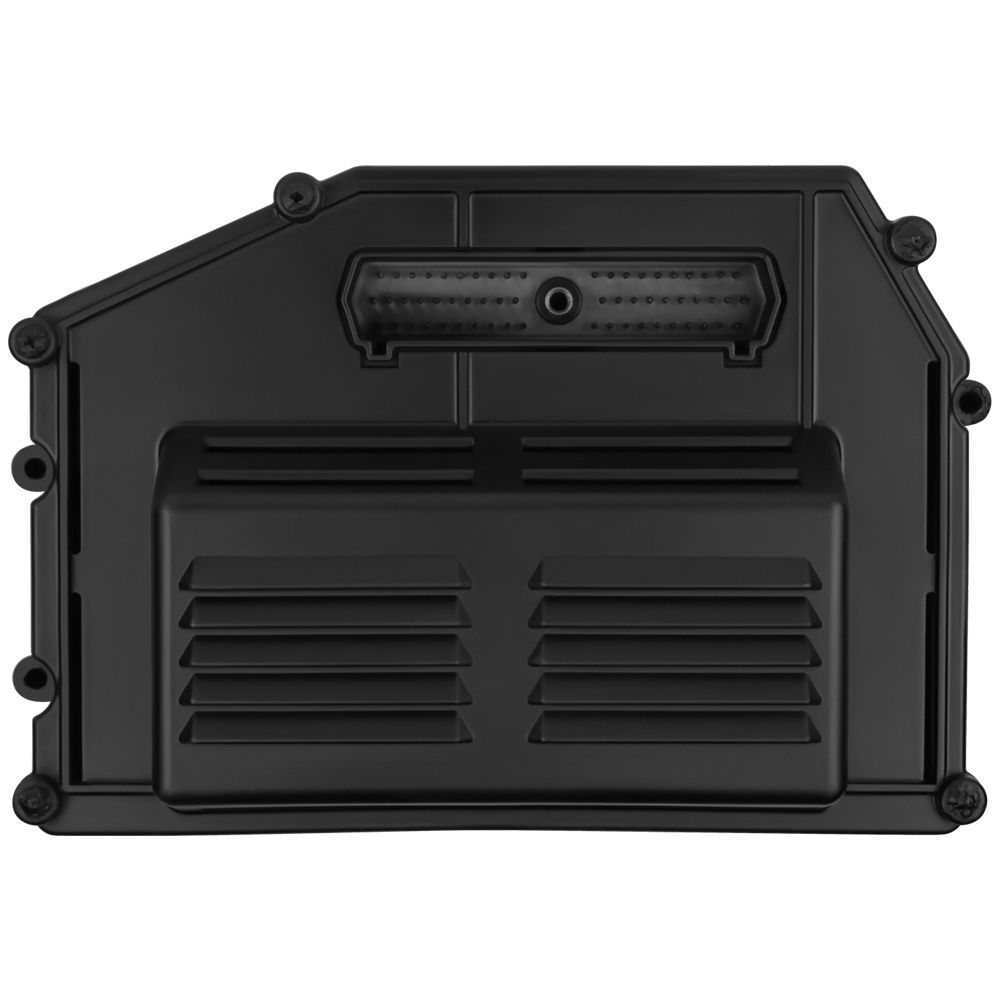
Flagship One stocks a refurbished, VIN-programmed PCM for the 1995 Plymouth Grand Voyager with a lifetime warranty, free shipping and no core charge. The full Plymouth Grand Voyager module lineup covers other engine configurations as well.
The PCM in your 1995 Plymouth Grand Voyager is a critical component that manages engine and transmission operation. Understanding its location, replacement requirements, and programming needs helps ensure a successful repair. Whether you choose dealer parts or a remanufactured unit, proper installation and compatibility verification are essential for getting your minivan back to reliable operation.