
Last updated on August 25th, 2026 at 12:27 pm
The Engine Control Module (ECM) in the 1989 Toyota Land Cruiser is the primary computer managing the 4.0L engine’s fuel injection, idle speed, and emissions systems. When this unit fails, the vehicle may not run properly or at all.
If your 1989 Toyota Land Cruiser has developed drivability problems such as hard starting, stalling, or rough running, the Engine Control Module may be the culprit. The ECM serves as the central computer for your vehicle’s fuel injection system, continuously monitoring sensors and adjusting engine parameters to maintain smooth operation. Because this computer handles critical functions, a failing or failed ECM can leave you stranded or cause persistent issues that seem impossible to diagnose. This guide walks you through recognizing ECM failure symptoms in your Land Cruiser, understanding where the module is located, and what the replacement process involves. You will also learn about the programming requirements after installation and why choosing a properly programmed replacement unit matters for this specific model year. Whether you plan to perform the replacement yourself or have it done professionally, the information here helps you approach the repair with confidence and realistic expectations.
1989 Toyota Land Cruiser
OEM programmed ECM for your 1989 Toyota Land Cruiser — plug & play, no dealer visit.
Free shipping · Lifetime warranty
The Engine Control Module in your 1989 Toyota Land Cruiser functions as the brain of the fuel injection system. This computer receives input from multiple sensors throughout the engine bay, including the coolant temperature sensor, throttle position sensor, and various airflow measurements. Using this data, the ECM calculates the precise amount of fuel to inject into each cylinder and determines the optimal timing for ignition. For the 4.0L inline-six engine in this vehicle, the ECM also controls the idle air control system to maintain stable idle speeds and manages the emissions control components to meet the standards of that era.
Unlike modern vehicles with sophisticated OBD-II systems, the 1989 Land Cruiser uses a simpler architecture that still requires precise coordination between components. The ECM stores calibration data specific to your engine’s characteristics, learned fuel trims from previous operation, and adaptive strategies that develop over time. When the module fails internally, these learned values are lost and the engine may run poorly or not start at all. Given the age of these vehicles, ECM failures often result from degraded internal circuitry, failed memory cells, or damage to the internal processor caused by thermal cycling over nearly four decades of service. Replacement engine computers for the Land Cruiser are available from specialty suppliers who understand the requirements of these older Toyota systems.
Flagship One keeps Toyota Land Cruiser replacement engine computers in stock for exactly this failure pattern.
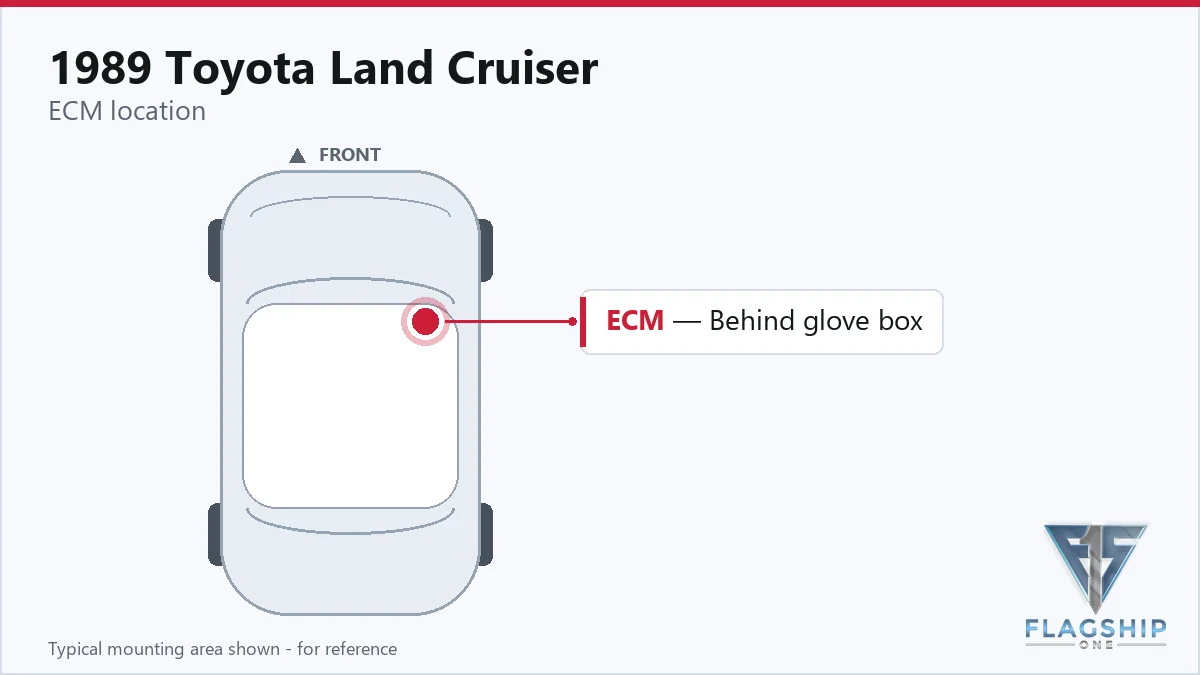
The ECM on the 1989 Toyota Land Cruiser is positioned behind the glove box assembly, making access relatively straightforward compared to some vehicles where the computer is buried under the dashboard or located in the engine bay. To reach the module, you must remove the glove box door and the interior panel that houses it. This location keeps the electronics protected from engine bay heat but exposes them to potential moisture ingress over time, particularly if the HVAC system seals degrade.
Replacing the ECM involves disconnecting the battery, removing the glove box assembly, unplugging the electrical connector from the old module, and installing the replacement in the same orientation. All electrical connections should be inspected for corrosion or damaged pins during the procedure. The specific book labor hours for this job may not be widely documented for this older model, but the physical access portion is generally considered straightforward for someone with moderate automotive repair experience. After installation, the battery is reconnected and the system is tested for proper operation.
After replacing the ECM in your 1989 Toyota Land Cruiser, the module must be initialized to communicate properly with the vehicle’s specific engine and sensors. The factory procedure involves having the new module learn the fuel trims and idle air control values specific to your engine, a process that typically occurs automatically during the first startup cycles. However, the replacement unit must contain the correct calibration data for the 4.0L engine and must be recognized by the vehicle’s other control systems.
This is where ordering from a specialized supplier matters. A VIN-programmed replacement unit arrives pre-configured with the correct calibration data matched to your specific vehicle identification number, eliminating the need for most dealer-level programming procedures. This means you can install the unit and expect it to start the engine without additional programming steps, though a professional verification of proper operation is still recommended to ensure all systems are communicating correctly.
Every VIN-programmed replacement unit from Flagship One arrives with these steps already completed.
When the ECM in your 1989 Toyota Land Cruiser begins to fail or has failed completely, you may notice several distinct symptoms that differentiate it from other drivability problems. The most severe indicator is a no-start condition where the engine cranks normally but will not fire, or the engine starts and immediately dies. This often occurs because the ECM is not providing the fuel pump activation signal or the injector pulse needed for combustion.
Less dramatic failures manifest as intermittent stalling, especially at idle or under light load conditions. The engine may run roughly at idle, exhibit hesitation during acceleration, or display poor fuel economy due to incorrect fuel delivery calculations. In some cases, the vehicle may run but display warning indicators or experience transmission shifting irregularities because the ECM provides data to other vehicle systems.
Diagnostic trouble codes related to ECM internal failures may be stored in the module memory, including codes indicating checksum errors or processor faults. These codes often cannot be cleared by disconnecting the battery, as the problem exists within the ECM itself rather than in external sensors or wiring. If your scan tool cannot communicate with the ECM at all, this strongly suggests a failed module rather than a wiring issue.
Internal ECM repairs are generally not practical due to the complex multi-layer circuit boards and sealed construction. Replacement with a properly programmed unit is the standard repair approach.
Costs vary based on supplier and whether the unit comes pre-programmed. Specialty units configured for your specific VIN typically cost more but save significant troubleshooting time.
No. The replacement ECM must be calibrated for the 4.0L engine and ideally programmed to your vehicle’s VIN for plug-and-play installation. An unprogrammed unit will not start the engine.
When you purchase a VIN-programmed replacement unit, dealer programming is not required. The unit arrives ready to install and should start the engine immediately.
An unprogrammed or incorrectly programmed ECM will likely cause a no-start condition or the engine will run very poorly. The module will not properly communicate with your vehicle’s sensors.
When your 1989 Toyota Land Cruiser requires ECM replacement, you have two primary options: purchasing a refurbished unit or a new replacement. Refurbished units are typically less expensive but may have limited warranty coverage and uncertain service history. New or professionally programmed replacements offer peace of mind with proper calibration for your specific vehicle. Given the age and specific requirements of the 1989 Land Cruiser, sourcing the correct module from a supplier experienced with legacy Toyota products is essential for a successful repair.
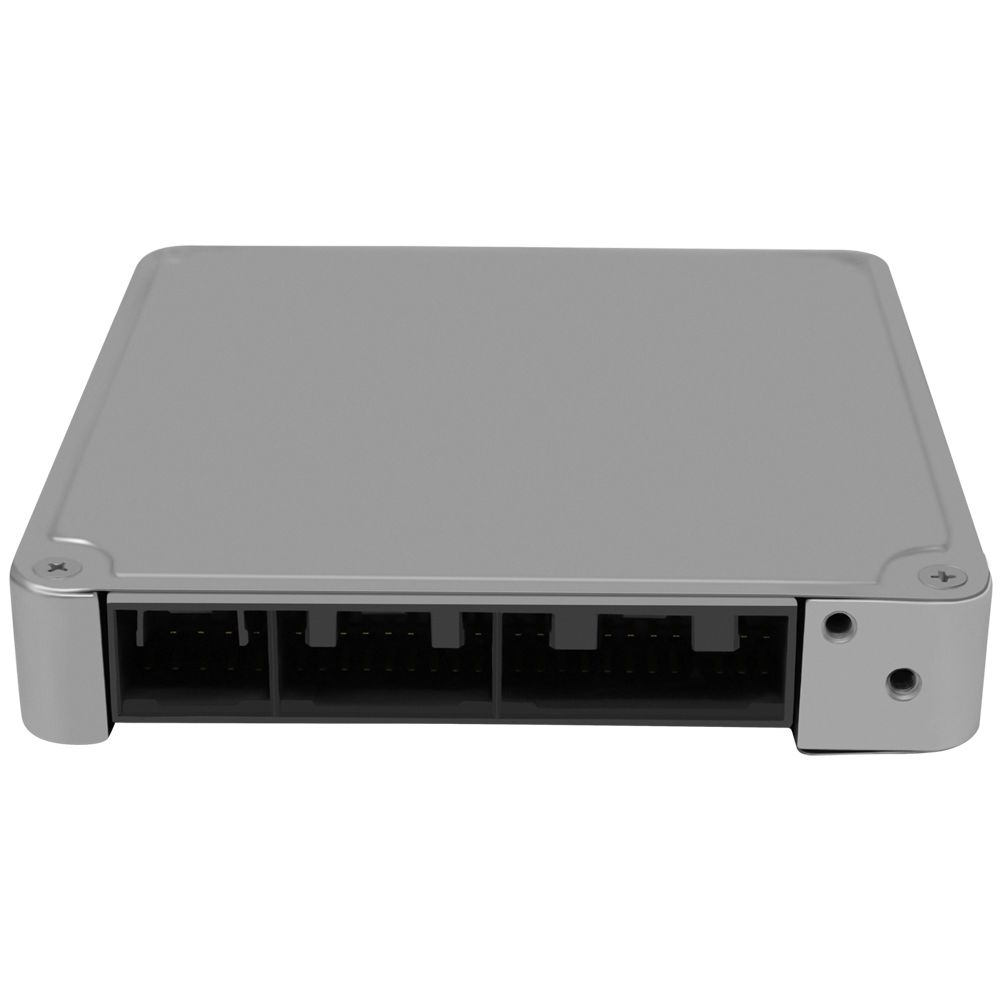
Flagship One stocks a refurbished, VIN-programmed ECM for the 1989 Toyota Land Cruiser with a lifetime warranty, free shipping and no core charge. The full Toyota Land Cruiser module lineup covers other engine configurations as well.
The ECM is a critical component in your 1989 Toyota Land Cruiser, managing the fuel injection and engine functions that keep your 4.0L running smoothly. When this module fails, the repair is straightforward but requires the correct replacement unit properly programmed for your vehicle. By understanding the symptoms, location, and programming requirements, you can approach this repair with confidence and get your Land Cruiser back on the road reliably.