
Last updated on August 25th, 2026 at 11:52 am
The engine control module manages fuel injection and sensor data for your 1997 Volkswagen Golf GTI. When this unit fails, you may experience starting issues or irregular engine performance. Replacing the component often restores proper communication between the management system and critical engine sensors.
Working on the electronics of a late nineties German hatchback requires careful attention to detail. You might be investigating a no-start condition or persistent check engine lights on your 1997 Volkswagen Golf GTI. Understanding the role of the central management computer helps you diagnose whether the issue lies within the wiring or the unit itself. This guide explains where the component lives and what steps are necessary for a successful swap. You will learn about factory labor estimates and specific adaptation requirements tied to the immobilizer system. Proper knowledge ensures you avoid common pitfalls during the repair process. Reading this overview prepares you for the technical procedures involved in restoring engine management functionality without unnecessary confusion about the scope of work needed for your specific car.
This electronic unit serves as the brain for the fuel injection system and oxygen sensor control. It processes data from various inputs to regulate engine performance and emissions components like the EVAP canister. When the original hardware degrades over time, signal processing errors can lead to drivability concerns. You need a reliable substitute to maintain proper operation of the management system. Sourcing 1997 Volkswagen Golf GTI replacement computers ensures compatibility with existing wiring harnesses and sensor arrays. The unit coordinates ignition timing and fuel delivery based on real-time data from the engine bay. Without a functioning controller, the vehicle cannot manage air-fuel ratios effectively. Installing a capable unit restores the communication necessary for smooth idling and acceleration. This component is critical for meeting emissions standards and maintaining daily drivability for your car.
1997 Volkswagen Golf GTI
OEM programmed ECM for your 1997 Volkswagen Golf GTI — plug & play, no dealer visit.
Free shipping · Lifetime warranty
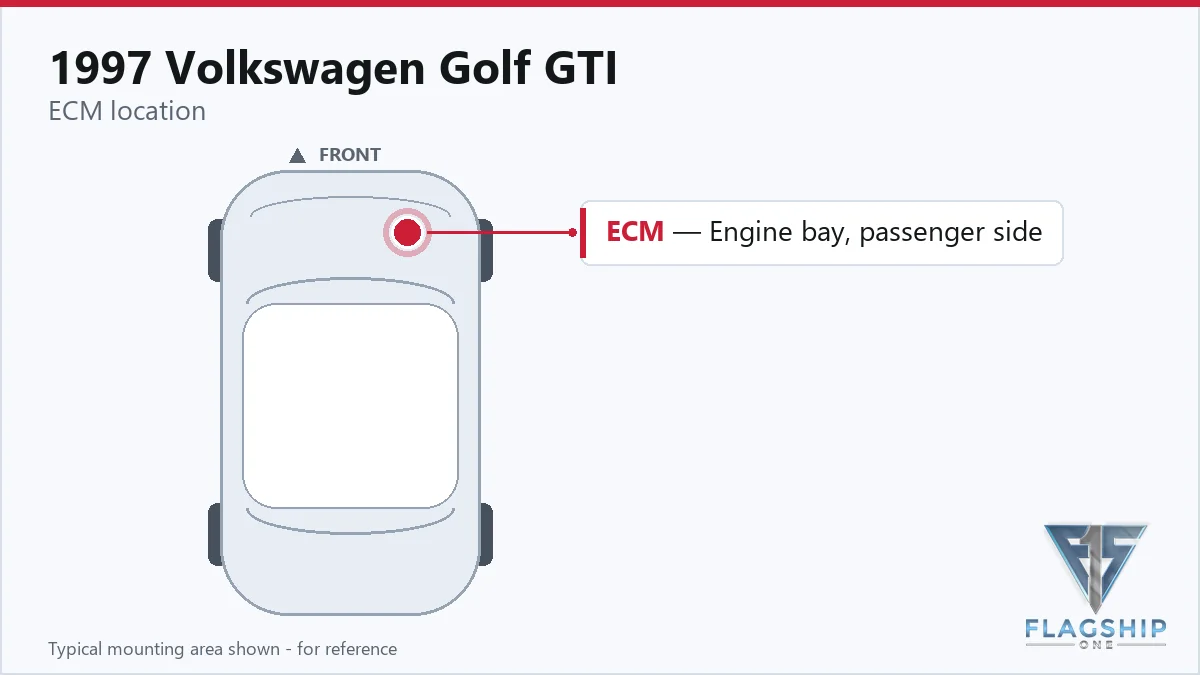
Factory documentation indicates the engine control module sits within the plenum chamber on the right side. Accessing this area requires removing surrounding components to reach the electronic housing safely. Book times suggest that removing and installing the unit takes approximately 0.3 hours of labor. Once physical installation is complete, additional procedures are necessary to integrate the hardware with the vehicle systems. A reset procedure typically requires 0.3 hours according to standard labor guides. Furthermore, a relearn process may take around 0.5 hours to ensure proper calibration. These steps are distinct from the physical swap and must be accounted for in your repair plan. The location protects the unit but limits easy access during service intervals. You should anticipate these time estimates when scheduling the work at a shop. Proper handling during removal prevents damage to the connector pins or housing mounts. Following the prescribed labor times helps ensure the job is completed without rushing critical setup phases.
| Operation | Configuration | Book Time |
|---|---|---|
| Engine Control Module R&R | All configurations | 0.3 hr |
| Engine Control Module Reset | All configurations | 0.3 hr |
| Engine Control Module Relearn | All configurations | 0.5 hr |
| Powertrain Control Module Relearn | All configurations | 0.5 hr |
| Powertrain Control Module R&R | All configurations | 0.3 hr |
Factory service information specifies that immobilizer adaptation is necessary when replacing the engine control module on models with Immobilizer 3 or 4. This security feature prevents unauthorized operation and must be synchronized during installation. Typically, a technician would perform this adaptation using specialized diagnostic tools. However, Flagship One supplies a VIN-programmed replacement unit so those steps are already done before shipping. This approach eliminates the need for onsite immobilizer adaptation in many cases. You save time by avoiding complex security synchronization procedures at the repair facility. The unit arrives ready to communicate with your existing key system. This reduces the potential for errors during the initial startup sequence. Ensuring the programming matches your vehicle identification number is critical for success. Pre-configured hardware simplifies the overall replacement process significantly.
Owners of this hatchback may notice irregular engine behavior when the management computer begins to fail. Common signs include a no-start condition where the crankshaft turns but the engine does not fire. You might experience sudden stalling while driving or rough idling at stop lights. Misfire codes often appear because the unit cannot process sensor data correctly. Dead scan-tool communication is another indicator that the internal processor is malfunctioning. Shifting issues may occur if the transmission relies on data from this controller. These symptoms suggest the electronic brain is struggling to manage fuel injection or ignition timing. Addressing these signs early prevents further damage to related systems. Your 1997 Volkswagen Golf GTI depends on this module for consistent performance. Ignoring these warnings often leads to a complete loss of engine management functionality.
Factory service bulletin number 96-07-42 addresses immobilizer adaptation requirements for this vehicle. The technical note applies to vehicles featuring Immobilizer version 3 or 4 systems. It specifies that adaptation is necessary when swapping the engine control module. This procedure ensures the security system recognizes the new hardware correctly. Ignoring this bulletin may result in the vehicle failing to start after installation. The document highlights the importance of synchronizing the immobilizer data during the swap. Technicians should reference this guidance to avoid security lockouts. Following the outlined steps ensures the replacement unit functions within the protected engine management network.
| Bulletin | Subject | What It Addresses |
|---|---|---|
| 96-07-42 | TT 96-07-42 All Models With Immobilizer 3 or 4, Immobilizer Adaptation When Replacing the ECM | — |
Factory diagrams place the unit within the plenum chamber on the right side. Accessing this area requires removing surrounding components to reach the electronic housing safely.
Book times suggest that removing and installing the unit takes approximately 0.3 hours of labor. Additional time is needed for reset and relearn procedures separately.
Factory bulletins indicate adaptation is necessary for models with Immobilizer 3 or 4. Pre-programmed units often eliminate the need for this step at the shop.
You may choose to repair your existing unit or install a refurbished replacement depending on your situation. Both options aim to restore engine management functionality for your 1997 Volkswagen Golf GTI. Refurbished units often provide a quicker solution than sending your original computer out for service. Evaluating the cost and time involved helps you decide the best path forward. Consider the labor estimates when weighing these repair versus replacement options.
Flagship One stocks a refurbished, VIN-programmed PCM for the 1997 Volkswagen Golf GTI with a lifetime warranty, free shipping and no core charge. The full Volkswagen Golf GTI module lineup covers other engine configurations as well.
Restoring proper function to your 1997 Volkswagen Golf GTI requires attention to these specific electronic details. Understanding the location and programming needs ensures a successful repair outcome. You now have the information needed to proceed with confidence. Review your options and select the solution that best fits your maintenance goals.