
Last updated on August 25th, 2026 at 11:58 am
The engine control module (ECM) in the 2013 Toyota Venza 2.7L manages fuel injection, ignition timing, and emissions. When it fails, the vehicle may experience no-start conditions, stalling, or trigger diagnostic trouble code P0606, indicating an internal processor fault.
When your 2013 Toyota Venza with the 2.7L engine suddenly refuses to start, stalls without warning, or illuminates the check engine light with a cryptic code, the engine control module may be the culprit. This compact computer orchestrates nearly every aspect of engine operation, and when it fails, the symptoms can be both frustrating and unpredictable. You might have already pulled a P0606 code from the OBD-II port, a clear signal that the module’s internal processor has encountered a fault. Replacing an ECM is not an everyday repair, but understanding what’s involved can save you time, money, and a tow to the dealership. This guide walks you through the module’s role, its location, the replacement labor, and the critical programming steps that Toyota requires. You’ll also learn how a pre-programmed replacement can simplify the job dramatically, letting you skip the dealer-only VIN registration and system initialization procedures. By the end, you’ll know exactly what to expect and how to get your Venza back on the road with confidence.
The engine control module in the 2013 Toyota Venza 2.7L is the primary computer responsible for real-time engine management. It receives signals from sensors such as the mass airflow sensor, throttle position sensor, oxygen sensors, and crankshaft position sensor, then uses that data to calculate the precise air/fuel mixture, ignition timing, and idle speed. The ECM also monitors emissions systems, controls the variable valve timing, and communicates with the transmission control module to coordinate shifts. Without a functioning ECM, the engine cannot start or run properly. When internal circuitry degrades or a processor fault occurs, the module may send incorrect commands or stop communicating altogether. This can lead to a no-start condition, stalling, or erratic performance that leaves you stranded. For owners facing this issue, replacement ECMs for the Venza are available that come pre-loaded with the correct software and vehicle-specific data, eliminating the need for complex post-installation programming. The ECM’s health is vital to the overall reliability of your Venza, and recognizing its failure symptoms early can prevent more extensive damage to other components.
2013 Toyota Venza 2.7L
OEM programmed ECM for your 2013 Toyota Venza 2.7L — plug & play, no dealer visit.
Free shipping · Lifetime warranty
The ECM on the 2013 Toyota Venza 2.7L is accessed from inside the vehicle. The only preparation step required before removal is disconnecting the cable from the negative battery terminal. This is a critical safety measure that prevents electrical shorts and protects both the technician and the vehicle’s electronics. Once the battery is disconnected, the module can be unplugged and unbolted. The factory book time for removing and reinstalling the ECM on the 2.7L engine is 1.2 hours. No other components need to be removed to reach the module, making this a relatively straightforward job for a skilled DIYer. After the replacement module is installed and the connectors are securely seated, the negative battery cable is reconnected. At that point, some vehicle systems may require initialization—a process that can involve cycling the power windows, sunroof, or other accessories. The entire procedure, from start to finish, typically aligns with the 1.2-hour labor estimate when performed by an experienced technician.
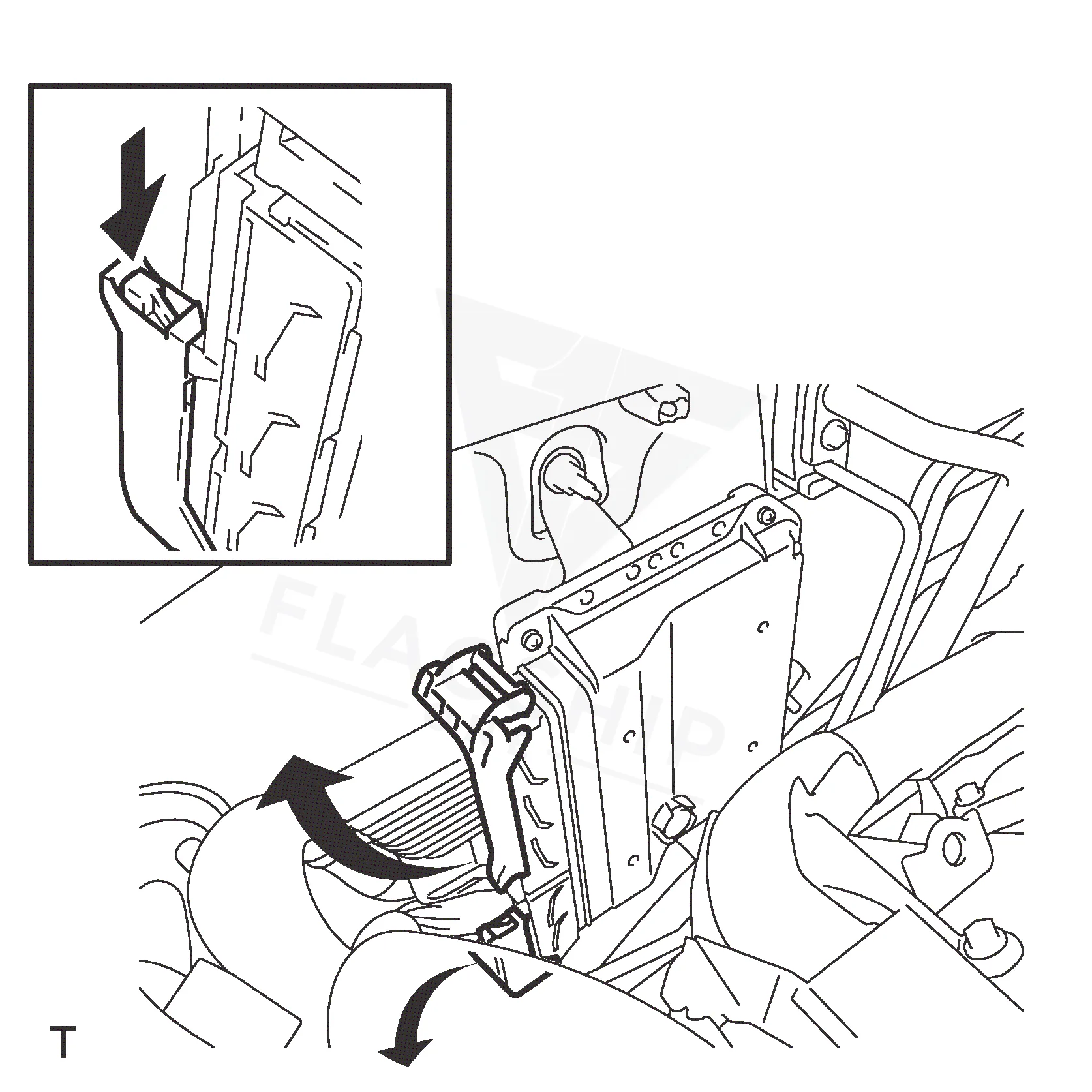
Work with the ignition off, and treat the module as static-sensitive: avoid touching the connector pins at any point.
| Operation | Configuration | Book Time |
|---|---|---|
| Powertrain Control Module R&R | 2.7L | 1.2 hr |
| Powertrain Control Module R&R | 3.5L | 0.5 hr |
| Engine Control Module Relearn | All configurations | 0.5 hr |
| Engine Control Module R&R | 2.7L | 1.2 hr |
| Engine Control Module R&R | 3.5L | 0.5 hr |
Toyota specifies that whenever the ECM is replaced, a Vehicle Identification Number (VIN) registration procedure must be performed. This process writes the vehicle’s unique VIN into the new module so that it can communicate correctly with the immobilizer system and other networked control units. Additionally, the factory caution notes that disconnecting the negative battery cable—a necessary step during replacement—may require initialization of certain systems after the cable is reconnected. These post-installation steps normally demand a professional-grade scan tool and access to Toyota’s technical software. However, when you order from Flagship One, the replacement ECM arrives already programmed with your VIN and immobilizer data. This means the VIN registration is complete before the module ever ships, and the system initialization concerns are minimized because the module is pre-configured to your vehicle. a pre-programmed ECM from Flagship One eliminates the need for dealer-level tools and the associated labor costs, allowing you to simply install the unit and drive.
A failing ECM in the 2013 Toyota Venza 2.7L often produces symptoms that can be mistaken for other problems. You may experience an intermittent crank-but-no-start condition where the engine turns over but never fires. Stalling can occur at idle or while driving, sometimes without any warning. The check engine light will typically illuminate, and a scan tool may reveal a internal processor fault—a code that specifically indicates the ECM’s own self-diagnostics have detected a processor error. Other possible signs include rough idling, misfire-like behavior, poor fuel economy, and transmission shifting irregularities because the ECM and transmission control module share data. In some cases, a scan tool may fail to communicate with the vehicle at all, pointing to a completely dead module. Because the ECM controls so many critical functions, these symptoms can appear suddenly and worsen over time. If you notice any combination of these issues and retrieve a P0606 code, the ECM is the likely root cause and should be addressed promptly to avoid being stranded.
The 2013 Toyota Venza 2.7L ECM can log specific internal fault codes when its processor or memory fails. The most commonly documented code for this vehicle is P0606, which indicates an internal control module processor fault. This code often means the module cannot be repaired and must be replaced. Below is the full list of known ECM-internal trouble codes for this vehicle.
| Code | Meaning | Full Guide |
|---|---|---|
| P0606 | Module processor failure | Full P0606 guide → |
Common symptoms include a no-start condition, stalling, rough idle, and a check engine light with code P0606. You may also experience poor fuel economy or transmission shifting problems.
Yes, Toyota requires VIN registration after installing a new ECM. However, a pre-programmed unit from Flagship One arrives with your VIN and immobilizer data already loaded, so no additional programming is needed.
The book time for ECM replacement is 1.2 hours. The only access step is disconnecting the negative battery cable, so a skilled DIYer can complete the job in about that time.
P0606 indicates an internal ECM processor fault. It means the module’s own self-checks have failed, and the ECM typically needs to be replaced.
It is not recommended. The vehicle may stall or fail to start, leaving you stranded. Address the issue promptly to avoid safety risks.
When your Venza’s ECM fails, you have two main paths: a dealer replacement that requires towing, programming, and a long wait, or a pre-programmed unit from Flagship One that arrives ready to install. For the 2013 Venza 2.7L, the choice is clear—get back on the road faster with a plug-and-play solution that eliminates the need for dealer-level programming tools.
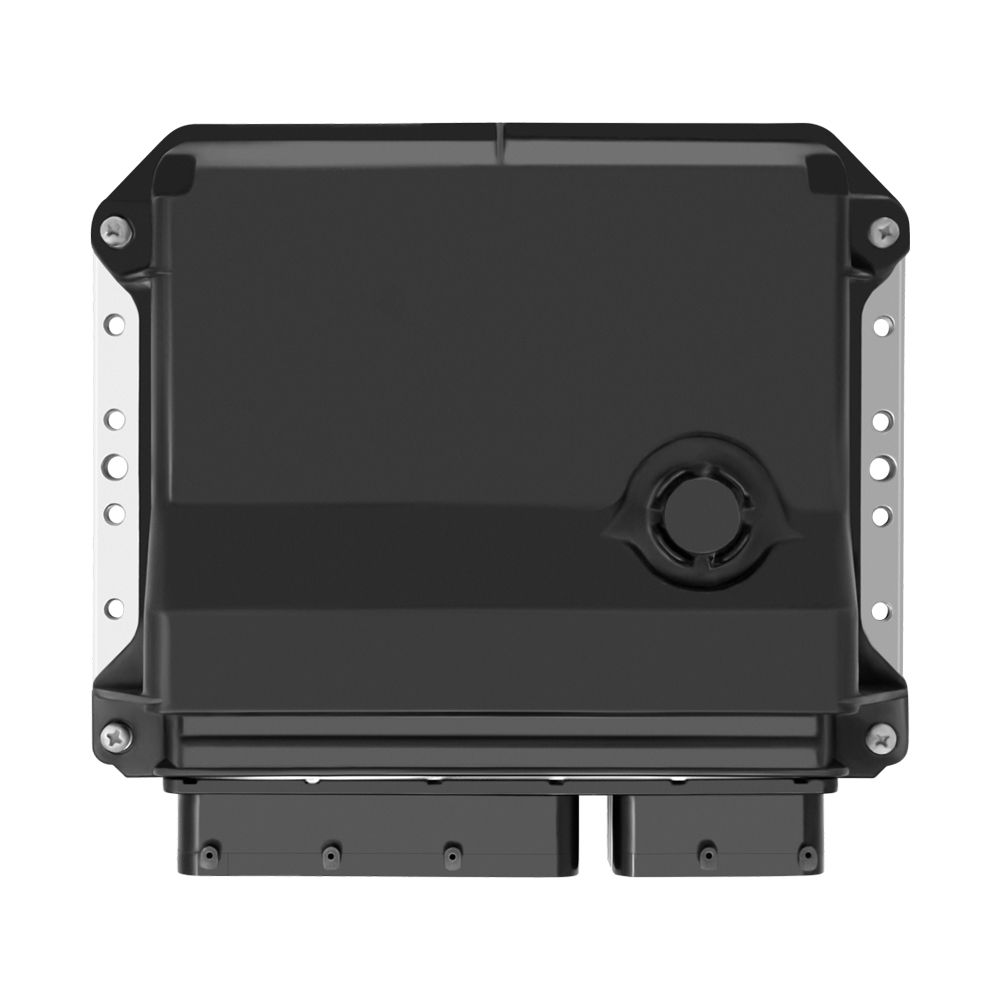
Flagship One stocks a refurbished, VIN-programmed PCM for the 2013 Toyota Venza with a lifetime warranty, free shipping and no core charge. The full Toyota Venza module lineup covers other engine configurations as well.
The 2013 Toyota Venza 2.7L relies on a healthy ECM for reliable operation. When internal faults like P0606 appear, prompt replacement is essential. With a pre-programmed unit, you can avoid the complexity of VIN registration and system initialization, making the repair straightforward. Trust a solution that gets your Venza running again without the dealer delay.