
Last updated on August 25th, 2026 at 11:59 am
The Engine Control Module (ECM) and Powertrain Control Module (PCM) in your 2011 Toyota RAV4 3.5L are the same physical unit. It manages fuel injection, ignition timing, emissions, and transmission shift points. Failure often results from voltage spikes, corrosion, or internal component degradation, triggering codes like P0604 or P0606.
If your 2011 Toyota RAV4 3.5L has suddenly lost communication with a scan tool, stalls intermittently, or illuminates the check-engine light with codes P0604 or P0606, the engine control module may be failing. The ECM (Engine Control Module) and PCM (Powertrain Control Module) are the same component in this vehicle — a single computer that governs fuel delivery, ignition timing, variable valve timing, and transmission shift scheduling. When this module begins to fail, the entire drivetrain can behave erratically. This article explains what the module does, where it is located, what replacement involves using the published labor times, and how a pre-programmed unit from Flagship One can simplify the repair. You will also learn about a relevant service bulletin and practical steps to protect the module from future damage.
The Engine Control Module in your 2011 Toyota RAV4 3.5L is the central computer that interprets sensor inputs and sends commands to actuators. It controls the air-fuel ratio, spark timing, idle speed, and the operation of the electronic throttle body. Because the RAV4 uses a combined ECM/PCM, it also manages transmission shift solenoids and torque converter lockup. The module relies on a stable 12-volt supply and clean ground connections to function correctly. A voltage spike from a failing alternator or a jump-start can damage internal circuits, leading to memory corruption or processor failure. The module stores adaptive learning values for fuel trim and transmission shift patterns; when it fails, those values are lost. For this reason, replacement ECMs for the RAV4 must be programmed with the vehicle’s VIN and calibration data. Without proper programming, the engine may run poorly or not start at all. The module also monitors the evaporative emissions system; a related service bulletin addresses a specific EVAP fault that can turn on the MIL.
2011 Toyota RAV4 3.5L
OEM programmed ECM for your 2011 Toyota RAV4 3.5L — plug & play, no dealer visit.
Free shipping · Lifetime warranty
The ECM/PCM in the 2011 Toyota RAV4 3.5L is typically mounted under the hood, near the passenger-side strut tower or on the firewall. Access requires removing the air cleaner assembly and possibly the battery tray to reach the module and its connectors. According to published labor times, removing and replacing the module carries a book time of 0.8 hours. After installation, a relearn procedure is necessary to synchronize the module with the vehicle’s systems; that procedure is listed at 0.5 hours. The relearn involves a specific sequence of ignition cycles and throttle movements to allow the module to recalibrate idle and throttle position. No torque values for the mounting bolts or connector fasteners are provided in the available data, so follow the factory repair manual for exact specifications.
| Operation | Configuration | Book Time |
|---|---|---|
| Engine Control Module Relearn | All configurations | 0.5 hr |
| Engine Control Module R&R | All configurations | 0.8 hr |
| Powertrain Control Module R&R | All configurations | 0.8 hr |
| Powertrain Control Module Relearn | All configurations | 0.5 hr |
After installing a new or used ECM/PCM in the 2011 RAV4 3.5L, the factory procedure requires a relearn that takes 0.5 hours. This relearn typically involves turning the ignition on, waiting, then starting the engine and allowing it to idle while the module adapts to the throttle body and transmission. Some versions also require a road test to complete shift adaptation. Flagship One supplies a VIN-programmed replacement unit that arrives with the correct calibration already loaded. This means the 0.5-hour relearn step is already completed at the factory, so you can install the module and start the engine without additional programming equipment. The module is ready to communicate with all vehicle systems immediately.
A failing ECM/PCM in the 2011 Toyota RAV4 3.5L can produce a range of symptoms. The engine may crank but not start, or it may start and stall after a few seconds. You might notice erratic idle speed, hesitation during acceleration, or the transmission shifting harshly or at the wrong times. The check-engine light often illuminates with codes that are not related to a specific sensor, such as internal control module RAM fault. Another common code is P0606, which indicates a processor fault inside the module. The scan tool may fail to communicate with the ECM altogether, or it may show unrealistic sensor readings. In some cases, the vehicle enters a limp-home mode with reduced power and a fixed shift pattern. These symptoms can also be caused by wiring or connector issues, so always inspect the harness and grounds before condemning the module.
The following trouble codes are documented as module-internal faults for the 2011 Toyota RAV4 3.5L. These codes indicate a problem within the ECM/PCM itself rather than a sensor or actuator circuit.
| Code | Meaning | Full Guide |
|---|---|---|
| P0604 | Internal RAM error | Full P0604 guide → |
| P0606 | Module processor failure | Full P0606 guide → |
Toyota issued service bulletin T-SB-0046-10 Rev1 for 2006-2011 RAV4 models. This bulletin addresses a MIL-on condition caused by fuel entering the evaporative emissions system. The repair involves inspecting the EVAP canister and related hoses for liquid fuel contamination. If fuel is found, the canister and possibly the vent valve must be replaced. This bulletin does not directly relate to ECM failure, but a faulty EVAP system can generate codes that may be misdiagnosed as a module problem. Always check for this bulletin when diagnosing a check-engine light on a 2011 RAV4 3.5L.
| Bulletin | Subject | What It Addresses |
|---|---|---|
| T-SB-0046-10 Rev1 | T-SB-0046-10 Rev1: 06-11 RAV4: MIL “ON” – Fuel in EVAP System | — |
Yes, the physical swap is straightforward and the book time is only 0.8 hours. However, the module must be programmed to your vehicle’s VIN. A pre-programmed unit from Flagship One eliminates that step, making it a DIY-friendly repair.
The relearn typically requires turning the ignition on for a set time, then starting the engine and letting it idle until the idle stabilizes. Some procedures also include a short road test. Flagship One modules arrive with the relearn already performed.
A used ECM must be reprogrammed with your vehicle’s VIN and calibration data. Without that, the module may not communicate with the immobilizer or transmission. A pre-programmed unit is a more reliable option.
Check for power and ground at the ECM connector. If the module has power and ground but does not communicate with a scan tool, the ECM is likely faulty. Also inspect the harness for chafing or corrosion near the battery tray.
Yes, the bulletin covers 2006-2011 RAV4 models. It addresses a MIL-on condition caused by fuel in the EVAP system. If you have EVAP-related codes, check for liquid fuel contamination before replacing the ECM.
When your 2011 Toyota RAV4 3.5L needs a new ECM or PCM, you have two paths: have a dealer install a blank module and perform the 0.5-hour relearn, or choose a refurbished unit that arrives pre-programmed. Flagship One offers VIN-programmed modules for the RAV4, so the relearn is already done. This saves labor time and gets your vehicle back on the road faster, with no special tools required.
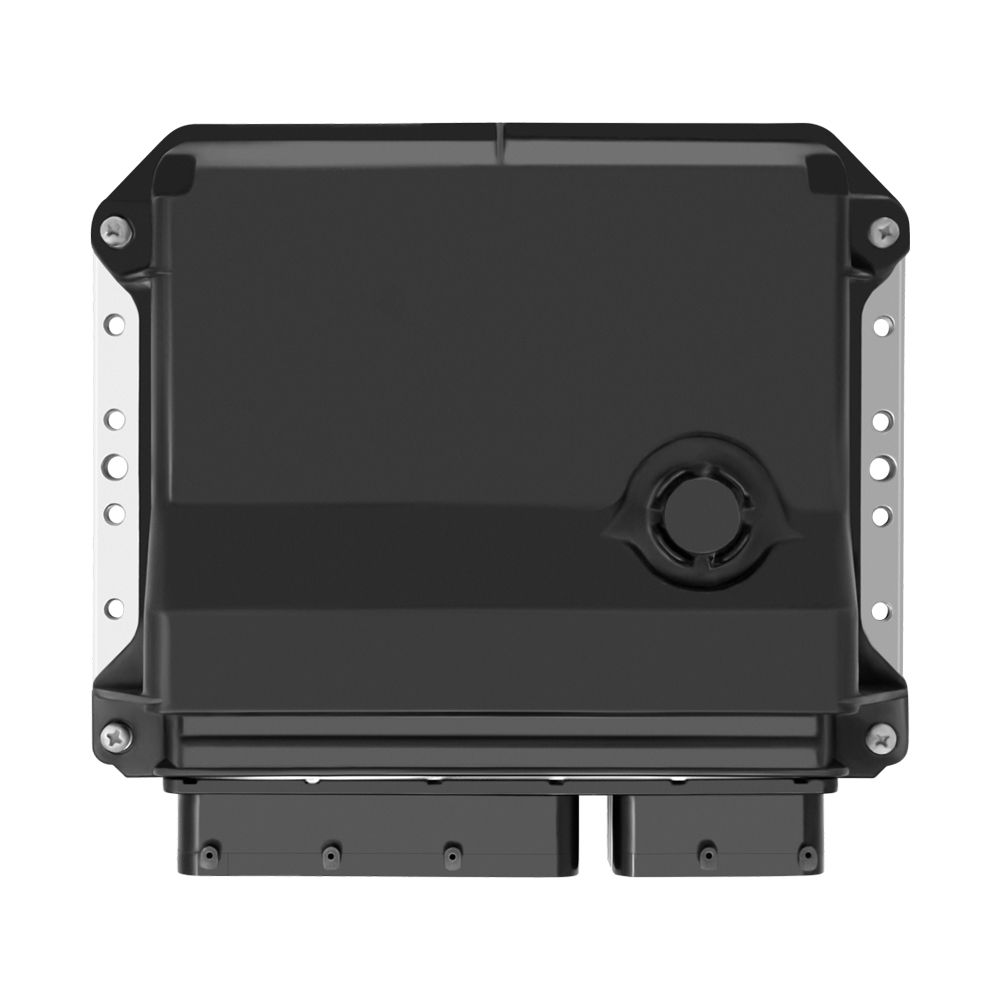
Flagship One stocks a refurbished, VIN-programmed PCM for the 2011 Toyota RAV4 with a lifetime warranty, free shipping and no core charge. The full Toyota RAV4 module lineup covers other engine configurations as well.
The ECM/PCM in your 2011 Toyota RAV4 3.5L is a critical component that controls engine and transmission operation. When it fails, symptoms like no-start, stalling, or codes P0604 and P0606 can appear. Replacement is straightforward with a 0.8-hour book time, and a pre-programmed unit from Flagship One eliminates the 0.5-hour relearn. Address any related service bulletins and protect the module with good electrical system habits.