
Last updated on August 25th, 2026 at 12:03 pm
The Engine Control Module in your 2005 Toyota Sienna serves as the central computer managing the 3.3L engine and electronically controlled transmission. This unit processes data from numerous sensors to optimize performance, fuel economy, and emissions. Common failure causes include voltage spikes, heat damage, moisture intrusion, and age-related component degradation.
Discovering a drivability problem in your 2005 Toyota Sienna and tracing it to the engine control module can feel overwhelming. The ECM represents the nerve center of your minivan’s powertrain, handling everything from fuel injection timing to transmission gear selection. When this computer fails, your vehicle may exhibit a wide range of symptoms that seem unrelated, making diagnosis challenging without proper information. This guide explains how the Sienna’s control module operates, where it is mounted, what symptoms point toward module failure, and what the replacement process entails. You will understand the labor operations involved, the programming requirements after installation, and how replacement modules from suppliers like Flagship One arrive ready to install. By the end, you will have the knowledge to make informed decisions about repair options, whether you are pursuing dealer service or independent shop work.
The Engine Control Module in your 2005 Toyota Sienna functions as the primary computer responsible for managing the 3.3L V6 engine and the electronically shifted automatic transmission. This integrated design consolidates what some manufacturers separate into distinct components, meaning one physical unit handles both powertrain functions. The module receives continuous data streams from the mass airflow sensor, throttle position sensor, oxygen sensors, crankshaft position sensor, and numerous other inputs. It processes this information against stored calibration tables to determine optimal fuel delivery, ignition timing, variable valve timing activation, and transmission shift points.
Because this computer interfaces directly with transmission controls, its location inside the passenger compartment provides some protection from engine bay heat but places it near climate control actuators and wiring that may carry moisture. replacement engine computers for the Sienna often fail due to internal component degradation from sustained heat exposure over years of service. The module controls fuel injector pulse width, spark advance, torque converter clutch engagement, and gear ratio selection. Without proper signals from this computer, the 3.3L engine cannot maintain stable idle speed, the transmission cannot execute smooth gear changes, and emission control systems cannot function within acceptable parameters. When this computer malfunctions, the result typically involves multiple interrelated symptoms rather than a single isolated problem.
The module also manages the Sienna’s cruise control, electric cooling fan operation, and evaporative emission system purge functions. Its internal processors execute millions of calculations per second to maintain optimal operation under varying loads, temperatures, and driving conditions. The design philosophy behind this integration aims to reduce component count while improving powertrain coordination, though it means the failure of one component affects both engine and transmission behavior simultaneously.
2005 Toyota Sienna
OEM programmed ECM for your 2005 Toyota Sienna — plug & play, no dealer visit.
Free shipping · Lifetime warranty
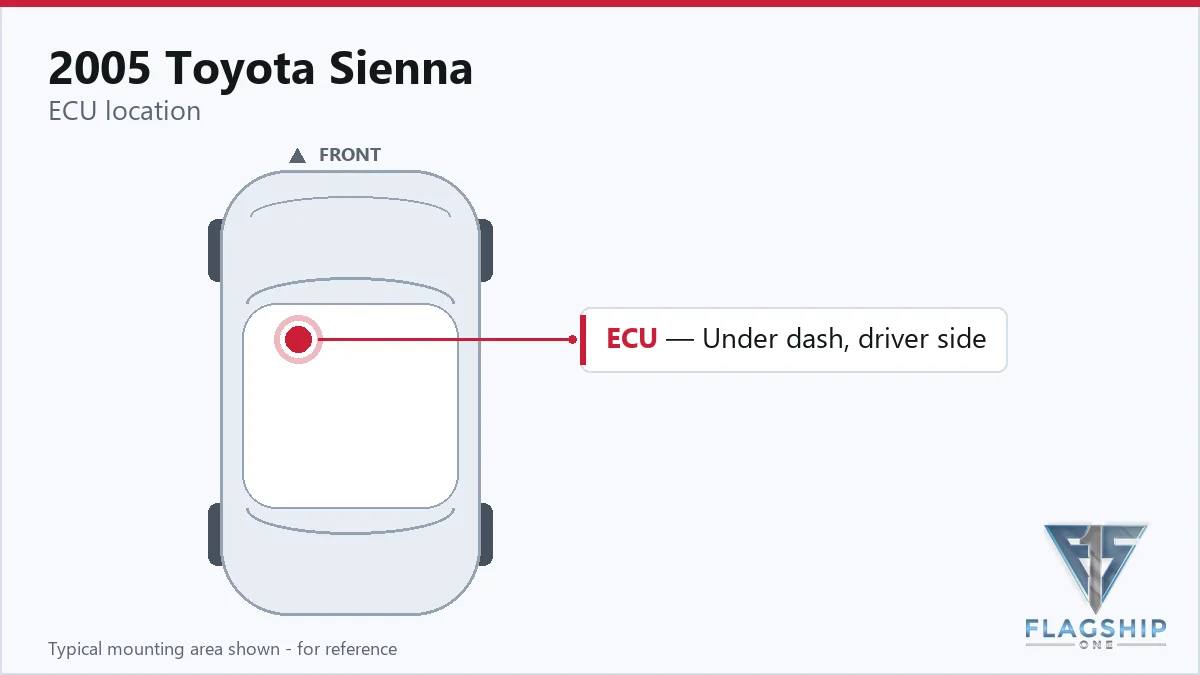
The engine ECU for your 2005 Toyota Sienna sits behind the instrument panel, a location specified in the factory wiring documentation. This placement positions the module away from direct engine heat but within reach of the main wiring harness that runs through the firewall. Accessing this component requires working through the driver’s side footwell area, typically involving removal of the lower dashboard panel and any associated trim pieces.
The replacement process involves disconnecting the vehicle battery before beginning work, a critical safety step that prevents short circuits and protects the new module from voltage spikes. Once you gain access, electrical connectors detach from the module, mounting hardware releases, and the old unit slides free. Installation reverses this sequence with the new module secured using the original fasteners and all connectors firmly seated.
Labor estimates for this work follow industry-standard book times. The R&R operation for the Engine Control Module requires 0.6 hours, while removal and installation of the Powertrain Control Module variant requires 0.8 hours. These times reflect the physical exchange of components and do not include additional procedures needed afterward. Your technician will need to route wiring harness connections properly and ensure no fasteners were overlooked during reinstallation. The instrument panel must be reassembled carefully to prevent rattles or misaligned trim pieces.
| Operation | Configuration | Book Time |
|---|---|---|
| Engine Control Module Relearn | All configurations | 0.5 hr |
| Engine Control Module R&R | All configurations | 0.6 hr |
| Powertrain Control Module R&R | All configurations | 0.8 hr |
| Powertrain Control Module Relearn | All configurations | 0.5 hr |
After installing a replacement control module in your 2005 Toyota Sienna, the vehicle requires a relearn procedure to calibrate the new computer to your specific drivetrain. This process involves specialized diagnostic equipment that connects to the module through the data link connector. The procedure teaches the new computer your engine’s unique sensor characteristics and transmission clutch adaptive values. Without completing this step, the vehicle may exhibit poor idle quality, suboptimal fuel economy, and rough shift quality until the module eventually adapts through normal driving cycles.
The factory-specified relearn operation for the Engine Control Module requires 0.5 hours, and the same duration applies for the Powertrain Control Module procedure. These times represent the minimum shop estimate when a technician follows documented procedures using proper equipment. Some vehicles may require additional adjustment cycles depending on specific conditions encountered during the relearn process.
Units supplied by Flagship One arrive already configured with the correct VIN and vehicle-specific programming data. This means the initial factory flashing step that dealerships perform has been completed before the part reaches your installer. a VIN-programmed replacement unit eliminates waiting for software updates during installation. However, the relearn procedure remains mandatory because each individual vehicle needs to teach its new computer the specific operating parameters of its own engine and transmission components.
Control module failure in your 2005 Toyota Sienna typically announces itself through multiple drivability concerns that develop gradually or appear suddenly depending on the failure mode. Hard-starting represents one of the most common complaints, where the engine cranks normally but fails to fire, sometimes requiring several attempts before running. Once running, the engine may stall unexpectedly at idle or during deceleration, creating potentially dangerous situations in traffic.
Poor idle quality manifests as irregular engine speed, shaking, or stumbling that intensifies when electrical accessories activate. The check engine light often illuminates, sometimes accompanied by a transmission warning indicator. Drivers frequently report hesitation during acceleration and reduced power output when climbing hills or carrying cargo. The automatic transmission may exhibit harsh shifts, delayed engagement from park to drive, failure to shift into higher gears, or refusal to shift at all.
Scan tool communication sometimes becomes impossible because a failed module cannot respond to diagnostic requests. Other times, the tool connects but returns fault codes pointing to processor or memory problems within the module itself. Fuel economy often drops noticeably as the engine runs outside optimal parameters. MEMORY CHECKSUM ERROR fault codes indicate internal data corruption that cannot be corrected through normal troubleshooting procedures, pointing toward module replacement rather than repair.
In severe cases, the engine may not start at all, or the transmission may lock into a single gear, forcing the vehicle to operate in a severely restricted mode. Electrical system irregularities sometimes accompany module failure, though these typically represent consequences rather than causes of the primary problem.
The physical replacement requires mechanical skill and access to the instrument panel area. The relearn procedure afterward requires professional diagnostic equipment that communicates with the module through the OBD-II port. While some mechanically inclined owners attempt the physical swap, the programming and relearn steps typically require dealer or shop involvement.
A replacement module without the correct VIN programming will not communicate properly with your vehicle’s other control systems. Your Sienna may fail to start, run poorly, or trigger multiple fault codes. Units from reputable suppliers like Flagship One arrive pre-programmed, but the relearn procedure must still be performed to allow the computer to adapt to your specific vehicle.
The relearn procedure allows the new module to calibrate itself to the unique characteristics of your vehicle’s engine and transmission. Each drivetrain has slightly different wear patterns, sensor outputs, and operating characteristics. The relearn process captures this specific data so the computer can optimize fuel delivery, ignition timing, and transmission shift points for your particular vehicle.
The Engine Control Module handles engine functions while the Powertrain Control Module terminology sometimes applies to units that integrate transmission control with engine management. On your Sienna, these functions are combined into one physical unit, though labor operations distinguish between ECM-specific and PCM-specific procedures in factory documentation.
Physical replacement of the module requires 0.6 to 0.8 hours depending on which labor operation your service manual specifies. The mandatory relearn procedure adds 0.5 hours. Most shops schedule approximately 2 to 3 hours total, allowing some buffer for diagnostic confirmation, connector inspection, and verification of proper operation afterward.
Choosing between repair options for your 2005 Toyota Sienna involves weighing cost against long-term reliability. Dealer-sourced replacement modules carry premium pricing and may require scheduling appointments well in advance. Remanufactured units from suppliers like Flagship One offer significant savings while providing pre-programmed components that simplify installation. Your Sienna’s integrated powertrain control design means the module affects both engine and transmission behavior, making reliable replacement critical for consistent performance. Whether you pursue dealer service or independent repair, understanding the relearn procedure requirement helps you evaluate quotes accurately and avoid surprises during the repair process.
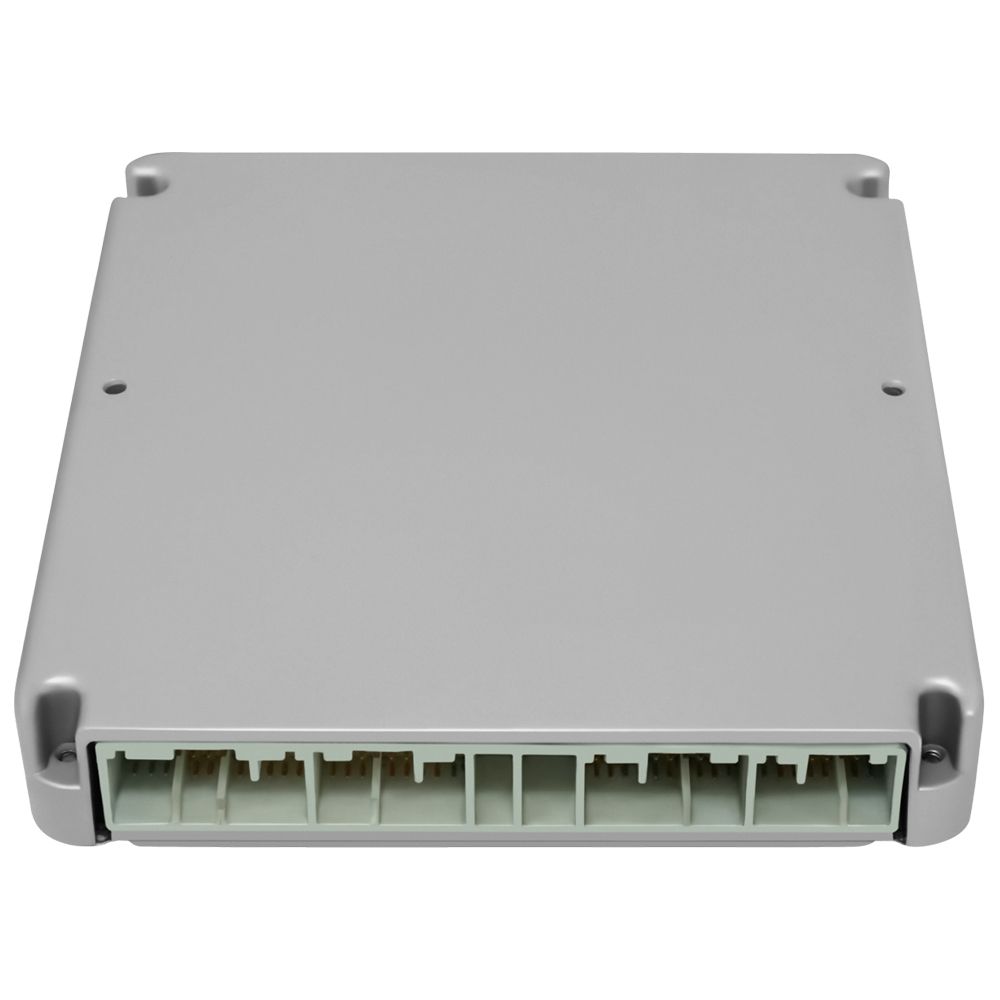
Flagship One stocks a refurbished, VIN-programmed PCM for the 2005 Toyota Sienna with a lifetime warranty, free shipping and no core charge. The full Toyota Sienna module lineup covers other engine configurations as well.
The 2005 Toyota Sienna relies on its engine control module to coordinate the 3.3L powertrain, making module failure a serious concern that affects daily drivability. Understanding the location behind the instrument panel, the book labor times involved, and the mandatory relearn procedure prepares you for informed conversations with repair professionals. Flagship One supplies replacement modules programmed specifically for your Sienna, reducing installation complexity while maintaining quality standards. Prompt attention to symptoms helps prevent complete failure and potentially costly tow bills or secondary damage to related components.