
Last updated on August 25th, 2026 at 12:03 pm
The powertrain control module in the 2005 Toyota Sequoia manages critical engine and transmission operations, regulating fuel delivery and ignition timing. When this computer fails, it often causes stalling, no-start conditions, or erratic shifting, leaving your vehicle undrivable and requiring prompt diagnosis and replacement to restore proper operation.
When your 2005 Toyota Sequoia begins experiencing drivability issues such as stalling, harsh shifting, or a complete no-start condition, the powertrain control module may be at fault. This critical computer orchestrates how your engine and transmission work together, and when it malfunctions, the effects are immediately noticeable. Understanding what this module does, how to identify its failures, and what replacement entails can save you time and unnecessary frustration during the repair process. Many Sequoia owners find themselves uncertain about whether their symptoms point to a module problem or a separate issue entirely. The distinction matters because replacing the unit involves specific programming steps that must be completed before your vehicle will run correctly again. Knowing the labor times, the relearn requirements, and the common failure patterns helps you make informed decisions about whether to pursue repair or replacement. This guide walks through the role the module plays in your Toyota, where it sits under the hood, what symptoms typically accompany its failure, and how the replacement and programming process works. By the end, you will have a clear understanding of what the job requires and what to expect from a properly functioning unit.
Engine computer (ECM/PCM)
OEM programmed replacements — plug & play, no dealer visit.
Find yours by year, make & model →
Free shipping · Lifetime warranty
In the 2005 Toyota Sequoia, the powertrain control module serves as the central brain coordinating engine performance and transmission behavior. This computer continuously processes input from dozens of sensors throughout your vehicle, adjusting fuel injector pulse width, ignition timing, and shift points to maintain efficient and smooth operation. The module ensures your engine delivers appropriate power while meeting emissions standards, and it governs how the automatic transmission shifts through its gears under various driving conditions. Without a properly functioning unit, your Sequoia cannot regulate these interdependent systems, leading to noticeable performance degradation or complete inability to operate. When this component fails, owners often explore replacement Sequoia PCM units to restore proper vehicle function without paying dealership prices. The module also stores diagnostic trouble codes that help technicians pinpoint specific failures, making it an essential part of the onboard diagnostics system. Because it controls both engine and transmission calibration simultaneously, any disruption to its internal programming or circuitry typically affects multiple vehicle systems at once. This integrated design means that symptoms rarely remain isolated to a single subsystem, which is why a failing module can produce such a wide and confusing array of drivability complaints. Understanding the module’s role helps clarify why replacement requires careful attention to programming, as the new unit must be configured to communicate properly with your vehicle’s other systems and learn the specific characteristics of your engine and transmission over the initial drive cycles.
Replacing the powertrain control module on a 2005 Toyota Sequoia involves removing the old unit and installing the replacement, with book time for the removal and installation procedure listed at 0.5 hours. This labor time reflects the physical process of accessing, unfastening, and swapping the component. The same 0.5-hour book time applies whether you are handling the engine control module or the powertrain control module specifically. During installation, care must be taken to ensure all electrical connectors seat fully and latch securely, as poor connections can mimic module failure symptoms. The connector pins should be inspected for corrosion or bent terminals before the new unit plugs in. Because the module communicates with nearly every major system in your Sequoia, a clean and proper physical connection is essential for reliable operation. Once the replacement module is secured and all harnesses are reconnected, the vehicle must undergo relearn procedures before it will perform correctly. The relearn process carries its own book time of 0.5 hours, and this step cannot be skipped or the engine and transmission will not adapt to proper operating parameters.
| Operation | Configuration | Book Time |
|---|---|---|
| Engine Control Module Relearn | All configurations | 0.5 hr |
| Engine Control Module R&R | All configurations | 0.5 hr |
| Powertrain Control Module R&R | All configurations | 0.5 hr |
| Powertrain Control Module Relearn | All configurations | 0.5 hr |
After installing a replacement powertrain control module in the 2005 Toyota Sequoia, the factory procedure requires a relearn process that books at 0.5 hours of labor time. This relearn step is essential because a brand-new or freshly flashed module arrives without the adaptive data your specific vehicle has accumulated over thousands of miles of driving. The engine control module relearn similarly requires 0.5 hours, meaning both the powertrain and engine modules have their own dedicated relearn procedures if both are being addressed. During the relearn, the module reestablishes idle characteristics, fuel trim values, and transmission shift adaptives so your Sequoia runs smoothly across all operating conditions. Skipping this step typically results in rough idling, poor acceleration, and erratic shifting until the module eventually relearns on its own over an extended period. Choosing a pre-programmed replacement unit from Flagship One eliminates these concerns entirely, because each unit arrives already programmed with your vehicle identification number and the necessary calibration data. This means the relearn procedure is already accounted for, allowing your Sequoia to start and run properly immediately after installation without additional dealership visits.
When the powertrain control module begins failing in a 2005 Toyota Sequoia, the symptoms often manifest across multiple vehicle systems simultaneously because the unit governs both engine and transmission operation. One of the most common complaints is a no-start condition where the engine cranks but refuses to fire, leaving you stranded. Other owners report intermittent stalling, particularly at idle or when coming to a stop, which can be dangerous in traffic. Misfire codes frequently appear on diagnostic scanners, even though the spark plugs and ignition coils may test fine, because the module fails to properly control ignition timing and fuel delivery. Rough or uneven idling is another telltale sign, as the computer struggles to maintain consistent injector pulse width at low engine speeds. Transmission-related symptoms often accompany engine issues, including harsh or delayed shifts, slipping between gears, or the transmission refusing to shift out of a default limp-home gear. In some cases, the check engine light illuminates and remains on despite no apparent drivability issue, while in other instances the light may flash or cycle intermittently as the module intermittently loses communication. Dead communication with a scan tool when attempting to read codes is a strong indicator that the module itself has lost internal power or processing capability. You may also notice decreased fuel economy, as the failing unit cannot maintain optimal air-fuel ratios, causing the engine to run richer than intended. Some Sequoia owners experience hesitation or surging during acceleration, which occurs when the module cannot properly coordinate throttle position with transmission load signals.
The book time for powertrain control module removal and installation is 0.5 hours. An additional 0.5 hours is allocated for the relearn procedure, which must be completed after the new module is installed.
Yes, the factory procedure mandates a relearn process after replacing the powertrain control module. This relearn books at 0.5 hours and allows the new unit to adapt idle characteristics, fuel trims, and transmission shift points to your specific vehicle.
It depends on the severity of the failure. If the vehicle still starts and runs, you may be able to drive short distances, but symptoms like stalling, harsh shifting, or no-start conditions make driving unsafe. Prompt diagnosis and replacement are recommended.
Both relearn procedures book at 0.5 hours each. The engine control module relearn focuses on idle and fuel adaptation, while the powertrain control module relearn encompasses both engine and transmission calibration parameters.
No, Flagship One units arrive already programmed with your vehicle identification number and the necessary calibration data. This eliminates the need for dealership programming and the associated relearn procedure, allowing your Sequoia to operate properly right after installation.
Deciding between repairing your existing module or opting for a refurbished replacement depends on the nature of the failure and your timeline. Internal circuit board damage often cannot be reliably repaired, making a pre-programmed replacement the more dependable path for your 2005 Toyota Sequoia. A refurbished unit that arrives ready to install saves both the dealership programming cost and the vehicle downtime associated with relearn procedures.
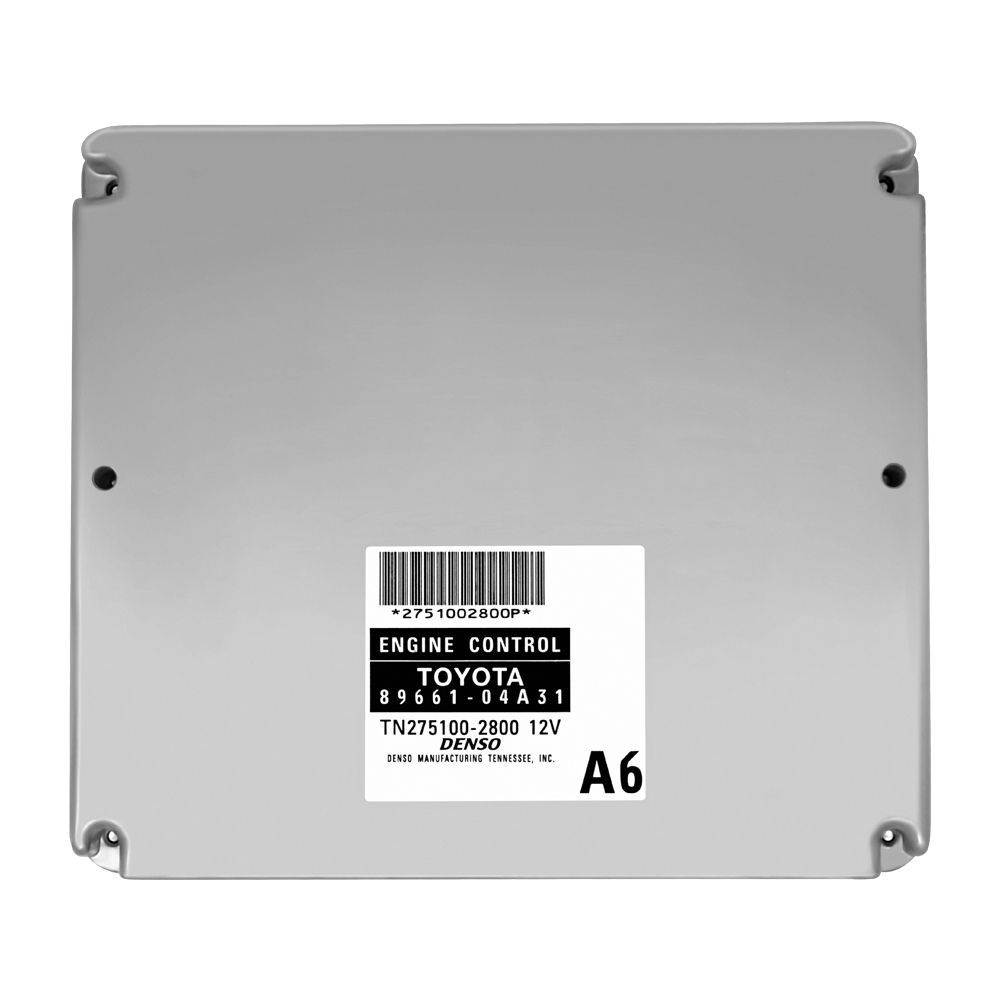
Flagship One stocks a refurbished, VIN-programmed PCM for the 2005 Toyota Sequoia with a lifetime warranty, free shipping and no core charge. The full Toyota Sequoia module lineup covers other engine configurations as well.
The 2005 Toyota Sequoia relies on its powertrain control module to keep engine and transmission systems working in harmony. Recognizing the symptoms of failure and understanding the replacement process empowers you to address the issue confidently. Whether you choose a refurbished unit or explore other options, ensuring the replacement is properly programmed is essential. Consider a pre-programmed solution to get your Sequoia back on the road without the hassle of additional dealership visits.