
Last updated on August 25th, 2026 at 12:05 pm
The engine control module in your 2001 Toyota Sequoia manages fuel injection, ignition timing, and emissions systems. Heat cycles, voltage spikes, or internal solder joint fatigue may degrade this unit over time, often causing driveability concerns or complete starting failure when communication with sensors degrades.
When your 2001 Toyota Sequoia develops intermittent stalling or refuses to start, the engine control module may be the underlying issue. This onboard computer coordinates fuel delivery, ignition timing, and emission controls while monitoring sensor data throughout your vehicle. Understanding how this component functions helps you make informed decisions about repair versus replacement. You will learn where the module resides, what labor time to expect during service, and why programming matters for proper operation. The following sections explain factory service procedures, common failure symptoms, and practical steps to protect your investment. Whether you are troubleshooting a no-start condition or planning preventive maintenance, this guide provides specific information tailored to your Sequoia without unnecessary technical jargon or generic advice that might confuse the diagnosis.
The engine control module in your 2001 Toyota Sequoia serves as the central processing unit for powertrain management. It interprets signals from the mass airflow sensor, throttle position sensor, and oxygen sensors to calculate precise fuel injection pulses and ignition advance. The module also controls the automatic transmission shift points and torque converter lockup on your 4.7L V8. When operating normally, this computer maintains optimal air-fuel ratios and emission compliance while storing adaptive fuel trim values. However, internal circuit board degradation or corrupted memory sectors may disrupt these calculations. Installing replacement engine computers for the Sequoia requires careful consideration because the unit must match your specific engine calibration and VIN configuration. Proper function depends on accurate sensor interpretation and reliable voltage regulation, making the module essential for daily drivability and long-term reliability in your specific vehicle.
2001 Toyota Sequoia
OEM programmed ECM for your 2001 Toyota Sequoia — plug & play, no dealer visit.
Free shipping · Lifetime warranty
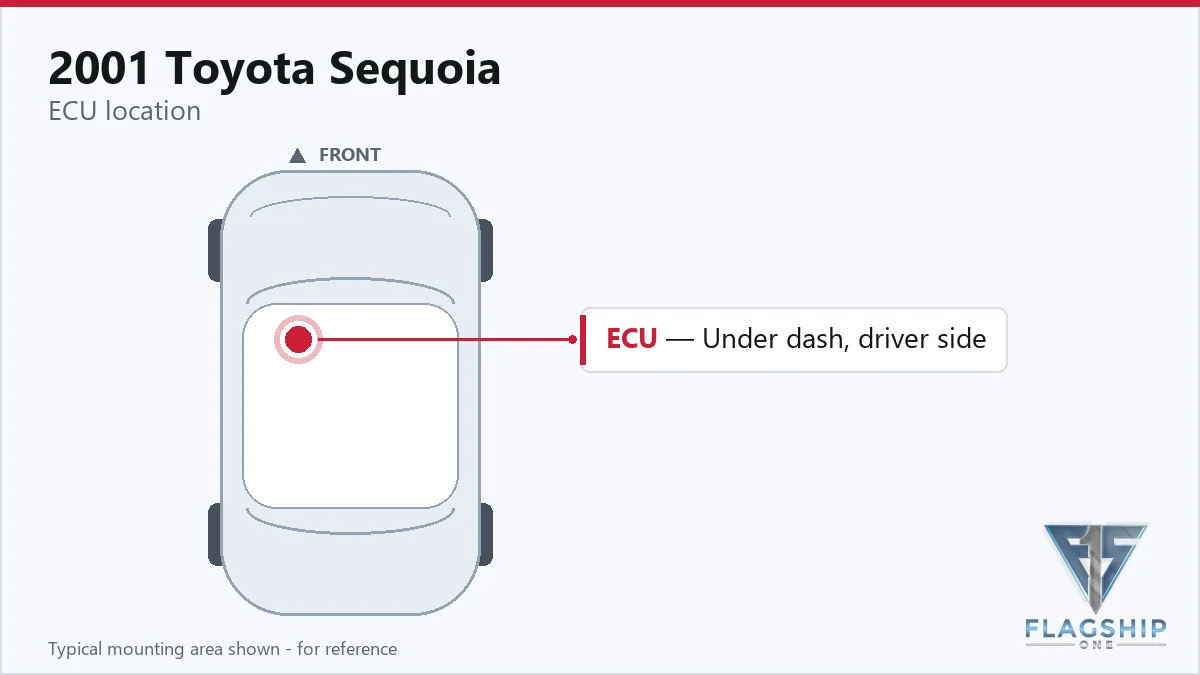
Your 2001 Toyota Sequoia houses the engine ECU within the instrument panel according to factory wiring documentation. Technicians performing service must access this dashboard location to complete removal and replacement tasks. The standard labor allocation for engine control module R&R is 0.5 hours. Following physical installation, the engine control module relearn procedure requires an additional 0.5 hours to complete calibration sequences. For powertrain control module service, R&R similarly requires 0.5 hours. The subsequent powertrain control module relearn also carries a 0.5 hour book time. These published figures represent the specific operations separately rather than combined totals. Service writers typically quote these intervals individually when estimating your repair. The instrument panel mounting position means the unit sits centrally within the vehicle cabin.
| Operation | Configuration | Book Time |
|---|---|---|
| Engine Control Module Relearn | All configurations | 0.5 hr |
| Engine Control Module R&R | All configurations | 0.5 hr |
| Powertrain Control Module R&R | All configurations | 0.5 hr |
| Powertrain Control Module Relearn | All configurations | 0.5 hr |
Toyota factory service bulletins SS002-01 and SS002-07 outline the flash reprogramming procedures required for 2001 through 2008 models. These documents describe the Techstream-based ECU flash reprogramming process necessary when installing certain replacement modules. Typically, shops must perform these steps after hardware installation to ensure proper communication and calibration. However, a VIN-programmed replacement unit arrives with your specific calibration data already installed. This preparation eliminates the need for your technician to execute the factory flash sequence, saving the 0.5 hour relearn time while ensuring immediate compatibility with your Sequoia’s existing systems.
A failing engine control module in your 2001 Toyota Sequoia may produce several distinct drivability concerns. You might experience intermittent stalling at traffic lights or complete no-start conditions where the engine cranks but fails to fire. Rough idle and unexplained misfires on the 4.7L V8 often indicate the computer cannot properly regulate fuel mixture. Automatic transmission shift quality may degrade if the module sends incorrect signals to the shift solenoids. Additionally, your diagnostic scanner may fail to establish communication with the ECU, or the check engine light might illuminate continuously without stored codes. These symptoms typically worsen as internal circuit boards deteriorate, though they may appear intermittently during early failure stages when connections are temperature-sensitive.
Toyota issued technical service bulletin SS002-01 covering ECU flash reprogramming processes for 2001 and later applicable models. This revised document provides updated procedures for calibration updates and software modifications. Additionally, bulletin SS002-07 applies to 2001 through 2008 Toyota vehicles and details the specific Techstream ECU flash reprogramming procedure using factory diagnostic equipment. These bulletins guide technicians through the software update sequence required when replacing or updating engine control modules in your Sequoia. Following these published procedures ensures proper communication between the new module and your vehicle’s existing network architecture.
| Bulletin | Subject | What It Addresses |
|---|---|---|
| SS002-01 | :SS002-01: 2001 & Later Applicable Models: ECU Flash Reprogramming Process (Revised) | — |
| SS002-07 | :SS002-07: 01-08 Applicable Toyota: Techstream ECU Flash Reprogramming Procedure | — |
Factory bulletins SS002-01 and SS002-07 describe flash reprogramming procedures typically required after installation. However, VIN-programmed units arrive with your specific calibration data already installed, eliminating the need for additional dealership programming steps.
The factory wiring guide places the engine ECU within the instrument panel behind the dashboard. Technicians access this location for replacement procedures that book at 0.5 hours for R&R.
Common indicators include intermittent stalling, no-start conditions, rough idle, transmission shift irregularities, and loss of scan tool communication. These issues often worsen as internal circuit boards degrade.
When your 2001 Toyota Sequoia exhibits persistent computer-related drivability issues, you face a choice between repair attempts and replacement. While circuit board repair may address specific solder failures, refurbished replacement units often provide more reliable long-term solutions for this model year. Consider the labor investment of 0.5 hours for installation plus the value of pre-programmed calibration data when evaluating your options. The instrument panel location makes replacement straightforward for qualified technicians.
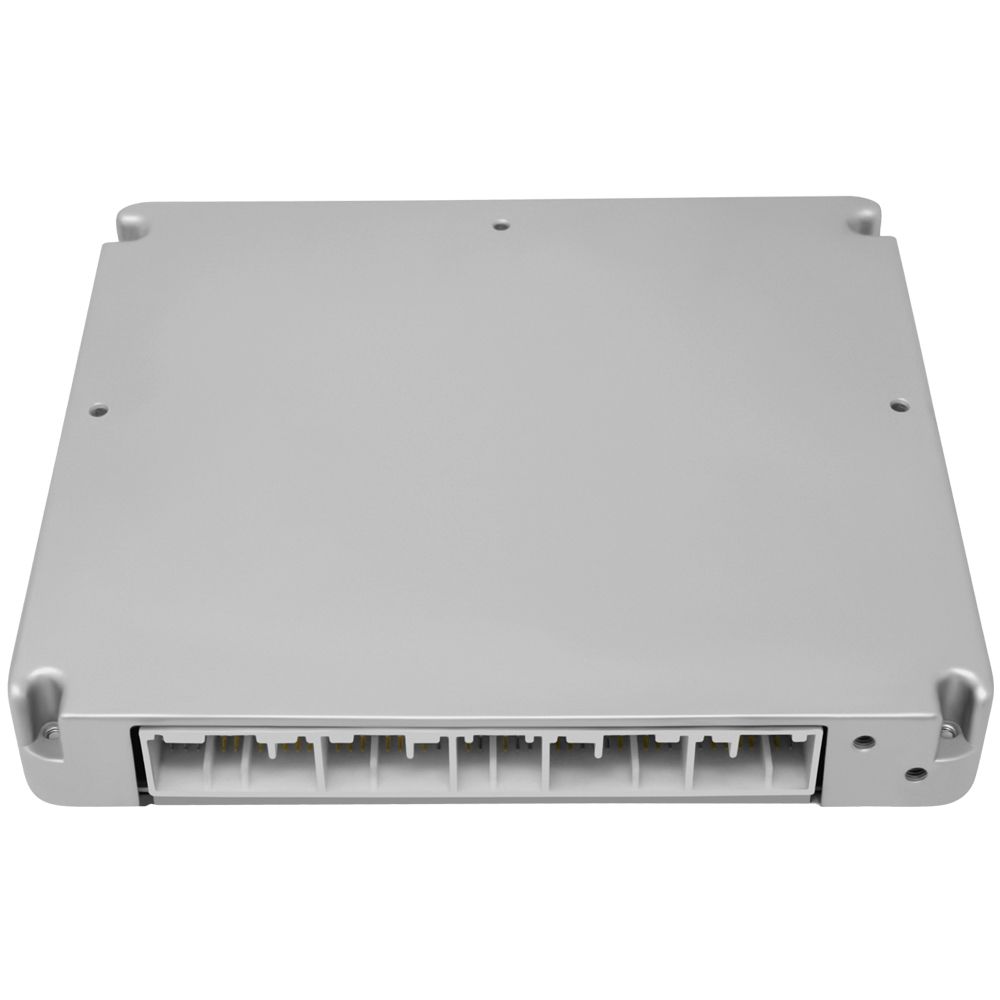
Flagship One stocks a refurbished, VIN-programmed PCM for the 2001 Toyota Sequoia with a lifetime warranty, free shipping and no core charge. The full Toyota Sequoia module lineup covers other engine configurations as well.
Understanding your 2001 Toyota Sequoia engine control module helps you address no-start and drivability concerns effectively. With the unit located in the instrument panel and specific labor times documented, you can plan repairs confidently. Whether addressing current symptoms or preventing future issues, proper attention to this critical computer ensures your full-size SUV maintains reliable performance and proper transmission operation for years to come.