
Last updated on August 25th, 2026 at 12:05 pm
The engine control module in the 2000 Toyota Echo manages critical fuel delivery and ignition timing functions. When this computer fails, it often causes rough running or a complete no-start situation, requiring replacement to restore proper vehicle operation.
When your 2000 Toyota Echo begins to exhibit strange drivability issues, the engine control module often becomes a primary suspect. Many owners find themselves researching this topic after experiencing sudden stalling or an inability to start the engine altogether. Understanding how this critical computer interacts with your vehicle can save you both time and frustration. The engine computer serves as the brain of your Echo, constantly adjusting parameters to keep the 1.5L engine running smoothly. When it malfunctions, the symptoms can easily mimic other mechanical failures, making accurate diagnosis essential before replacing any parts. By learning about the function, location, and replacement procedures for this specific component, you gain the knowledge necessary to make informed repair decisions. You will discover exactly what the module does under the hood, where it is physically located, and what steps are required to get your vehicle back on the road. Furthermore, understanding the programming requirements after installation helps you avoid unexpected shop fees. Whether you are troubleshooting a persistent check engine light or preparing for a module swap, this guide provides the technical details you need to approach the repair with confidence and clarity.
The engine control module in your 2000 Toyota Echo acts as the central processing unit for the entire powertrain management system. It continuously collects data from an array of sensors positioned throughout the engine and exhaust system. Using this real-time information, the computer calculates the precise amount of fuel needed and determines the exact moment to fire the spark plugs. This constant adjustment ensures that the 1.5L engine operates efficiently while meeting emissions standards. Beyond fuel and ignition management, the module also controls the idle speed and monitors various actuators to maintain optimal performance under changing loads. When this unit operates correctly, your Echo delivers reliable and economical transportation. However, internal circuitry can degrade over time due to heat and vibration, leading to incorrect commands being sent to the engine. A failing computer might deliver too much fuel, causing poor mileage and spark plug fouling, or it might restrict fuel entirely, preventing the engine from starting. Diagnosing these issues often points directly to the module itself, especially when mechanical components test normally. Once you determine that the original unit is defective, finding Toyota Echo replacement engine computers becomes the next logical step to restore proper vehicle function. Choosing the correct replacement ensures that all the specific programming and operating strategies match the original factory specifications, allowing your vehicle to run as intended without drivability concerns. Replacing the defective unit with a properly programmed module eliminates the erratic behavior and restores the precise fuel and ignition control your engine requires.
2000 Toyota Echo
OEM programmed ECM for your 2000 Toyota Echo — plug & play, no dealer visit.
Free shipping · Lifetime warranty
Locating the engine control module on your 2000 Toyota Echo typically requires accessing the passenger compartment or engine bay, depending on the specific manufacturing configuration. Because exact physical location details vary and are not universally documented for this specific model year without visual inspection, consulting a service manual for the precise placement is advisable. When it comes to the labor involved in swapping the unit, the process is generally straightforward for an experienced technician. The industry book time for both the engine control module and powertrain control module removal and replacement is listed at 0.5 hours. This timeframe accounts for physically disconnecting the battery, removing the necessary covers or panels to reach the unit, unseating the electrical connectors, and bolting the new component into place. Proper care should be taken when handling the connectors to avoid bending the pins. After physically installing the replacement computer, the vehicle will require specific initialization steps. The book time for the relearn procedure on both the engine and powertrain control modules is also 0.5 hours. This relearn period allows the fresh module to adapt to the specific operating characteristics of your engine and transmission.
| Operation | Configuration | Book Time |
|---|---|---|
| Engine Control Module Relearn | All configurations | 0.5 hr |
| Engine Control Module R&R | All configurations | 0.5 hr |
| Powertrain Control Module R&R | All configurations | 0.5 hr |
| Powertrain Control Module Relearn | All configurations | 0.5 hr |
After installing a new or refurbished engine computer in your 2000 Toyota Echo, the factory procedure dictates that specific initialization steps must be performed. The powertrain control module relearn process typically takes 0.5 hours of labor, while the engine control module relearn also requires 0.5 hours. During this time, the technician must follow a strict sequence of key cycles, idle relearn procedures, and test drives to ensure the new module correctly adapts to the throttle position, idle air control, and fuel trim parameters. Skipping these critical steps often results in erratic idle, harsh shifting, or persistent check engine lights. However, choosing a VIN-programmed replacement unit from Flagship One eliminates the need for these extensive dealership programming procedures. Because the module arrives pre-programmed with your vehicle’s specific identification number and operational data, the complex relearn sequences are already completed. This means you can simply install the unit, start the engine, and drive away without worrying about additional shop fees or lengthy idle relearn processes.
When the engine control module in your 2000 Toyota Echo begins to fail, the vehicle often exhibits a range of noticeable drivability symptoms that can appear gradually or very suddenly. One of the most common indicators is a complete no-start condition, where the engine cranks normally but fails to receive fuel or spark because the computer has stopped communicating with the injectors and coils. In other cases, you might experience intermittent stalling while idling at a traffic light or driving at highway speeds, creating a serious safety concern. Rough idling and persistent misfire codes are also typical, as the failing module struggles to calculate the correct fuel trim or ignition timing, causing the 1.5L engine to run excessively lean or rich. You may also notice a significant drop in fuel economy or sluggish acceleration when pressing the throttle. Another major red flag is the loss of communication with diagnostic scan tools, which prevents mechanics from reading live data or clearing codes. Often, these failures trigger specific diagnostic trouble codes pointing directly to an internal processor fault, such as internal memory checksum failure, indicating the computer can no longer store or verify its own operational software. Transmission shifting issues may also arise if the unit controls both the engine and transmission, leading to harsh or delayed gear changes. Recognizing these symptoms early helps prevent being stranded and ensures accurate diagnosis.
Toyota has issued technical service bulletin number TC002-03, which specifically addresses the ECM Reset Memory Function for the 2000 Toyota Echo and other affected models. This bulletin is relevant for all 2000 through 2005 Toyota vehicles, as well as 2004 and 2005 Scion models. The document outlines the proper procedure for clearing the adaptive memory from the engine control module. When certain drivability repairs are performed, or when a battery is disconnected, the computer may retain corrupted learned values that cause poor engine performance. Following the reset procedure detailed in bulletin TC002-03 ensures the module reverts to its base calibration, allowing it to relearn the correct idle and fuel parameters from a clean slate. Technicians should always reference this specific bulletin when addressing unexplained rough idle or hesitation issues after battery disconnection or module replacement.
| Bulletin | Subject | What It Addresses |
|---|---|---|
| TC002-03 | :TC002-03: ECM Reset Memory Function: All 00-05 Toyota & 04-05 Scion (Revised) | — |
A failing engine computer in the 2000 Toyota Echo often presents as a no-start condition, intermittent stalling, or sudden drops in fuel economy. You may also notice harsh shifting or persistent misfire codes that do not resolve with standard sensor replacements.
The industry book time for physically removing and replacing the engine control module on the 2000 Toyota Echo is 0.5 hours. An additional 0.5 hours is typically allocated for the relearn procedure, ensuring the new module adapts properly to your specific engine parameters.
Installing a used computer from a salvage yard often creates compatibility issues, as the module may be locked to the original vehicle’s immobilizer or calibration data. It typically requires dealership programming to function correctly, whereas a pre-programmed unit eliminates this hassle.
The TC002-03 technical service bulletin outlines the proper procedure for resetting the engine control module memory on your 2000 Toyota Echo. This reset clears corrupted adaptive data, which is often necessary after battery disconnection or when resolving unexplained rough idle conditions.
Yes, the factory procedure requires a relearn process after replacing the powertrain control module, which typically takes 0.5 hours of labor. This step ensures the new computer correctly adapts to the idle characteristics and fuel requirements of your specific 1.5L engine.
Deciding between repairing the original unit or purchasing a refurbished replacement for your 2000 Toyota Echo depends on the severity of the internal damage. While some module failures may be repairable, a pre-programmed replacement often provides a more reliable long-term solution by eliminating the risk of recurring faults. Choosing a unit that is ready for immediate installation ensures your vehicle is back on the road quickly.
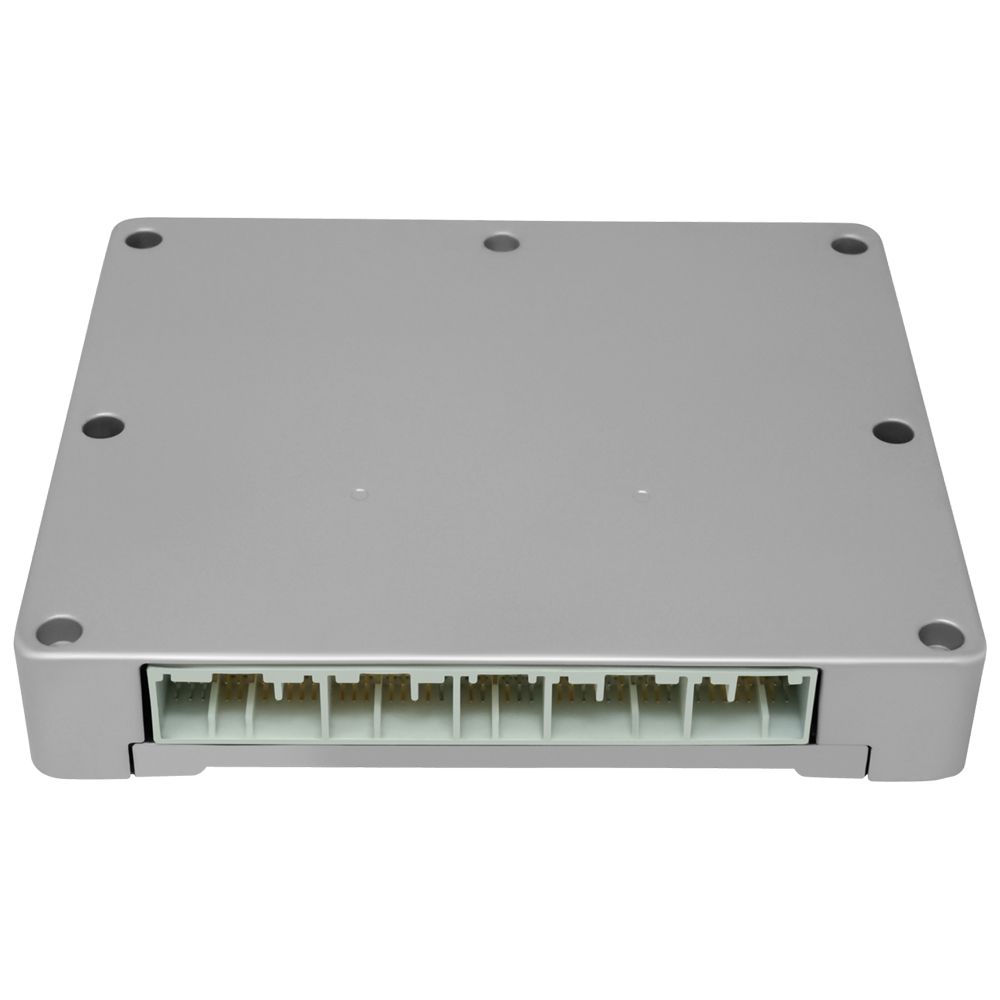
Flagship One stocks a refurbished, VIN-programmed PCM for the 2000 Toyota Echo with a lifetime warranty, free shipping and no core charge. The full Toyota Echo module lineup covers other engine configurations as well.
Addressing engine control module issues in your 2000 Toyota Echo promptly prevents further drivability complications and keeps your vehicle running reliably. By understanding the symptoms, labor times, and necessary relearn procedures, you can approach the repair process with confidence and accuracy. When you are ready to restore your vehicle, selecting a pre-programmed replacement unit ensures a seamless and efficient installation experience.