
Last updated on August 25th, 2026 at 12:05 pm
The powertrain control module in the 2000 Toyota Celica GTS is the central computer that manages fuel delivery, ignition timing, and transmission shift points. When it fails, the engine may crank without starting, stall unexpectedly, or exhibit erratic shifting, often leaving the vehicle undrivable.
When a 2000 Toyota Celica GTS with the 1.8L engine suddenly refuses to start or begins stalling without warning, the powertrain control module often becomes the prime suspect. This compact computer orchestrates nearly every aspect of engine operation, and its failure can mimic a dozen other problems, leading to expensive misdiagnosis. Understanding what the module does, where it lives, and how to replace it correctly can save you from unnecessary parts swapping and repeated trips to the dealer. This guide walks you through the module’s role in your Celica, the symptoms that point to a failing unit, and the straightforward replacement process. You will also learn why a VIN-programmed replacement from Flagship One removes the most intimidating part of the job — the post-installation programming — so you can install the part and drive away without special tools or software.
The powertrain control module in the 2000 Toyota Celica GTS is a sealed electronic unit that acts as the brain for the 1.8L engine and its automatic transmission. It receives real-time data from sensors such as the crankshaft position sensor, mass airflow sensor, throttle position sensor, and oxygen sensors, then uses that information to calculate the ideal air-fuel mixture and spark advance. At the same time, it commands the fuel injectors, ignition coils, and automatic transmission solenoids to deliver smooth acceleration and efficient cruising. Because the module is constantly processing high-speed signals and operating in a hot, vibration-prone environment, internal solder joints, capacitors, or microprocessors can degrade over time. When that happens, the module may send incorrect commands or stop communicating altogether, leading to a range of driveability problems. For Celica GTS owners, a reliable source for replacement engine computers for the Celica is essential to restore factory performance without guesswork.
2000 Toyota Celica GTS
OEM programmed replacements — plug & play, no dealer visit.
Find yours by year, make & model →
Free shipping · Lifetime warranty
The engine control module in the 2000 Toyota Celica GTS is located behind the glove box on the passenger side of the cabin. Access requires removing the glove box assembly to expose the module and its wiring connectors. Factory labor guides allocate 0.6 hours for removal and replacement of the module, which involves disconnecting the battery, releasing the harness connectors, and unbolting the unit from its bracket. Installation follows the reverse order, with careful attention to fully seating the connectors to avoid intermittent contact. After a new module is physically installed, the service information calls for a separate relearn procedure that books at 0.5 hours. This step allows the module to adapt to the vehicle’s specific sensors and actuators, but it typically requires a Toyota-compatible scan tool to initiate.
| Operation | Configuration | Book Time |
|---|---|---|
| Engine Control Module Relearn | All configurations | 0.5 hr |
| Engine Control Module R&R | All configurations | 0.6 hr |
| Powertrain Control Module R&R | All configurations | 0.6 hr |
| Powertrain Control Module Relearn | All configurations | 0.5 hr |
Toyota’s factory procedure for the 2000 Celica GTS specifies that after a new powertrain control module is installed, a memory reset and relearn process must be performed. This procedure, which books at 0.5 hours, clears learned values and allows the module to recalibrate idle speed, fuel trims, and transmission shift points. Without it, the vehicle may exhibit rough running, stalling, or transmission shift concerns. Flagship One eliminates this step by shipping every module pre-programmed with your vehicle’s VIN and factory calibration. When you install a VIN-programmed replacement unit, the module is ready to operate immediately — no scan tool, no dealer visit, and no separate relearn procedure required. The engine will still undergo a brief adaptive learning period during the first few drive cycles, but the critical baseline programming is already in place.
A failing powertrain control module in the 2000 Toyota Celica GTS often produces symptoms that can be mistaken for sensor or wiring faults. The most common complaint is a crank-no-start condition where the engine turns over but will not fire, often because the module fails to trigger the fuel pump or ignition system. Intermittent stalling while driving is another red flag, especially if the engine cuts out without sputtering and then restarts after cooling down. You may also experience hard starting when the engine is hot, sudden loss of power, or automatic transmission shifting that becomes harsh or erratic. In some cases, the check engine light will not illuminate at all during key-on, or a scan tool will fail to communicate with the module, indicating a complete internal failure. Misfire codes may appear even after replacing ignition components, because the module is not firing the coils correctly. These symptoms often come and go with temperature changes, pointing to cracked solder joints inside the module that expand and contract.
Toyota issued Technical Service Bulletin TC002-03, titled “ECM Reset Memory Function,” which applies to all 2000–2005 Toyota models and 2004–2005 Scion vehicles. This revised bulletin outlines the proper procedure for resetting the engine control module’s learned memory values after battery disconnection or module replacement. It emphasizes that simply clearing codes with a generic scan tool is not sufficient; a specific initialization sequence must be followed to restore proper idle quality and driveability. The bulletin confirms that the ECM in the 2000 Celica GTS relies on stored adaptive data, and an incomplete reset can lead to stalling, rough idle, or poor fuel economy until the module relearns.
| Bulletin | Subject | What It Addresses |
|---|---|---|
| TC002-03 | :TC002-03: ECM Reset Memory Function: All 00-05 Toyota & 04-05 Scion (Revised) | — |
If the module fails to communicate with a scan tool or shows internal fault codes, replacement is usually necessary. A module that still communicates but has corrupted adaptive memory may respond to a proper relearn procedure. However, repeated relearn failures or persistent no-start conditions typically point to internal hardware damage requiring a new unit.
A used module from an identical 2000 Celica GTS with the same engine and transmission may start the car, but it will carry the original vehicle’s VIN and immobilizer data. This can cause anti-theft system conflicts, incorrect odometer readings, and failed emissions tests. A VIN-programmed replacement avoids these problems entirely.
In the 2000 Celica GTS, the terms ECM (engine control module) and PCM (powertrain control module) are often used interchangeably because a single computer manages both engine and automatic transmission functions. The factory service information may refer to it as the ECM, but it performs the full range of powertrain control duties.
If harsh or erratic shifting is caused by an internal module failure — such as corrupted shift maps or solenoid driver faults — a properly programmed replacement PCM can resolve the issue. However, if the transmission itself has mechanical wear or solenoid problems, those must be addressed separately. A diagnostic scan for transmission codes is recommended before replacing the module.
Physically replacing the module behind the glove box requires only basic hand tools and takes about 0.6 hours. The factory relearn procedure normally requires a Toyota-compatible scan tool, but a pre-programmed unit from Flagship One arrives with your VIN and calibration already loaded, so no special tools are needed for programming.
When a 2000 Toyota Celica GTS PCM fails, you have two paths: purchase a blank module from a dealer and pay for programming and relearn, or choose a pre-programmed unit that arrives ready to install. Dealer modules often require a separate appointment for VIN writing and immobilizer synchronization, adding time and cost. A VIN-programmed replacement from Flagship One includes your vehicle’s specific calibration and is tested before shipping, so you can complete the job in your own garage with minimal downtime.
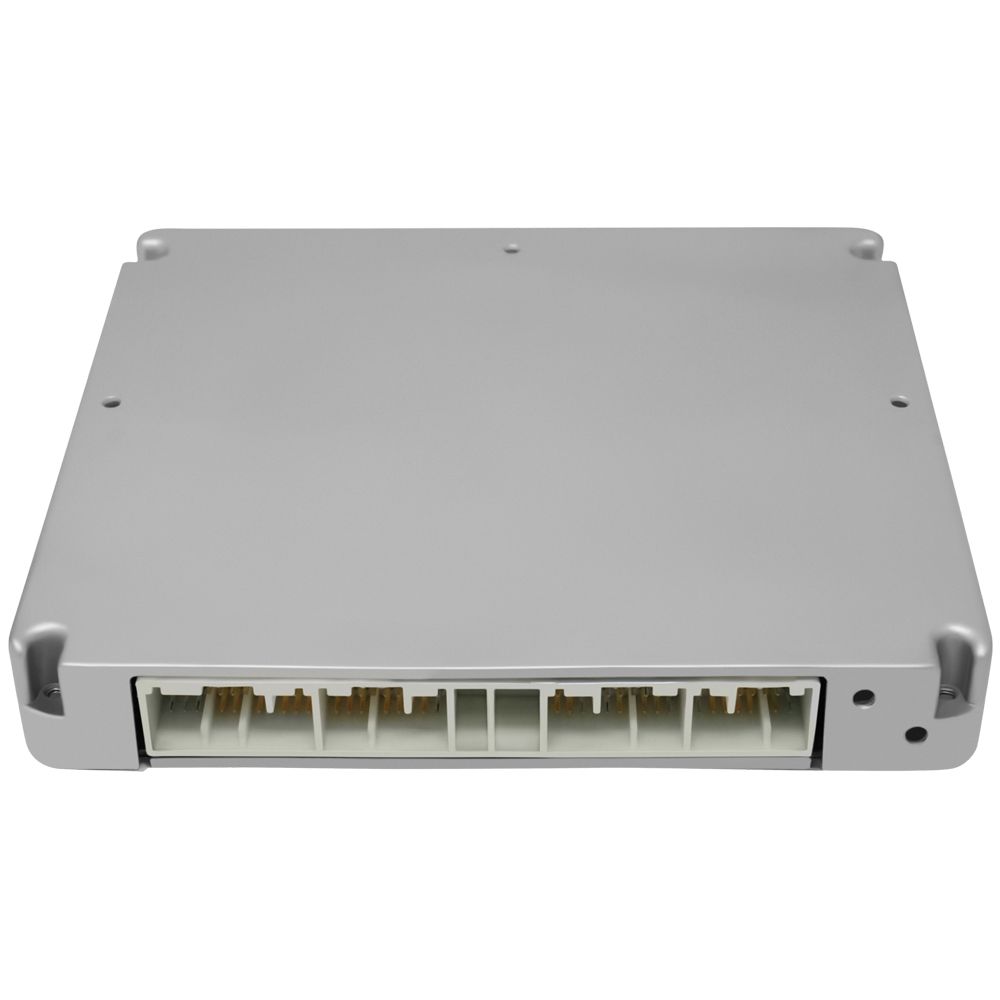
Flagship One stocks a refurbished, VIN-programmed PCM for the 2000 Toyota Celica GTS with a lifetime warranty, free shipping and no core charge. The full Toyota Celica GTS module lineup covers other engine configurations as well.
Replacing the powertrain control module in a 2000 Toyota Celica GTS does not have to be a complicated or expensive ordeal. With the module located in an accessible spot behind the glove box and a book time of just over half an hour for the physical swap, the real hurdle has always been the programming step. A pre-programmed, VIN-matched unit removes that barrier, letting you restore your Celica’s performance quickly and confidently.