
Last updated on August 25th, 2026 at 12:06 pm
The engine control module in the 1999 Toyota Sienna manages fuel delivery, ignition timing, and transmission shift logic for the 3.0L V6. When the module degrades, it can interrupt communication with sensors, causing erratic running, loss of power, or a complete no‑start condition.
What you experience when the engine computer in a 1999 Toyota Sienna begins to act up can range from intermittent stalling to a total refusal to start. The vehicle uses separate engine and powertrain control modules that coordinate fuel, spark, and shift strategies for the 3.0L V6. When either module loses internal memory or suffers a circuit fault, the symptoms often mimic sensor failures, making diagnosis tricky. This article walks through the function of each module, where they are mounted, the factory labor allowances for removal, installation, and relearn procedures, and the programming steps that normally follow a swap. You will also learn common warning signs, typical trouble‑code families, and practical habits that protect the electronics from voltage spikes and corrosion. By the end, you should feel confident discussing repair versus replacement options with a technician and understand why a pre‑programmed unit can shorten the shop visit. The guide also notes the specific book hours for each task, so you can estimate labor cost before authorizing work. Understanding the relearn sequence helps you verify that the new module has been properly integrated into the vehicle’s network.
1999 Toyota Sienna 3.0L
OEM programmed ECM for your 1999 Toyota Sienna 3.0L — plug & play, no dealer visit.
Free shipping · Lifetime warranty
The engine control module in the 1999 Toyota Sienna acts as the central processor for the 3.0L V6, constantly interpreting data from the mass‑air flow sensor, throttle position sensor, crankshaft and camshaft position sensors, and the oxygen sensors to calculate the precise fuel‑injection pulse width and ignition advance for each cylinder. It also communicates with the separate powertrain control module to coordinate shift timing, torque converter lock‑up, and line pressure, ensuring smooth acceleration and fuel economy. When the module’s internal flash memory develops a fault or its driver circuits degrade, the processor may output incorrect commands or stop communicating altogether, which can manifest as rough idle, hesitation under load, unexpected gear changes, or a complete loss of engine start capability. Because the module also stores adaptive learning values for idle speed, fuel trim, and transmission behavior, a failure erases those calibrations and forces the system to revert to default maps that are rarely optimal for a worn engine. Replacing the unit with a correctly programmed part restores the factory calibration and allows the adaptive strategy to rebuild quickly. replacement engine computers for the Sienna are built to match the original hardware specifications and arrive with the vehicle identification number already encoded, so the relearn routine can begin immediately after installation.
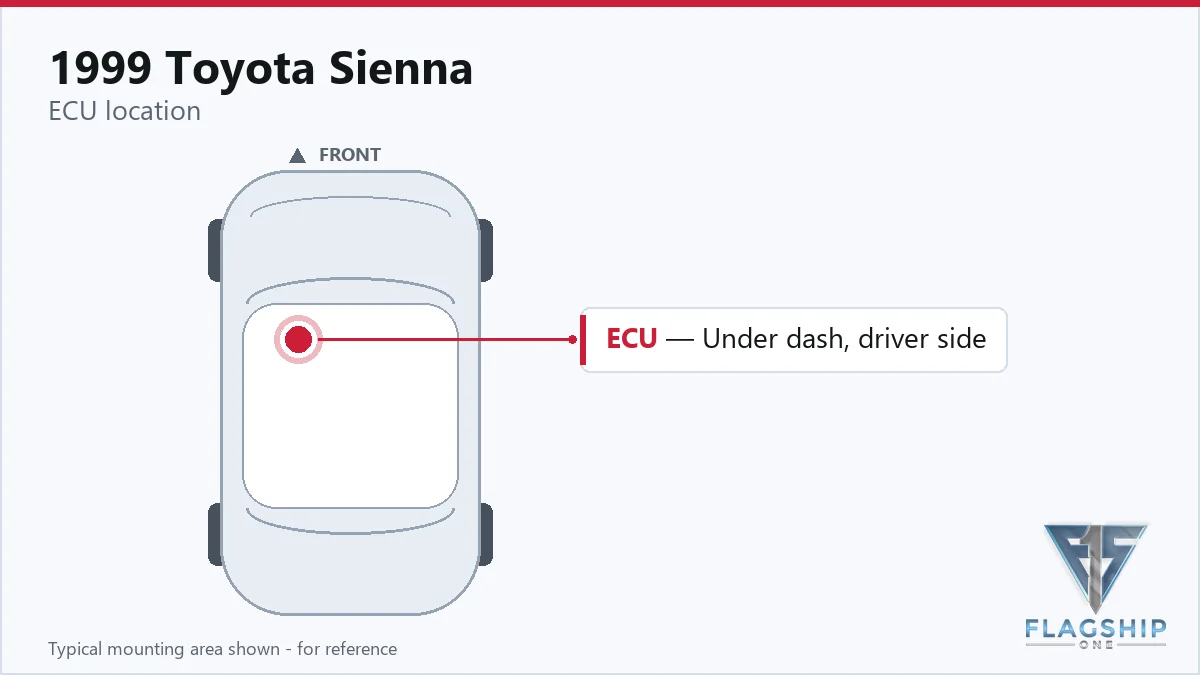
The engine ECU is mounted inside the instrument panel, which means a technician must remove the lower dashboard trim and possibly the steering column cover to reach the connector. Factory labor guidance lists 0.6 hours for engine control module removal and installation, and a separate 0.5 hours for the required relearn after the new unit is seated. The powertrain control module, located in the same general area, calls for 0.8 hours for removal and installation, followed by 0.5 hours for its relearn procedure. Because both modules share the same access path, the combined effort can be performed in a single dashboard teardown, though each relearn step must be completed independently. A practical tip is to label each connector before disconnecting, and to verify that the battery voltage is stable before initiating any relearn, as low voltage can interrupt the process and leave the module in a default state.
| Operation | Configuration | Book Time |
|---|---|---|
| Engine Control Module Relearn | All configurations | 0.5 hr |
| Engine Control Module R&R | All configurations | 0.6 hr |
| Powertrain Control Module R&R | All configurations | 0.8 hr |
| Powertrain Control Module Relearn | All configurations | 0.5 hr |
After a module swap, the factory service routine calls for a relearn sequence that lets the new computer synchronize its adaptive tables with the engine and transmission sensors. For the engine control module this takes roughly 0.5 hours, and the powertrain control module requires an additional 0.5 hours of relearn time. During the procedure the scan tool commands the module to clear stored adaptive values, run a self‑test, and then learn idle speed, fuel trim, and shift points through a defined drive cycle. If the replacement part arrives with the vehicle identification number already encoded, the initial programming step is eliminated and the technician can move straight to the relearn drive cycle. a VIN-programmed replacement unit therefore reduces the total shop time to the relearn portions only, which can be valuable when labor rates are high. It is still advisable to verify that the module communicates on the data bus before beginning the drive cycle, as a wiring fault would prevent successful learning.
When the engine control module in a 1999 Toyota Sienna begins to fail, the driver may notice a range of drivability issues that often appear intermittently at first. The engine can stall suddenly at idle or while decelerating, then restart after a short pause, which points to a loss of injector pulse or ignition timing control. Hard starting or a complete no‑start condition may develop, especially after the vehicle has sat for several hours, because the module can no longer maintain the fuel‑pump prime or the crank‑shaft position signal. Rough idle, surging, or hesitation during acceleration are common when the adaptive fuel‑trim tables become corrupted. The transmission may exhibit harsh or delayed shifts, unexpected downshifts, or a failure to engage overdrive, reflecting the loss of communication with the powertrain control module. A scan tool may show a loss of communication with the ECU, or it may display a series of generic powertrain codes such as misfire, fuel‑system lean, or throttle‑position sensor faults that are actually downstream of the module failure. In some cases the check‑engine light illuminates with no obvious pattern, and the data stream freezes, indicating that the module’s internal processor has halted. Because these symptoms overlap with sensor or wiring problems, a systematic diagnostic that isolates the module’s power, ground, and data‑bus integrity is essential before committing to a replacement.
Factory guidance allocates 0.6 hours for removal and installation of the engine control module, plus an additional 0.5 hours for the required relearn procedure. Actual shop time may vary based on dashboard access difficulty.
The engine ECU is mounted inside the instrument panel, requiring removal of the lower dashboard trim and possibly the steering column cover for access.
If the replacement unit arrives with the vehicle identification number already encoded, the initial programming step is eliminated and the technician can proceed directly to the relearn sequence.
Harsh or delayed shifts, unexpected downshifts, loss of overdrive, and communication loss on the data bus can all indicate a powertrain control module problem.
Maintain a healthy charging system, use proper jump‑start procedures, and keep battery terminals clean and tight to limit voltage transients that can damage the modules.
When the engine or powertrain control module in a 1999 Toyota Sienna shows signs of failure, a shop can either attempt a bench repair of the existing unit or install a refurbished replacement that matches the original specifications. Because the modules are housed behind the instrument panel, labor time is a significant factor, and a pre‑programmed replacement can eliminate the separate programming step, leaving only the relearn drive cycles. Discuss both paths with your technician to weigh cost, warranty, and turnaround time for your specific vehicle.
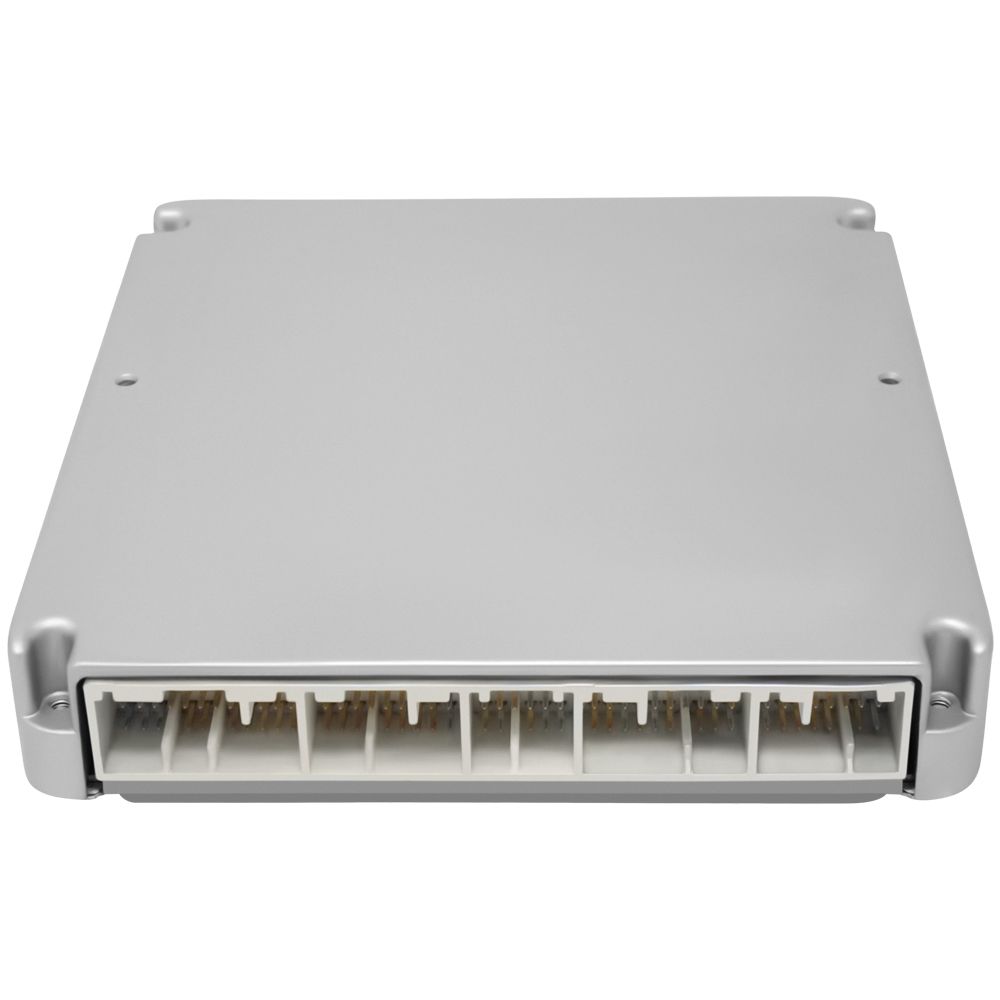
Flagship One stocks a refurbished, VIN-programmed PCM for the 1999 Toyota Sienna with a lifetime warranty, free shipping and no core charge. The full Toyota Sienna module lineup covers other engine configurations as well.
The 1999 Toyota Sienna relies on two dedicated control modules to keep its 3.0L V6 running smoothly and shifting cleanly. Understanding where they sit, how long the factory book allots for each service step, and what symptoms point to a module fault gives you a solid foundation for any repair conversation. If you decide a replacement is the right move, a unit that arrives ready for the relearn cycle can simplify the job and get you back on the road sooner.