
Last updated on August 25th, 2026 at 12:06 pm
The engine control module in the 1997 Toyota Tercel manages fuel delivery, ignition timing, and emission controls; when it malfunctions the vehicle can experience no‑start conditions, rough idle, or sudden stalling because the processor can no longer command the actuators correctly.
Owners of a 1997 Toyota Tercel who notice intermittent stalling, a persistent check‑engine light, or a complete no‑start condition may be dealing with a faulty engine or powertrain computer. These modules coordinate fuel injection, ignition timing, and transmission shift logic, so any internal failure can ripple through drivability. Understanding where the unit sits, how long a shop typically spends on removal, installation, and the required relearn procedures helps you evaluate repair estimates and decide whether a refurbished or new replacement makes sense. This overview walks through the factory‑specified labor times, the instrument‑panel location, and the programming steps that follow a swap, giving you a clear picture of what to expect before you authorize work. The guide also notes that both the engine and powertrain computers share the same instrument‑panel mounting area, so a technician may need to remove trim pieces to reach either unit. Knowing the separate relearn intervals for each module can prevent a second visit if the first procedure is overlooked. A thorough diagnostic scan before any replacement can confirm whether the fault originates in the computer or in related sensors, saving time and expense.
1997 Toyota Tercel
OEM programmed ECM for your 1997 Toyota Tercel — plug & play, no dealer visit.
Free shipping · Lifetime warranty
The engine control module in the 1997 Toyota Tercel acts as the central processor for fuel metering, spark advance, and emission‑system monitoring, while the powertrain control module adds transmission shift scheduling and torque‑converter lock‑up logic. Both units receive data from crankshaft, camshaft, throttle‑position, and oxygen sensors, then calculate injector pulse width and ignition timing in real time. When either processor develops an internal fault — such as a corrupted memory cell or a failed driver circuit — the vehicle may lose the ability to maintain proper air‑fuel ratios, resulting in rough idle, hesitation, or a complete inability to start. Because the two computers share the same instrument‑panel mounting location, a single wiring harness feeds both, and a fault in one can sometimes masquerade as a problem in the other. Technicians often begin with a full scan to isolate the offending module before committing to a swap. replacement engine computers for the Tercel are available as remanufactured units that meet original specifications, and they arrive pre‑programmed to the vehicle identification number so the relearn steps can be skipped. Understanding the distinct roles of each module helps you discuss repair options with confidence and avoid unnecessary parts replacement. The engine computer also stores adaptive fuel‑trim values that evolve with engine wear, while the powertrain computer learns shift‑point preferences based on driving style. When a module is replaced, those learned tables are cleared, which is why the factory prescribes a relearn routine for each unit. Skipping the relearn can leave the transmission hunting for gears or the engine running lean under load.
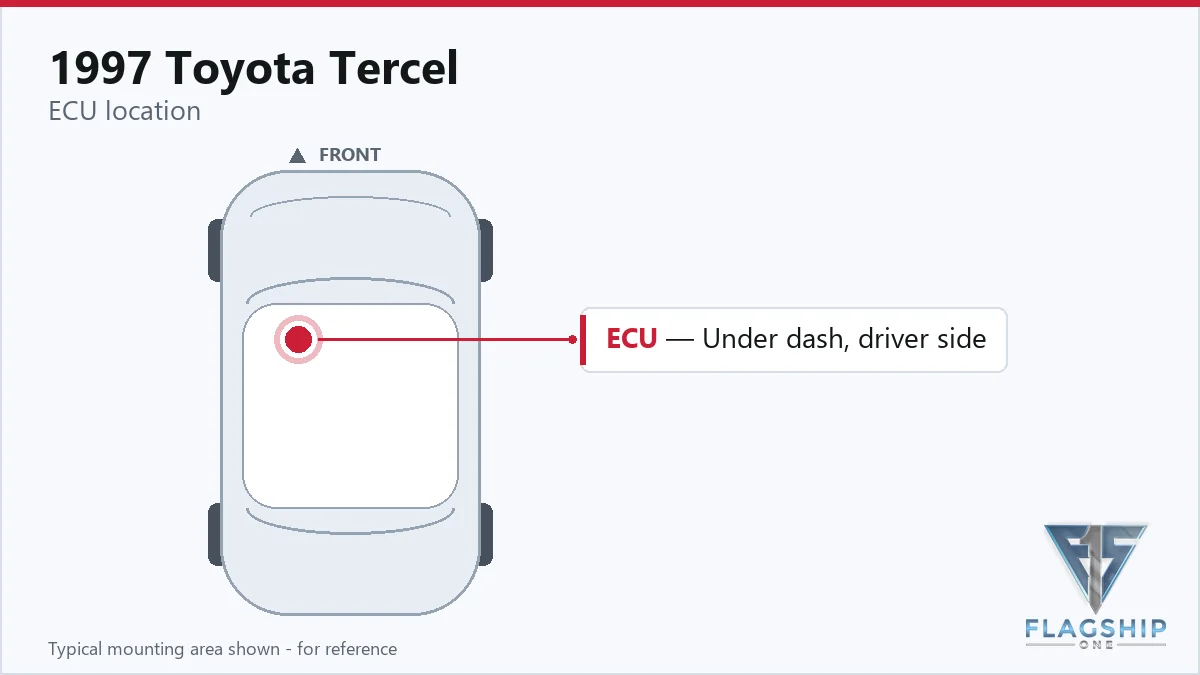
The factory wiring guide places the engine ECU in the instrument panel, which means a technician must remove the lower dash trim and possibly the knee bolster to reach the module. Removing the engine control module itself is a 0.8‑hour job, and the accompanying relearn procedure adds another 0.5 hours of labor. The powertrain control module shares the same mounting area, so its removal and installation also requires 0.8 hours, with a separate 0.5‑hour relearn afterward. No special torque values are listed for the mounting bolts, but the service manual recommends tightening the fasteners to the standard specification for interior panels. Because both computers are accessed through the same opening, a shop can often complete both swaps in a single visit, though each relearn must be performed independently. Proper re‑assembly of the trim pieces restores the original sealing and prevents future vibration‑related connector issues.
| Operation | Configuration | Book Time |
|---|---|---|
| Engine Control Module Relearn | All configurations | 0.5 hr |
| Engine Control Module R&R | All configurations | 0.8 hr |
| Powertrain Control Module R&R | All configurations | 0.8 hr |
| Powertrain Control Module Relearn | All configurations | 0.5 hr |
After a new engine or powertrain computer is installed, the factory service procedure calls for a relearn sequence that typically consumes 0.5 hours for each module; the engine control module relearn and the powertrain control module relearn are performed separately using a scan tool that commands the unit to re‑calibrate its adaptive tables. This step ensures that fuel‑trim values, idle‑speed targets, and shift‑point maps are rebuilt for the current engine condition. a VIN-programmed replacement unit arrives with the vehicle identification number already written into its memory, so the relearn routines are effectively completed before the part leaves the supplier. In practice, a technician can install the module, clear any stored codes, and return the vehicle to service without waiting for the additional labor time. If a shop chooses a non‑programmed unit, the 0.5‑hour relearn for each computer must be budgeted, and the scan‑tool session must be performed with the engine at operating temperature to avoid incomplete adaptation.
Drivers of a 1997 Toyota Tercel may notice a range of drivability clues when the engine or powertrain computer begins to fail. A common early sign is an intermittent check‑engine light that appears without a clear pattern, often accompanied by stored codes for sensor‑circuit faults that disappear after a key cycle. The engine may crank normally but refuse to fire, producing a no‑start condition that can be temporarily resolved by cycling the ignition. Rough idle, hesitation on acceleration, and sudden stalling at stoplights are also typical, especially when the module loses its ability to maintain proper fuel‑trim values. In some cases the transmission may shift erratically, hunt between gears, or refuse to engage overdrive because the powertrain controller cannot calculate correct shift points. A dead or unresponsive scan‑tool communication with the ECU is another strong indicator, as the diagnostic bus may go silent when the processor halts. Fuel economy can drop noticeably if the computer defaults to a rich‑run strategy to protect the catalyst. Because these symptoms overlap with sensor or wiring problems, a systematic scan and voltage check at the module connector are essential before condemning the computer. If the module is intermittently failing, the vehicle may run normally for a few minutes before the fault returns, making diagnosis more difficult without a data‑logging scan.
The factory labor guide lists 0.8 hours for removal and installation of the engine control module, plus an additional 0.5 hours for the required relearn procedure.
According to the factory wiring guide, the engine ECU is mounted in the instrument panel, behind the lower dash trim.
Yes, the powertrain control module also calls for a 0.5‑hour relearn after installation, independent of the engine module relearn.
A VIN‑programmed unit arrives with the vehicle identification number already written, so the factory relearn routines are effectively completed before the part is installed.
Common signs include intermittent check‑engine light, no‑start condition, rough idle, sudden stalling, erratic transmission shifts, and loss of scan‑tool communication.
When the engine or powertrain computer on a 1997 Toyota Tercel shows signs of failure, you can choose to have the original unit repaired by a specialist or install a remanufactured replacement that meets OEM specifications. A refurbished module often costs less than a new dealer part and, when sourced from a reputable supplier, arrives pre‑programmed to your VIN so the factory relearn is already satisfied. Weigh the warranty coverage and turnaround time against the labor savings to decide the best path for your vehicle.
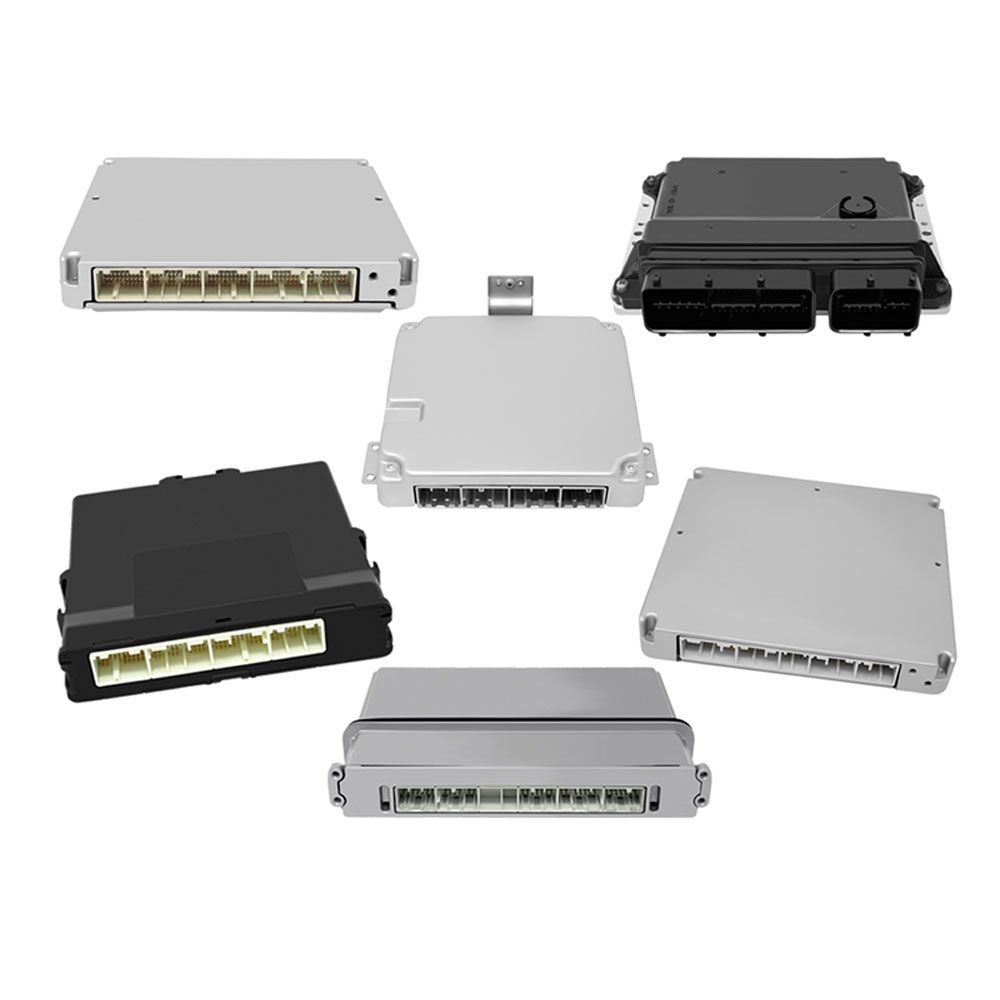
Flagship One stocks a refurbished, VIN-programmed PCM for the 1997 Toyota Tercel with a lifetime warranty, free shipping and no core charge. The full Toyota Tercel module lineup covers other engine configurations as well.
The 1997 Toyota Tercel relies on a pair of engine and powertrain computers that are both accessible behind the instrument panel and each requires a brief relearn after replacement. Understanding the labor estimates and the benefit of a VIN‑programmed unit can help you plan a cost‑effective repair. If you need a reliable replacement that arrives ready to install, consider a remanufactured module from a trusted source.