
Last updated on August 25th, 2026 at 12:07 pm
The Engine Control Module in your 1996 Toyota Land Cruiser is the primary computer managing fuel delivery, ignition timing, and emissions systems. When this unit fails, the engine may not run properly or may not start at all, leaving you stranded.
If your 1996 Toyota Land Cruiser has developed starting problems, runs poorly, or the check engine light stays on, the Engine Control Module may be the culprit. This computer is the brain of your 4.5L engine, coordinating dozens of sensors and actuators to keep the vehicle running smoothly. When the ECM fails or develops internal faults, symptoms can range from intermittent drivability issues to a completely dead vehicle that will not start. Many owners facing these problems must decide between paying dealer prices for a new module plus programming fees, or exploring alternative replacement options. This guide explains what the ECM does in your Land Cruiser, where it is located, what the replacement process involves, and how to protect this expensive component from premature failure. You will gain a clear understanding of the labor involved, the programming requirements, and the practical steps that can extend the life of your replacement module.
The Engine Control Module in your 1996 Toyota Land Cruiser functions as the central computer for the 4.5L powertrain. This unit receives input from dozens of sensors throughout the engine compartment and uses that information to calculate the optimal fuel injection volume, ignition timing advance, idle air control, and emissions control device operation for every driving condition. Without accurate data from the ECM, the engine cannot run efficiently, and fuel economy, power, and emissions all suffer. The module also monitors its own internal circuits and memory through a self-diagnostic system. When internal voltage references or processor checksums fall outside acceptable ranges, the ECM may store trouble codes and default to limp-home operation or simply fail to run. Replacement engine computers for the Land Cruiser must be programmed with the correct vehicle identification number and calibrated to the specific engine displacement and transmission combination before they will function properly. This is why simply swapping in a used unit from a salvage yard often results in a no-start condition or persistent fault codes.
Flagship One keeps Toyota Land Cruiser replacement engine computers in stock for exactly this failure pattern.
1996 Toyota Land Cruiser
OEM programmed ECM for your 1996 Toyota Land Cruiser — plug & play, no dealer visit.
Free shipping · Lifetime warranty
The Engine Control Module on your 1996 Toyota Land Cruiser is located behind the passenger-side kick panel trim, beneath the dashboard. Access requires removing the trim piece and any associated sound insulation. The module itself is a rectangular unit with a multi-pin connector that interfaces with the vehicle wiring harness. Replacement involves disconnecting the battery negative terminal first, removing the old module, transferring any mounting hardware, installing the new unit, and reconnecting the wiring. According to labor guides, the remove-and-replace procedure for the ECM takes approximately 1.1 hours of book time. After the new module is installed, a relearn procedure must be performed to allow the ECM to adapt to your specific engine’s characteristics; this additional procedure adds roughly 0.5 hours to the job. If you are replacing a separate Powertrain Control Module rather than the Engine Control Module, the same general location and time estimates apply, as these units share similar access and labor requirements.
| Operation | Configuration | Book Time |
|---|---|---|
| Engine Control Module Relearn | All configurations | 0.5 hr |
| Engine Control Module R&R | All configurations | 1.1 hr |
| Powertrain Control Module R&R | All configurations | 1.1 hr |
| Powertrain Control Module Relearn | All configurations | 0.5 hr |
After replacing the ECM in your 1996 Toyota Land Cruiser, the factory procedure requires a relearn session so the new module can establish communication with your specific engine sensors and learn optimal calibration values. This relearn process takes approximately 0.5 hours and may involve idling the engine, performing a drive cycle, or using a scan tool to initiate the adaptation procedure. The vehicle must be operated through various throttle positions and load conditions to allow the ECM to fine-tune its fuel and timing maps. Flagship One units arrive VIN-programmed to match your specific vehicle identification number, which means the critical programming steps have already been completed at the time of shipment. This allows you to install the module and proceed directly to the relearn procedure without paying additional dealer programming fees or waiting for the vehicle to be towed to a dealership for software updates.
Every VIN-programmed replacement unit from Flagship One arrives with these steps already completed.
When the Engine Control Module in your 1996 Toyota Land Cruiser begins to fail, several distinct patterns commonly emerge. The most frequent complaint is a no-start condition where the engine cranks normally but receives no fuel or spark because the ECM has stopped controlling the injectors or ignition system. Another common symptom is intermittent stalling, where the engine suddenly dies while driving and may restart after a brief period, suggesting the module is losing its ability to maintain proper idle control or fuel delivery. Misfire codes such as P0300 (random/multiple cylinder misfire) or specific cylinder misfires often appear when the ECM cannot properly meter fuel or time the ignition. In some cases, a scan tool may not communicate with the ECM at all, indicating a failed module communications circuit. Automatic transmission shifting may also become erratic or harsh because the TCM portion of the powertrain control system receives incorrect data from the failed ECM. Any of these symptoms warrants diagnostic testing before assuming the module is at fault, but persistent codes or complete communication failure strongly point toward ECM replacement.
Factory Service Bulletin EG001-96 covers ECM standardization for 1995-96 Toyota Land Cruiser and Tercel vehicles. This bulletin addresses potential issues with ECM consistency and calibration that may have existed in vehicles produced during this period. The bulletin recommends specific procedures to ensure the ECM meets factory specifications for emissions and drivability. If your Land Cruiser falls within the affected model years, referencing this bulletin during diagnosis or replacement may provide additional diagnostic insight or warranty coverage considerations.
| Bulletin | Subject | What It Addresses |
|---|---|---|
| EG001-96 | :EG001-96:95-96 Land Cruiser & Tercel ECM Standardization | — |
A used ECM will likely require programming to your specific VIN and may not match your engine calibration. Many salvage units are also from failed modules, so the reliability risk is significant. A refurbished or new unit that arrives pre-programmed typically provides better assurance of function.
Skilled DIY mechanics with basic electrical knowledge can perform the remove-and-replace portion, which takes about an hour. However, the relearn procedure typically requires a scan tool. Flagship One units arrive VIN-programmed, eliminating the need for dealer programming, though you may still need a shop to complete the relearn if you lack the equipment.
If scan tool communication fails entirely or internal fault codes are present, the ECM itself is likely failed. If communication works and only sensor-related codes like O2 sensor or mass air flow appear, those upstream components may be the actual problem. A qualified diagnostic approach saves money on unnecessary parts.
An unprogrammed ECM will not allow the engine to start. The module will not recognize your vehicle’s VIN, sensor configurations, or calibration data. This is why pre-programmed replacement units from Flagship One are advantageous — they arrive ready to install and communicate immediately.
In this model year, the Engine Control Module and Powertrain Control Module may be separate units or integrated depending on the exact configuration. The ECM primarily handles engine functions while the TCM manages transmission shifting. Some vehicles use a single integrated unit, while others keep them separate behind the passenger kick panel.
When your 1996 Toyota Land Cruiser requires ECM replacement, you have two primary paths: paying dealer prices for a new unit plus programming fees, or choosing a professionally refurbished replacement that arrives VIN-programmed for your specific vehicle. The first option guarantees a new part but at significantly higher cost. The second option provides a tested, programmed unit at a lower price point without the dealer programming delay. Either way, budget for the relearn procedure after installation to ensure proper adaptation between the new module and your 4.5L engine’s unique characteristics.
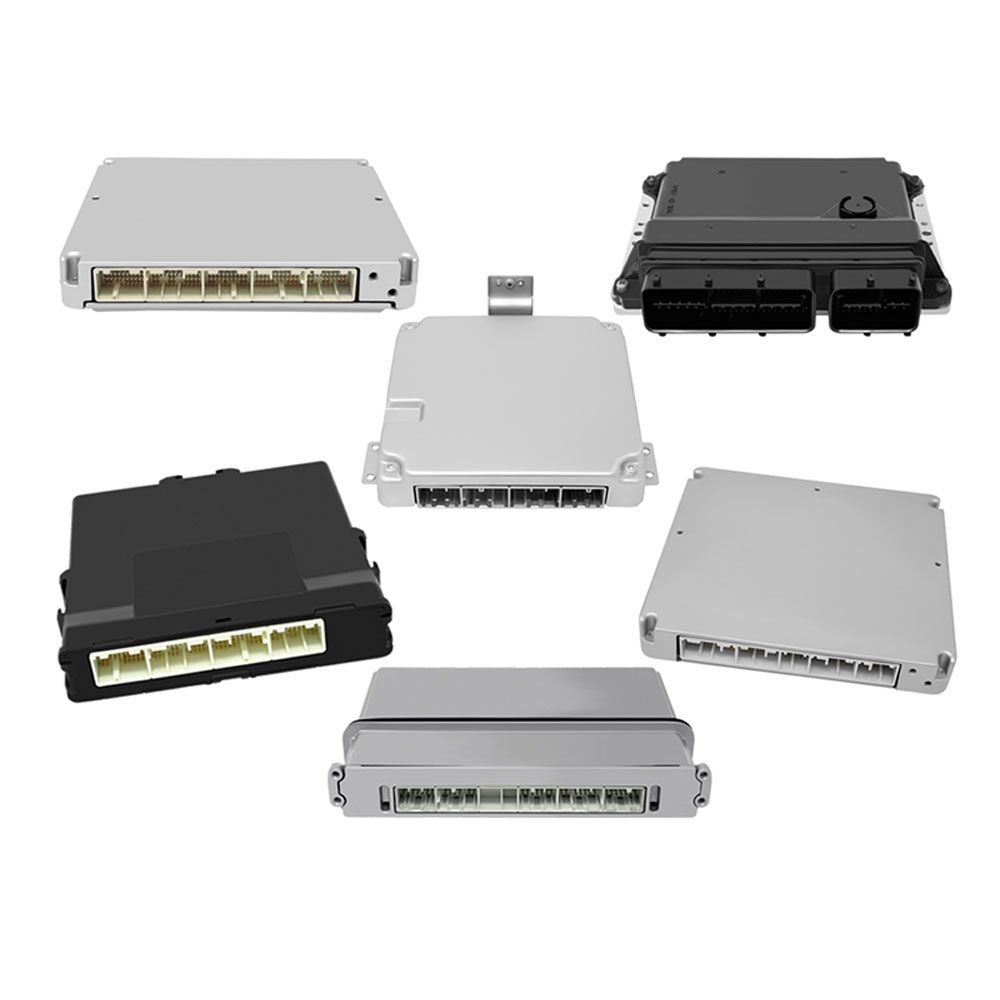
Flagship One stocks a refurbished, VIN-programmed PCM for the 1996 Toyota Land Cruiser with a lifetime warranty, free shipping and no core charge. The full Toyota Land Cruiser module lineup covers other engine configurations as well.
The Engine Control Module is the heart of your 1996 Toyota Land Cruiser’s engine management system, and failure leaves you stranded or facing expensive repairs. Understanding the location, programming requirements, and protection strategies outlined here helps you make informed decisions when problems arise. Whether you choose dealer replacement or a quality programmed unit from Flagship One, addressing ECM issues promptly restores your Land Cruiser’s reliability and gets you back on the road.