
Last updated on August 25th, 2026 at 12:25 pm
The engine control module (ECM) in the 1995 Toyota Tercel 1.5L manages fuel delivery, ignition timing, and idle control. When it fails, you may face a no-start condition, rough running, or stalling that mimics mechanical problems.
When a 1995 Toyota Tercel 1.5L develops hard-start, stalling, or erratic idle issues, the engine control module (ECM) is often overlooked. This compact computer orchestrates fuel and spark delivery, and its failure can mimic a range of mechanical faults. Because the Tercel is a pre-OBD-II vehicle, it does not store standardized P-codes, making diagnosis trickier. This guide explains what the ECM does, where it lives, and what a replacement involves. You will learn how to confirm a module fault, what the factory service procedure requires, and how a pre-programmed replacement can save you time and money. By the end, you will have a clear path to getting your Tercel back on the road without unnecessary guesswork.
1995 Toyota Tercel 1.5L
OEM programmed ECM for your 1995 Toyota Tercel 1.5L — plug & play, no dealer visit.
Free shipping · Lifetime warranty
The engine control module in the 1995 Toyota Tercel 1.5L is the central computer that reads sensor inputs—such as coolant temperature, throttle position, and crankshaft position—and commands the fuel injectors and ignition system accordingly. It also manages idle air control and, on automatic transmission models, may influence shift timing. When the ECM fails, the engine may crank but not fire, or it may start and then stall unpredictably. Internal circuit damage from heat, vibration, or voltage spikes can corrupt the module’s logic, leading to driveability problems that no amount of tune-up parts will fix. Because the Tercel uses a manufacturer-specific diagnostic system, a failed ECM often triggers a no-communication condition with a scan tool. For a reliable repair, many owners turn to replacement engine computers for the Tercel that arrive tested and ready to install.
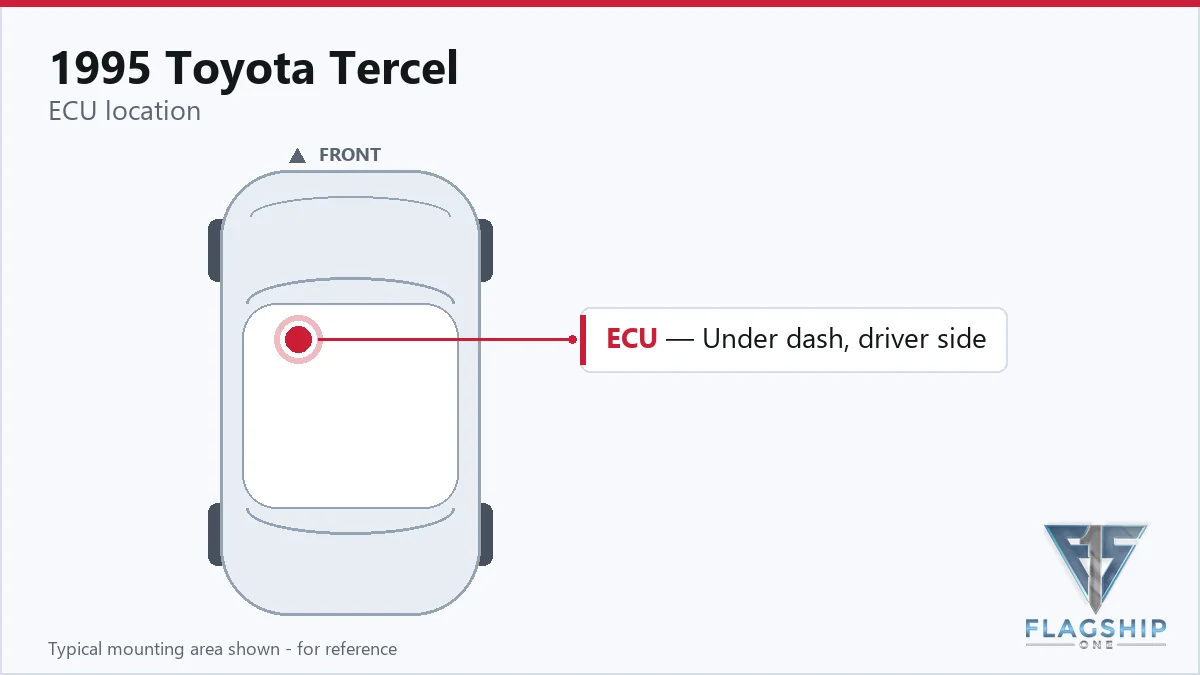
The factory wiring guide places the engine ECU in the instrument panel of the 1995 Tercel. Access typically requires removing trim panels and possibly the glove box to reach the module, which is secured by a bracket. The book time for engine control module removal and replacement is 0.8 hours. No special torque specifications are provided for the mounting hardware; standard hand-tight reassembly is sufficient. Once the old unit is unplugged and the new one is connected, the replacement module should be mounted in the same orientation to avoid strain on the wiring harness. Because the module is inside the cabin, it is protected from engine heat and moisture, but a failed unit can still cause a no-start or poor running condition.
| Operation | Configuration | Book Time |
|---|---|---|
| Engine Control Module Relearn | All configurations | 0.5 hr |
| Engine Control Module R&R | All configurations | 0.8 hr |
| Powertrain Control Module R&R | All configurations | 0.8 hr |
| Powertrain Control Module Relearn | All configurations | 0.5 hr |
After installing a replacement ECM, the factory service procedure requires a relearn process that takes 0.5 hours. This step allows the module to adapt to the vehicle’s sensors and actuators. However, when you order a VIN-programmed replacement unit from Flagship One, that relearn is already completed before shipping. The module arrives pre-configured with your Tercel’s specific calibration and VIN, so you can skip the dealer visit and the extra labor. Simply install the part, turn the key, and the engine should run as intended. This plug-and-play approach is especially valuable on a pre-OBD-II vehicle where performing a manual relearn without a factory scan tool can be challenging.
Common signs of a failing ECM on the 1995 Toyota Tercel include a crank-no-start condition, sudden stalling while driving, rough or surging idle, and a complete loss of communication with a diagnostic scan tool. You may also notice the check engine light staying on without any retrievable codes, or the light may not illuminate at all during key-on. Because the Tercel does not use OBD-II P-codes, a dead ECM often leaves you with no stored trouble codes to guide diagnosis. In some cases, the module can cause transmission shifting problems on automatic models by sending incorrect signals to the transmission control unit.
A failed ECM often causes a no-start condition, stalling, or a check engine light that cannot communicate with a scan tool. Since the Tercel is pre-OBD-II, you won’t see P-codes. A professional diagnosis that rules out sensors, wiring, and power supply is the most reliable way to confirm a module fault.
Used modules may have the same internal wear and will still require a factory relearn procedure. They also carry the risk of hidden damage. A refurbished, pre-programmed unit from Flagship One arrives tested and ready to install, eliminating the relearn step.
The book time for engine control module removal and replacement is 0.8 hours. The module is located in the instrument panel, so access involves removing some dash trim. No additional programming time is needed if you use a VIN-programmed replacement.
Repairing a failed ECM is rarely cost-effective on a 1995 Tercel; the internal components are not designed for service. A refurbished replacement that has been tested and updated offers a more reliable path. When you choose a pre-programmed unit, you avoid the factory relearn procedure and the need for a specialized scan tool, making this a straightforward driveway repair.
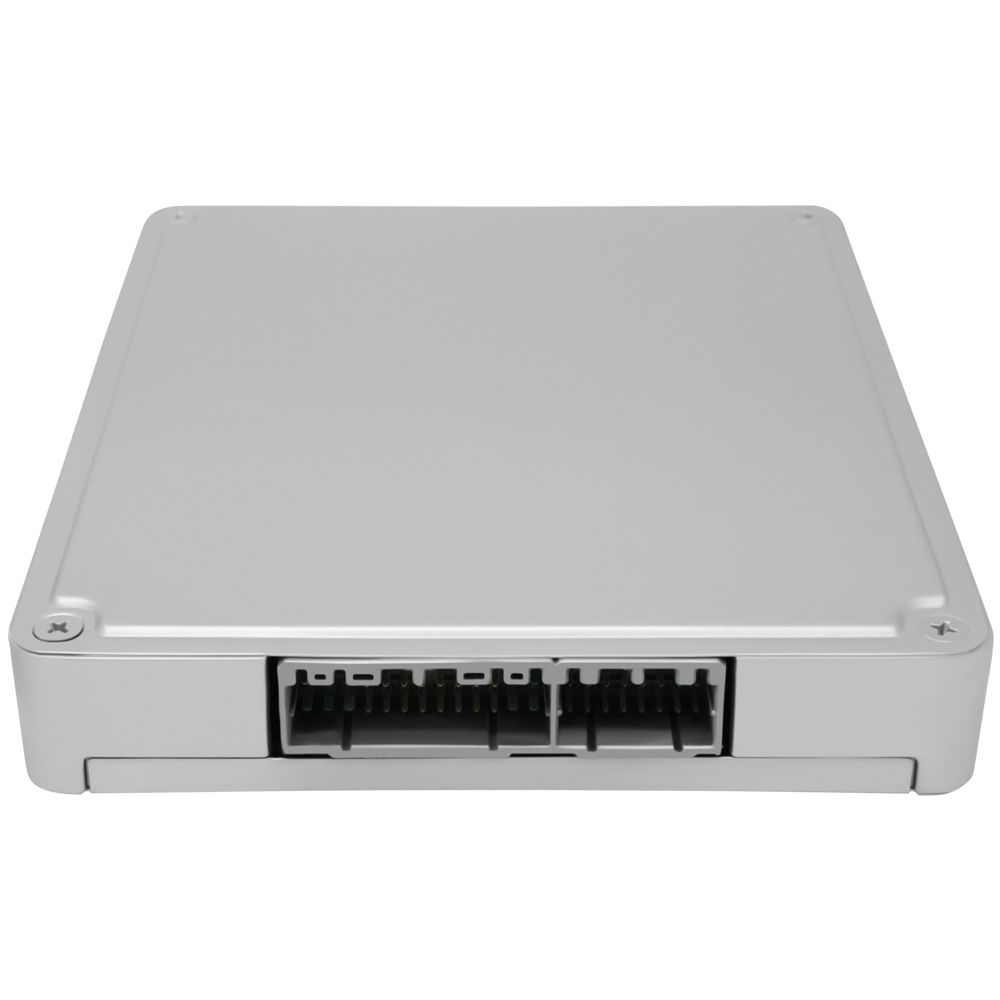
Flagship One stocks a refurbished, VIN-programmed PCM for the 1995 Toyota Tercel with a lifetime warranty, free shipping and no core charge. The full Toyota Tercel module lineup covers other engine configurations as well.
A faulty engine control module can bring your 1995 Toyota Tercel 1.5L to a halt, but the fix does not have to be complicated. With the module located in the instrument panel and a book time of 0.8 hours, replacement is accessible. A VIN-programmed unit from Flagship One removes the final hurdle, letting you install and drive without extra steps.