
Last updated on August 25th, 2026 at 12:26 pm
In the 1993 Toyota Tercel, the engine control module (ECM) and powertrain control module (PCM) manage fuel delivery, ignition timing, and transmission shift logic. A failure in either unit can cause the engine to refuse to start, stall unexpectedly, or run rough, often accompanied by loss of communication with diagnostic tools.
When a 1993 Toyota Tercel begins to exhibit no‑start conditions, rough idle, or erratic shifting, the underlying cause may be a failing engine or powertrain control module. Understanding how these computers operate and what the factory expects after a replacement can save you time and prevent future drivability problems. This guide walks you through the location of the modules, the labor involved, and the post‑install procedures that ensure your vehicle returns to normal operation. By the end, you will know what to expect during a swap, how long it typically takes, and why a VIN‑programmed replacement from Flagship One can simplify the process.
1993 Toyota Tercel
OEM programmed ECM for your 1993 Toyota Tercel — plug & play, no dealer visit.
Free shipping · Lifetime warranty
The engine control module in the 1993 Toyota Tercel oversees fuel injection timing, spark advance, and idle speed, while the powertrain control module extends that oversight to transmission shift schedules. Both units exchange data with sensors throughout the vehicle to keep the engine running smoothly and the transmission shifting correctly. Because the Tercel predates OBD‑II standards, the modules rely on proprietary communication protocols that are critical for engine start‑up and shift logic. A malfunction can interrupt these signals, leading to stalling, poor acceleration, or a complete no‑start condition. Proper operation of these computers is essential for fuel efficiency and emissions compliance. For owners seeking replacements, replacement engine computers for the 1993 Toyota Tercel provide a direct swap without the need for custom wiring.
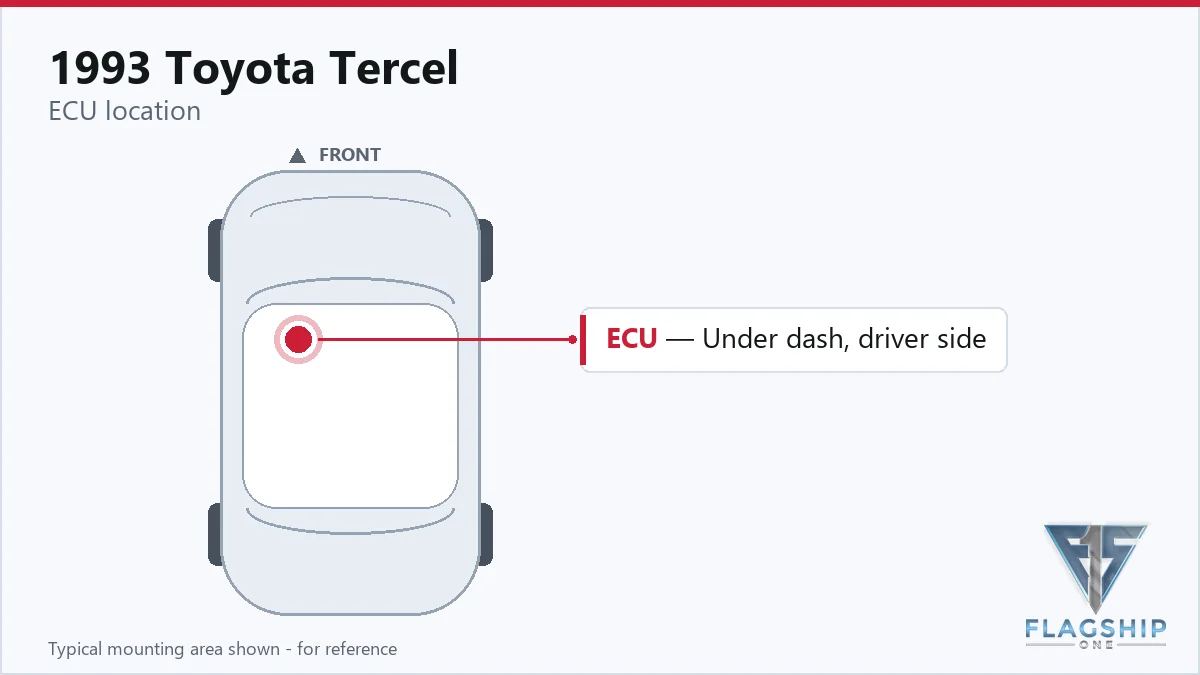
The factory wiring guide indicates that the engine control unit resides within the instrument panel of the 1993 Toyota Tercel. Access typically involves removing the instrument cluster to reach the module mounting bolts. The labor guide lists 0.5 hours for an ECM relearn and 0.8 hours for a full engine control module removal and replacement. The powertrain control module shares the same location, with a comparable removal time of 0.8 hours and a relearn requirement of 0.5 hours. No specific torque values are provided, so standard fastener practices for the instrument panel should be followed. After removal, the replacement unit is bolted in place, connectors are reattached, and the instrument panel is reassembled.
| Operation | Configuration | Book Time |
|---|---|---|
| Engine Control Module Relearn | All configurations | 0.5 hr |
| Engine Control Module R&R | All configurations | 0.8 hr |
| Powertrain Control Module R&R | All configurations | 0.8 hr |
| Powertrain Control Module Relearn | All configurations | 0.5 hr |
Following a module swap in the 1993 Toyota Tercel, the factory service procedure calls for a relearn cycle to synchronize the new unit with the vehicle’s sensors and actuators. The ECM relearn takes roughly half an hour, while the PCM relearn requires a similar interval. Flagship One replacement units arrive already VIN‑programmed, meaning the necessary calibration data is pre‑loaded, and the relearn step can often be completed with a simple power‑cycle. This eliminates the need for a separate programming session. Using a VIN-programmed replacement unit ensures the vehicle’s computer receives the correct identity and calibration settings straight from the factory.
Typical signs of a failing engine or powertrain control module in a 1993 Toyota Tercel include an inability to start, intermittent stalling at idle, rough acceleration, and loss of transmission shift smoothness. Owners may also notice a dead diagnostic port, preventing scan tools from communicating with the vehicle. In some cases, the instrument cluster may display unusual warning lights or fail to illuminate. When the module is defective, the vehicle may generate a fault such as system clock failure, which indicates a timing issue within the control unit. Prompt attention to these symptoms can prevent further damage to the fuel or transmission systems.
The factory labor guide estimates about 0.8 hours for removal and replacement of the engine control module in this vehicle.
Access generally requires removal of the instrument panel, which can be done with standard trim removal tools and basic hand tools.
A VIN‑programmed unit includes the necessary calibration data, but the factory still recommends completing the relearn cycle to confirm proper synchronization.
Yes, because the PCM controls shift timing, a malfunction can lead to harsh or delayed shifts and may trigger related diagnostic codes.
While a generic unit may physically fit, it may lack the proprietary programming required for proper operation, leading to unpredictable performance.
When the engine or powertrain control module in your 1993 Toyota Tercel needs service, you can choose a repair with a brand‑new OEM part or opt for a refurbished replacement from Flagship One. Both approaches address the same underlying issue, but a refurbished unit that arrives VIN‑programmed can reduce shop time and simplify the post‑install relearn steps.
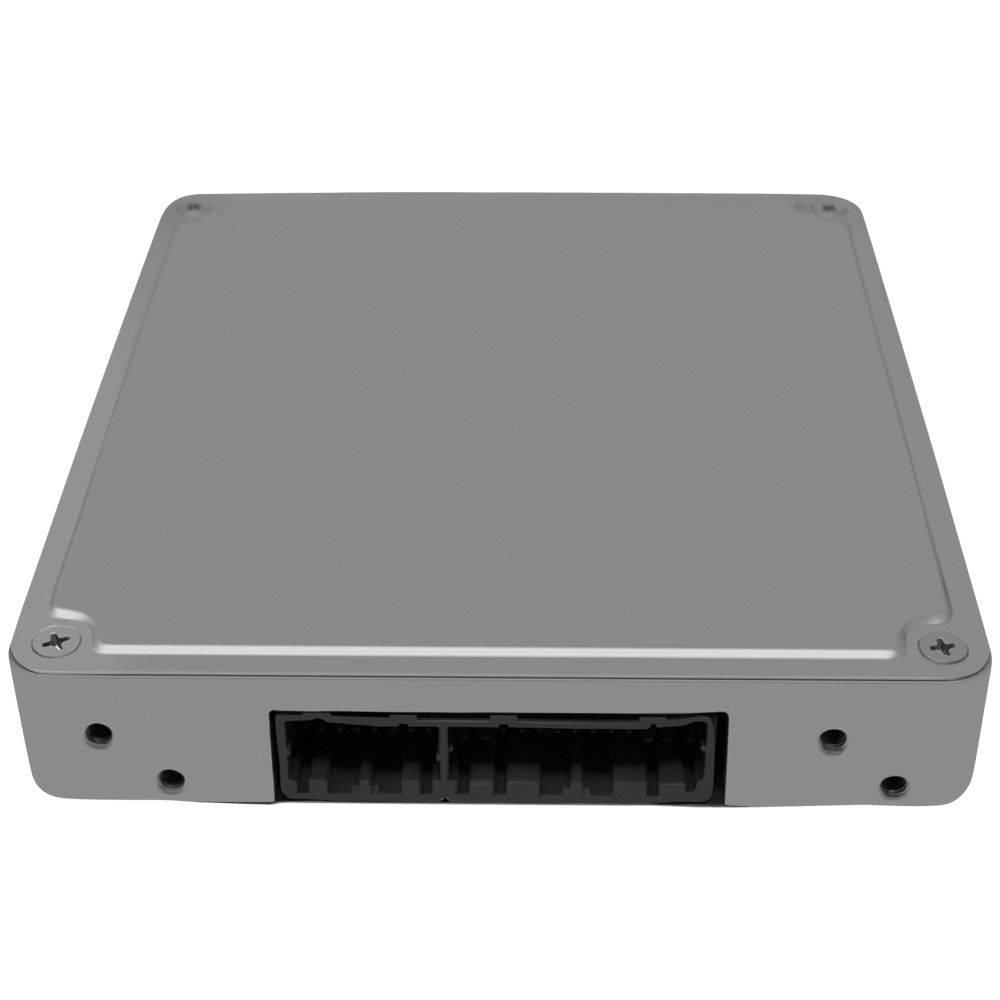
Flagship One stocks a refurbished, VIN-programmed PCM for the 1993 Toyota Tercel with a lifetime warranty, free shipping and no core charge. The full Toyota Tercel module lineup covers other engine configurations as well.
The 1993 Toyota Tercel relies on its engine and powertrain control modules for reliable operation. Whether you replace a faulty unit with a new or refurbished part, following the factory relearn procedures helps ensure a smooth return to normal performance. Consider a VIN‑programmed replacement to streamline the process.