
Last updated on August 25th, 2026 at 12:07 pm
The Engine Control Module in a 2010 Pontiac G3 acts as the central computer managing fuel delivery and ignition timing. When this hardware fails, it typically causes erratic engine behavior, failure to start, or the triggering of internal memory error codes that prevent the vehicle from operating efficiently.
When a 2010 Pontiac G3 begins to exhibit unpredictable idling or a complete failure to start, the root cause is often found within the engine management electronics. The Powertrain Control Module, or PCM, serves as the brain of the vehicle, coordinating the complex interaction between air, fuel, and spark. Over years of service, these components are subjected to extreme thermal cycling and constant vibration, which can eventually degrade the internal circuitry. This guide is designed to help you navigate the process of identifying a failing module and understanding the requirements for a successful replacement. By focusing on the technical aspects of the E83 system, you can distinguish between simple sensor failures and a critical computer malfunction. You will gain a clear understanding of the labor involved in the repair and how modern programming solutions can simplify the restoration of your vehicle’s driveability and efficiency.
The Engine Control Module serves as the primary logic center for the 2010 Pontiac G3. It continuously monitors air intake and engine temperature to calculate the precise amount of fuel needed for combustion. This complex process ensures the engine runs smoothly across various speeds and load conditions. Because it manages critical ignition timing, any internal failure can lead to poor combustion or a complete loss of power. Selecting replacement ECMs for 2010 Pontiac G3 requires a clear understanding of the specific hardware versions used in this model. The module interprets signals from the crankshaft and camshaft sensors to synchronize the firing order of the cylinders. If the internal processor becomes corrupted, the vehicle may experience erratic shifting or intermittent stalling during acceleration. This unit is essential for maintaining the balance between engine performance and environmental standards. Without a functional computer, the engine cannot maintain a steady idle or respond correctly to accelerator inputs. Over time, thermal cycling in the engine bay can cause the solder joints within the module to crack, leading to the intermittent communication errors often seen in older vehicles. These failures can be subtle at first, appearing only when the engine reaches a certain temperature, but they typically progress until the vehicle becomes undrivable.
2010 Pontiac G3
OEM programmed ECM for your 2010 Pontiac G3 — plug & play, no dealer visit.
Free shipping · Lifetime warranty
The control module for the 2010 Pontiac G3 is typically located within the engine bay for easy access. Replacing the Powertrain Control Module generally requires 0.6 hours of labor. Similarly, the Engine Control Module removal and replacement is listed at 0.6 hours. The process involves disconnecting the battery and removing the wiring harnesses from the module housing. Once the new unit is bolted in and connected, a relearn process is often necessary. This specific ECM relearn procedure typically takes 0.5 hours to complete. Technicians should ensure that all connectors are seated firmly to avoid communication errors during the initialization phase.
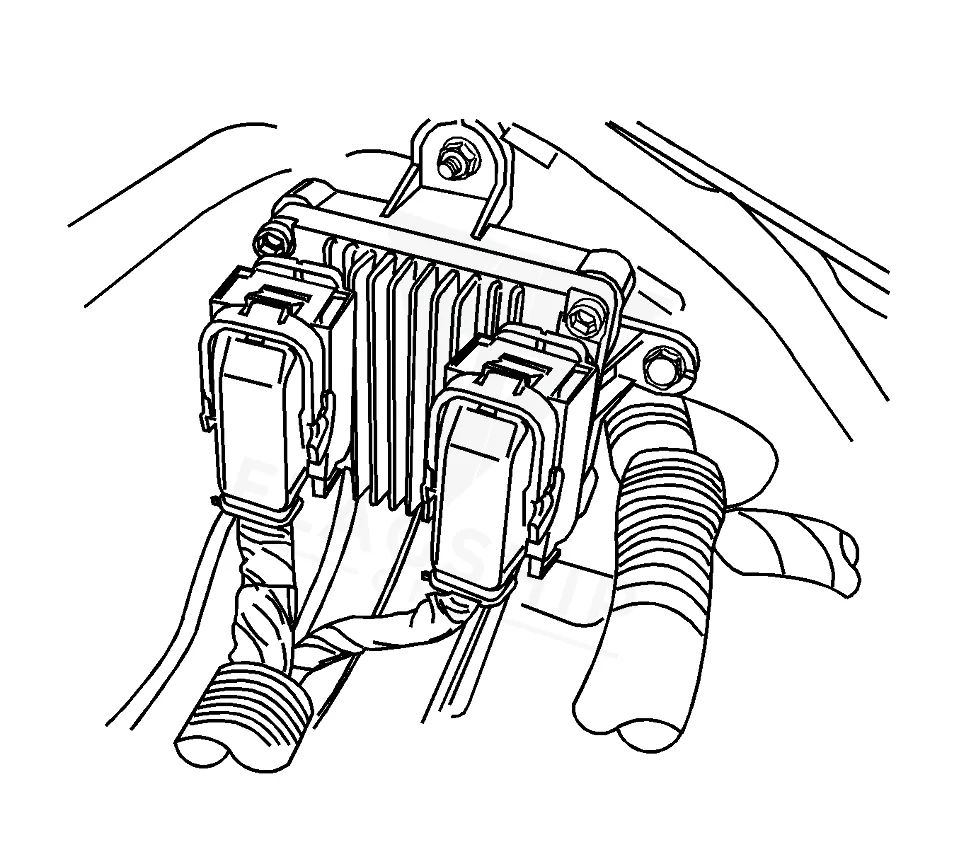
Work with the ignition off, and treat the module as static-sensitive: avoid touching the connector pins at any point.
| Operation | Configuration | Book Time |
|---|---|---|
| Powertrain Control Module R&R | All configurations | 0.6 hr |
| Engine Control Module R&R | All configurations | 0.6 hr |
| Engine Control Module Relearn | All configurations | 0.5 hr |
After installing a standard factory module in a 2010 Pontiac G3, the vehicle requires a specific programming sequence to recognize the new hardware. This usually involves using a professional-grade scan tool to input the Vehicle Identification Number and perform a comprehensive relearn. However, utilizing a VIN-programmed replacement unit eliminates these tedious dealership steps entirely. Since the software is pre-loaded to match the specific requirements of your vehicle, the module is ready for operation immediately upon installation. This removes the need for the 0.5 hour relearn process typically associated with blank modules. By bypassing the factory programming phase, you reduce the risk of software mismatches and get the vehicle back on the road much faster. This streamlined approach ensures that the engine’s fuel maps and ignition timing are correctly calibrated from the moment the key is turned.
A failing module in the 2010 Pontiac G3 often manifests as unpredictable engine behavior that can be difficult to pin down. You might notice the vehicle suddenly stalling while idling at a stoplight or failing to start entirely despite a healthy battery and starter motor. In some cases, the engine may run roughly, mimicking a cylinder misfire, even when the spark plugs and coils are in good condition. Communication between a diagnostic scan tool and the vehicle’s computer may be lost, leaving the technician unable to retrieve vital engine data. You may also encounter shifting irregularities if the PCM cannot properly coordinate with the transmission control logic. Internal memory errors are common in these units, and the system may throw an internal processor fault P0601 or other similar codes indicating that the computer’s own hardware is malfunctioning. These internal codes are distinct from sensor failures; they suggest the processor itself is damaged. Other signs include erratic tachometer readings or the sudden appearance of the check engine light without a clear external cause. When the module fails to process timing correctly, the vehicle may experience significant power loss or refuse to enter a higher gear.
The 2010 Pontiac G3 may trigger several internal module codes when the hardware fails. These specific codes indicate a malfunction within the computer’s circuitry rather than a failure of an external sensor or actuator.
There are specific factory bulletins regarding the E83 ECM for the 2010 Pontiac G3. Bulletin #PIC4953E, issued in August 2011, discusses part restrictions for the E83 ECM. Additionally, bulletin #PIP5051A from January 2013 further addresses part restrictions for the E83 ECM, specifically mentioning part number 12642927. These notices typically indicate that the manufacturer has updated the hardware or limited the availability of certain versions to ensure better reliability and compatibility.
| Bulletin | Subject | What It Addresses |
|---|---|---|
| — | PQC Part Restriction – E83 ECM – (Aug 23, 2011) | — |
| — | PQC Part Restriction – E83 ECM Restriction Part Number 12642927 – (Jan 25, 2013) | — |
Yes, if the PCM fails to trigger the fuel injectors or the ignition system, the engine will not start. This often occurs when the internal processor is corrupted.
Standard factory replacements typically require a 0.5 hour relearn procedure. However, pre-programmed units eliminate this requirement.
Common symptoms include erratic idling, sudden stalling, and the appearance of internal processor fault codes. You may also experience a total loss of scan-tool communication.
Installing a used unit is risky because the VIN and software version may not match your vehicle. This often leads to operational errors or a failure to start.
Internal codes such as P0601 specifically point to a failure within the module’s own circuitry. Sensor faults typically trigger different, external-facing diagnostic trouble codes.
When facing a module failure in the 2010 Pontiac G3, you have a choice between trying to repair a damaged circuit or opting for a replacement. While some attempt to rebuild old units, a refurbished replacement often provides a more reliable long-term solution. Choosing a unit that is already configured for your vehicle’s specifications ensures that the engine returns to its original operating efficiency without the need for extensive dealership visits.

Flagship One stocks a refurbished, VIN-programmed PCM for the 2010 Pontiac G3 with a lifetime warranty, free shipping and no core charge. The full Pontiac G3 module lineup covers other engine configurations as well.
Maintaining the electronic health of your 2010 Pontiac G3 is essential for consistent performance. By recognizing the signs of PCM failure and understanding the replacement process, you can effectively restore your vehicle’s reliability. If you are experiencing internal fault codes or starting issues, consider a pre-programmed module to simplify your repair.