
Last updated on August 25th, 2026 at 12:29 pm
The Engine Control Module (ECM) and Powertrain Control Module (PCM) in your 2001 Pontiac Firebird serve as the central brain managing fuel injection, ignition timing, emissions controls, and transmission shifting. When internal circuitry fails, the vehicle may exhibit drivability issues or fail to run entirely.
If your 2001 Pontiac Firebird with the 3.8L V6 engine won’t start, runs poorly, or displays a persistent check engine light, the Engine Control Module or Powertrain Control Module may be the culprit. These onboard computers manage critical engine functions including fuel delivery, ignition timing, emissions systems, and automatic transmission shifting. Unlike simple sensor failures that trigger isolated fault codes, internal module failures can cause multiple seemingly unrelated symptoms—from hard starting to complete no-start conditions. This guide explains what these control modules do, where they’re located, the replacement process, programming requirements, and the common symptoms that indicate module failure versus other electrical issues. Whether you’re diagnosing a no-start condition or evaluating repair options, understanding the role of your vehicle’s control module helps you make informed decisions about service and replacement parts.
The Powertrain Control Module in your 2001 Pontiac Firebird functions as the primary electronic brain for the engine and transmission. This unit receives input from dozens of sensors throughout the powertrain—monitoring coolant temperature, throttle position, oxygen levels, crankshaft position, and many others—then uses this data to calculate precise fuel injector pulse width, ignition advance, and transmission shift points in real time. The ECM version handles primarily engine-specific functions while the PCM integrates transmission control for automatic-equipped vehicles. These modules contain a microprocessor, memory chips for calibration data, and output drivers that control actuators throughout the engine bay. When internal memory corruption occurs—whether from voltage spikes, thermal stress, or component aging—the module may lose its programming or produce erroneous outputs. This is why replacement engine computers for the Firebird often require programming before installation; the vehicle-specific calibration data must be restored for proper operation. Without correct calibration, the engine may run excessively rich or lean, stall at idle, or refuse to start entirely.
The ECM or PCM on your 2001 Pontiac Firebird is located in the passenger side front engine compartment, mounted to the right side of the firewall near the windshield wiper area. Access requires removing the wiper motor cover panel and potentially the wiper linkage depending on exact location. The module sits in a bracket secured with multiple bolts. Book time for ECM R&R is 0.9 hours, while PCM replacement also requires 0.9 hours of labor. After removing the old unit, you’ll need to transfer any mounting hardware and ensure the new module seats properly in the bracket. The factory procedure notes the importance of recording remaining engine oil life before removal—this information is stored in the module and may need to be reset after replacement. Torque specifications for mounting bolts should follow standard practices, and all electrical connectors must be fully seated before attempting to start the engine. Always disconnect the negative battery cable before working on the module, and ensure the ignition is OFF when reconnecting connectors to prevent internal damage.
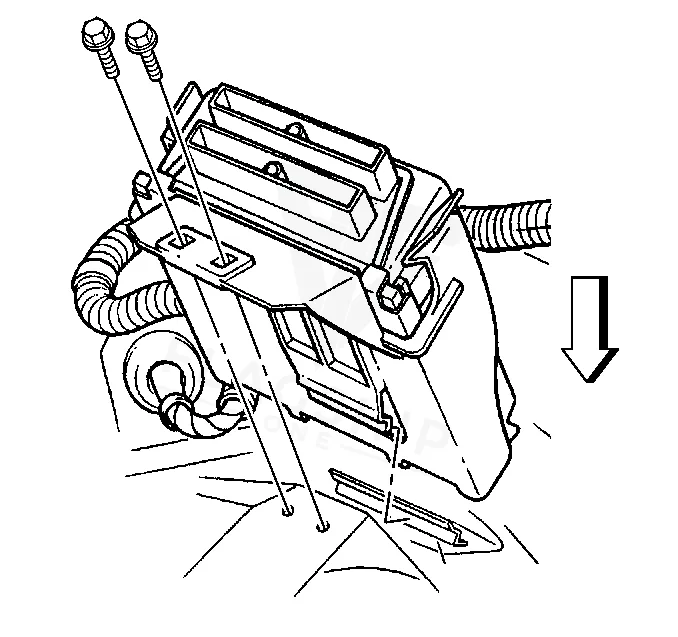
Work with the ignition off, and treat the module as static-sensitive: avoid touching the connector pins at any point.
| Operation | Configuration | Book Time |
|---|---|---|
| Engine Control Module R&R | All configurations | 0.9 hr |
| Engine Control Module Relearn | All configurations | 0.5 hr |
| Powertrain Control Module Relearn | All configurations | 0.5 hr |
| Powertrain Control Module R&R | All configurations | 0.9 hr |
2001 Pontiac Firebird
OEM programmed ECM for your 2001 Pontiac Firebird — plug & play, no dealer visit.
Free shipping · Lifetime warranty
After replacing the control module on your 2001 Pontiac Firebird, the factory service procedure requires programming before the vehicle will run properly. This programming step uploads vehicle-specific calibration data—including VIN, transmission calibration, idle air control strategy, and emissions settings—into the new module’s memory. Without this data, the engine may exhibit drivability problems or fail to start. The factory recommends turning the ignition OFF when connecting or disconnecting power to the module, including the battery cable, PCM pigtail, any related fuses, and especially jumper cables. This prevents voltage spikes that can damage internal circuits during the programming process. However, when you purchase a replacement unit from Flagship One, the module arrives pre-programmed with your specific VIN and calibration data, meaning those factory programming steps are already completed. This allows you to install the unit and proceed directly to relearn procedures rather than requiring dealer programming equipment or specialized software.
Every VIN-programmed replacement unit from Flagship One arrives with these steps already completed.
Control module failure in the 2001 Firebird typically manifests as hard starting or no-start conditions, often accompanied by a check engine light that may illuminate immediately or after a warm-up cycle. The vehicle may start but run roughly at idle, stall when coming to a stop, or demonstrate hesitation under acceleration. Transmission-equipped models may experience harsh shifting, failure to shift into gear, or the transmission remaining in a default gear. A common indicator of internal module failure is loss of communication with scan tools—you may be unable to access diagnostic data through the OBD-II port, or the tool may connect but show no live parameters. Multiple unrelated trouble codes often appear simultaneously, particularly P0600-series codes indicating internal memory or checksum errors. If you see codes like internal memory check failure stored alongside drivability complaints, the module itself is likely faulty rather than individual sensors. Some owners report intermittent issues where the vehicle runs normally for days or weeks then suddenly exhibits symptoms, suggesting progressive internal circuit degradation rather than complete sudden failure.
The 2001 Pontiac Firebird with 3.8L engine may store several module-internal diagnostic trouble codes when the ECM or PCM experiences internal faults. These P0600-series codes indicate problems within the control module itself rather than external sensor or wiring issues, and they often accompany multiple additional codes due to the module’s compromised ability to process sensor data properly.
The replacement module must be compatible with your specific vehicle configuration—3.8L V6 engine, automatic or manual transmission, and emission system type all factor into correct fitment. Using a unit from a different model year or engine combination may cause drivability issues or prevent the engine from running at all.
P0600-series codes indicate internal module faults and often point to ECM or PCM failure rather than external sensor problems. However, diagnosis should rule out battery voltage issues, poor grounds, and connector corrosion first, as these can trigger similar codes. When multiple memory-related codes appear together with drivability symptoms, the module is a strong suspect.
A used unit would require programming with your VIN and calibration data, which typically requires dealer equipment or a professional tuning tool. Even then, used modules have unknown remaining service life and may fail soon after installation. Remanufactured units from reputable suppliers like Flagship One offer tested reliability with programming included.
Yes. The engine control system performs an adaptation learning cycle after new hardware is installed. This involves allowing the engine to idle for several minutes, then driving through various throttle positions to recalibrate fuel delivery and idle air control. The procedure may set additional trouble codes temporarily that clear as learning completes.
Original equipment repair is generally not practical due to the specialized surface-mount components and need for clean-room equipment to access internal circuits. Replacement with a remanufactured unit that includes programming for your specific VIN is typically the most cost-effective and reliable solution.
If your 2001 Pontiac Firebird has been diagnosed with module failure or you’re experiencing the symptoms described, you have two primary repair paths: professional module repair services or replacement with a remanufactured unit. Repair may involve specialized board-level work but carries uncertainty about long-term reliability. Replacement units from Flagship One arrive VIN-programmed and ready to install, eliminating the need for dealer programming appointments. Consider your budget, timeline, and confidence in the diagnosis when choosing your path forward.
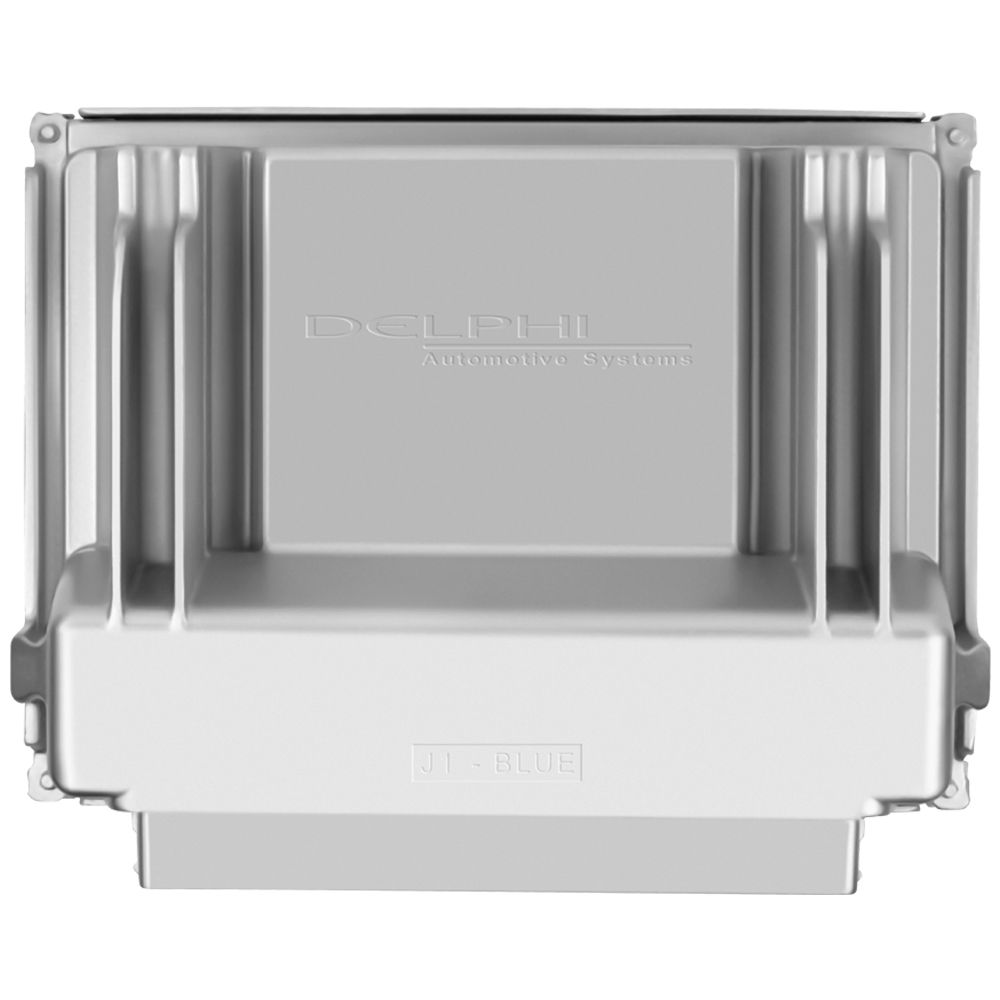
Flagship One stocks a refurbished, VIN-programmed PCM for the 2001 Pontiac Firebird with a lifetime warranty, free shipping and no core charge. The full Pontiac Firebird module lineup covers other engine configurations as well.
The ECM or PCM in your 2001 Pontiac Firebird is the central nervous system of the engine—when it fails, multiple systems are affected. Understanding the symptoms, replacement process, and programming requirements helps you navigate the repair confidently. Whether you need a programmed replacement unit or diagnostic guidance, approach the repair with the knowledge that this is a common failure point that can be resolved effectively with quality parts and proper procedure.