
Last updated on August 25th, 2026 at 12:45 pm
The Powertrain Control Module (PCM) in the 2012 Dodge Charger 3.6L is the main computer that manages engine and transmission functions. It processes sensor inputs and controls fuel, ignition, and shift timing. Failure often results in drivability issues, warning lights, or a no-start condition.
If your 2012 Dodge Charger with the 3.6L engine is experiencing erratic shifting, stalling, or a check engine light, the Powertrain Control Module (PCM) may be at fault. The PCM is the central computer that coordinates engine and transmission operation. This article explains what the PCM does, where it is located, common failure symptoms, and what to expect during replacement. You will also learn about a factory service bulletin that addresses a specific trouble code, and how choosing a pre-programmed module can simplify the repair. The goal is to give you the knowledge to diagnose and address PCM issues confidently.
The Powertrain Control Module (PCM) in the 2012 Dodge Charger 3.6L is a single unit that combines the functions of an Engine Control Module (ECM) and a Transmission Control Module (TCM). It receives data from sensors such as the manifold absolute pressure (MAP) sensor, crankshaft position sensor, and oxygen sensors, then adjusts fuel delivery, ignition timing, and transmission shift points accordingly. The PCM also communicates with other modules on the vehicle’s CAN bus network. When you need a replacement, you are looking for replacement PCMs for the 2012 Charger that are pre-programmed with your VIN and mileage to avoid additional steps. A failing PCM can cause a range of drivability problems, from rough running to a complete no-start.
2012 Dodge Charger
OEM programmed ECM for your 2012 Dodge Charger — plug & play, no dealer visit.
Free shipping · Lifetime warranty
The PCM on the 2012 Dodge Charger is located in the engine compartment, typically mounted near the air filter housing or on the driver-side strut tower. According to factory labor times, removing and replacing the PCM (R&R) is a 0.6-hour job. After installation, a PCM relearn procedure is required, which adds 0.5 hours of labor. The relearn process involves using a scan tool to reset adaptive values and confirm communication with all sensors. Access is straightforward, but care must be taken to disconnect the battery and avoid damaging the connector pins. No special tools are needed beyond basic hand tools and a scan tool for the relearn.
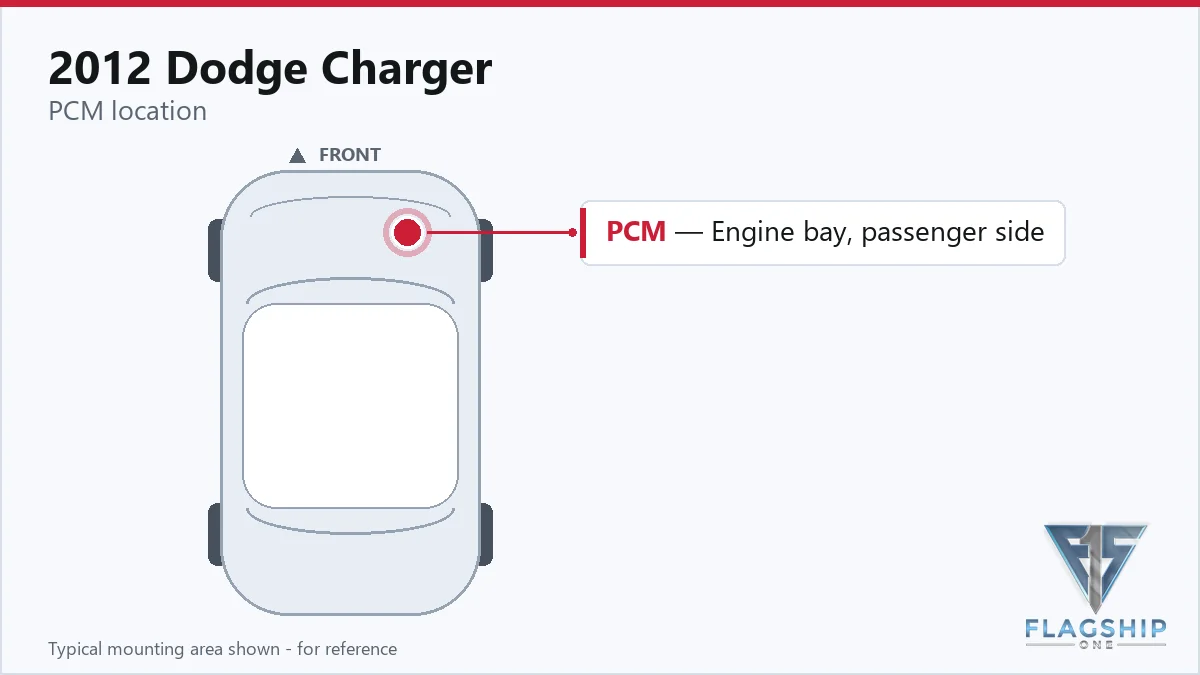
Work with the ignition off, and treat the module as static-sensitive: avoid touching the connector pins at any point.
| Operation | Configuration | Book Time |
|---|---|---|
| Powertrain Control Module Relearn | All configurations | 0.5 hr |
| Powertrain Control Module R&R | All configurations | 0.6 hr |
| Engine Control Module Relearn | All configurations | 0.5 hr |
| Engine Control Module Reset | All configurations | 0.3 hr |
| Engine Control Module R&R | All configurations | 0.6 hr |
When a new PCM is installed in the 2012 Dodge Charger, the factory procedure requires programming it with the original Vehicle Identification Number (VIN) and mileage. This step is essential for the module to communicate with the vehicle’s security system and other modules. A dealer or qualified shop uses a scan tool to perform this programming, which is included in the 0.5-hour relearn labor time. However, if you purchase a VIN-programmed replacement unit from Flagship One, that programming is already completed before shipping. The module arrives ready to install, and the only remaining step is the relearn procedure to synchronize adaptive values. This saves you the time and cost of the initial VIN programming step.
A failing PCM in the 2012 Dodge Charger 3.6L can produce several noticeable symptoms. The engine may crank but not start, or it may start and stall shortly after. You might experience erratic shifting, hesitation during acceleration, or a sudden loss of power. The check engine light often illuminates, and the vehicle may enter a limp-home mode with reduced performance. Scan tool communication can be lost entirely, or the tool may report a internal PCM fault P0601 that indicates a memory or processor issue. Other common codes include misfire or sensor circuit faults. If multiple unrelated codes appear simultaneously, the PCM is a likely suspect.
The PCM in the 2012 Dodge Charger can store internal trouble codes that point to module failure. One such code documented for this vehicle is P0601, which indicates an internal control module memory check sum error. This code typically requires PCM replacement.
| Code | Meaning | Full Guide |
|---|---|---|
| P0601 | Internal memory checksum error | Full P0601 guide → |
Factory service bulletin #18-031-12 Rev. A applies to the 2012 Dodge Charger 3.6L. It addresses a condition where the malfunction indicator lamp (MIL) illuminates and diagnostic trouble code P0108 (Manifold Absolute Pressure Sensor Circuit High) is stored. The bulletin provides a software flash update to correct the issue. If your vehicle exhibits this code, a PCM reflash may resolve it without replacing the module. Always check for applicable TSBs before replacing a PCM.
| Bulletin | Subject | What It Addresses |
|---|---|---|
| 18-031-12 Rev. A | 18-031-12 Rev. A Flash: MIL Illumination P0108 – Manifold Absolute Pressure Sensor Circuit High | — |
Common signs include a no-start condition, stalling, erratic shifting, and multiple unrelated trouble codes. If you retrieve code P0601 (internal PCM fault), replacement is typically required. A professional diagnosis with a scan tool can confirm the PCM is the root cause.
Yes, the PCM is located in the engine compartment and removal is straightforward with basic hand tools. The factory labor time for R&R is 0.6 hours. However, after installation, a PCM relearn procedure (0.5 hours) is needed to reset adaptive values. A pre-programmed module from Flagship One eliminates the need for VIN programming, but the relearn still requires a scan tool.
This bulletin addresses a check engine light with code P0108 (MAP sensor circuit high). The fix is a software flash update. If your vehicle has this code, a reflash may solve the problem without replacing the PCM. Always check for applicable TSBs before purchasing a new module.
If your 2012 Dodge Charger 3.6L has a confirmed PCM failure, you have two main options: have a dealer install a new factory module with programming, or purchase a refurbished, pre-programmed unit from Flagship One. The refurbished option is typically more cost-effective and arrives ready to install, saving you the dealer programming fee. Make sure the replacement module is specifically programmed for your VIN and mileage to ensure plug-and-play operation.
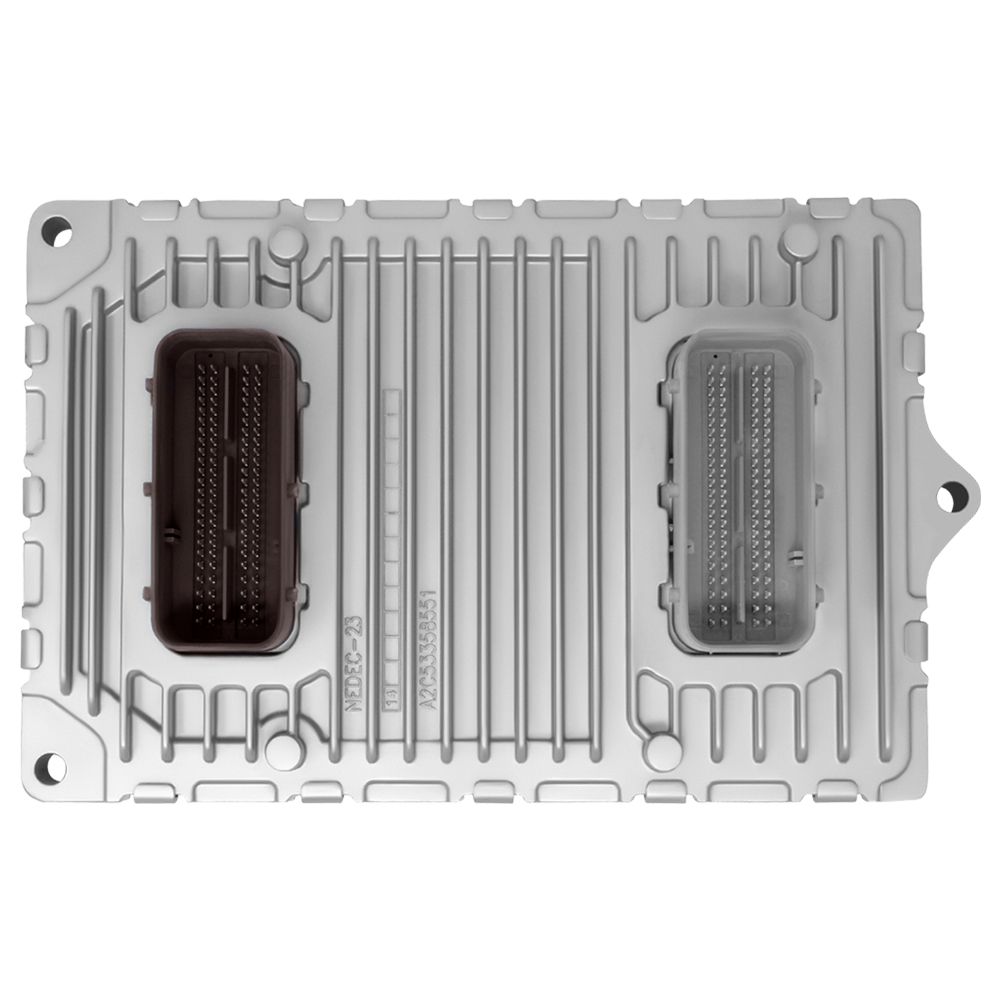
Flagship One stocks a refurbished, VIN-programmed PCM for the 2012 Dodge Charger with a lifetime warranty, free shipping and no core charge. The full Dodge Charger module lineup covers other engine configurations as well.
The PCM in the 2012 Dodge Charger 3.6L is a critical component that controls engine and transmission operation. Recognizing symptoms like no-start, stalling, or code P0601 can help you diagnose a failure. Replacement is straightforward, and using a pre-programmed module from Flagship One eliminates the VIN programming step. For a reliable repair, choose a module that matches your vehicle’s specifications.