
Last updated on August 25th, 2026 at 12:47 pm
The Powertrain Control Module (PCM) on your 2006 Dodge Stratus with the 2.4L engine manages fuel injection, ignition timing, emission controls and transmission shifting. Internal module failures often trigger diagnostic codes P0600 or P0601.
If your 2006 Dodge Stratus (2.4L) won’t start, runs poorly, or has illumination of the check engine light, the Powertrain Control Module may be the culprit. The PCM serves as the brain of your vehicle’s engine and transmission management, and when internal faults develop, the result can range from drivability complaints to a completely dead vehicle. This guide explains what the module does, how replacement works, and what programming steps are required to get your Stratus running again. You will learn the factory-recommended procedure, why proper VIN programming matters, and how pre-programmed replacement units from Flagship One simplify the repair.
The Powertrain Control Module in your 2006 Dodge Stratus is the central computer that coordinates engine and transmission operation. It receives input from numerous sensors throughout the engine compartment and uses that data to calculate fuel delivery, ignition advance, variable valve timing, and transmission shift points. Your Stratus uses a NGC (Next Generation Controller) design, which integrates what other vehicles separate into an Engine Control Module and a Transmission Control Module. When this unit fails internally, the result is often a vehicle that will not start or one that runs poorly despite otherwise normal mechanical condition. Replacement engine computers for the Stratus must be matched to your specific vehicle’s hardware configuration and then programmed with your identification number so the immobilizer system will allow the engine to start.
Flagship One keeps Dodge Stratus replacement engine computers in stock for exactly this failure pattern.
2006 Dodge Stratus
OEM programmed ECM for your 2006 Dodge Stratus — plug & play, no dealer visit.
Free shipping · Lifetime warranty
The PCM on this vehicle is located in the engine compartment, typically mounted to the driver’s side fender well or near the firewall. Replacement involves disconnecting the negative battery terminal first, then removing the module from its mounting bracket after unplugging the electrical connectors. The labor guide rates the R&R (remove and replace) portion at 0.5 hours, with an additional 0.5 hours allocated for the relearn procedure that follows. During reinstallation, all connectors must be fully seated and the mounting hardware torqued to specification. After the new module is installed, the battery must be reconnected and the system allowed to initialize before testing.
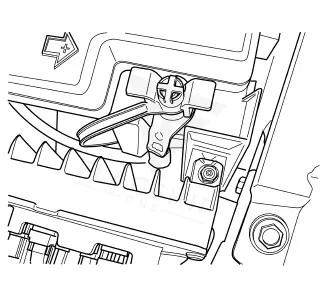
Work with the ignition off, and treat the module as static-sensitive: avoid touching the connector pins at any point.
| Operation | Configuration | Book Time |
|---|---|---|
| Engine Control Module Relearn | All configurations | 0.5 hr |
| Engine Control Module R&R | All configurations | 0.5 hr |
| Powertrain Control Module Relearn | All configurations | 0.5 hr |
| Powertrain Control Module R&R | All configurations | 0.5 hr |
After installing a replacement PCM, the factory procedure requires use of a scan tool to program the new controller with your vehicle’s original VIN and the original mileage stored in the odometer. This step is critical because the PCM must match your vehicle’s identification for the anti-theft system to allow engine starting. Additionally, you will need to reconnect the negative battery cable and reprogram both the radio and the clock, as these lose their memory when battery power is removed. Flagship One units arrive as a VIN-programmed replacement unit, meaning these programming steps have already been performed using your specific vehicle information before the part ships.
Every VIN-programmed replacement unit from Flagship One arrives with these steps already completed.
When the PCM fails on this vehicle, you may experience a no-start condition where the engine cranks but will not fire, or the vehicle may start and then stall shortly after. Common complaints include illuminated check engine light that may flash or remain steady, rough idle, hesitation under acceleration, and transmission shifting problems that feel abrupt or delayed. In some cases the scan tool may not communicate with the vehicle at all, or may display only diagnostic trouble codes related to module internal faults such as P0600 (Serial Communication Link) or P0601 (Internal Memory Check Sum). These codes indicate the PCM has detected an internal fault in its own memory circuitry and cannot guarantee accurate calculations.
Your vehicle’s service documentation references specific module-internal trouble codes that may be stored when the Powertrain Control Module has failed. Code P0600 indicates a general fault with the serial communication link within the controller, while P0601 specifically indicates that the module’s internal checksum validation has failed. Either code typically points to hardware-level failure requiring replacement of the PCM rather than repair of sensors or wiring.
| Code | Meaning | Full Guide |
|---|---|---|
| P0600 | Module-internal fault | Full P0600 guide → |
| P0601 | Internal memory checksum error | Full P0601 guide → |
Chrysler has published two service bulletins relevant to PCM service on this vehicle. Bulletin #08-030-06 Rev. A covers Powertrain Control Module Initialization and provides the factory-approved procedure for preparing a new or replacement PCM for installation. Bulletin #18-037-05 addresses Flash Programming Failure Recovery using the DRBIII diagnostic tool, which may be needed if the programming process is interrupted or fails to complete successfully. Both bulletins should be consulted by your service technician when performing this repair.
| Bulletin | Subject | What It Addresses |
|---|---|---|
| 08-030-06 Rev. A | 08-030-06 Rev. A Powertrain Control Module Initialization | — |
| 18-037-05 | 18-037-05 Flash Programming Failure Recovery Using DRBIII® | — |
The PCM must be matched to your vehicle’s specific engine and transmission combination. Using a unit designed for a different configuration may cause drivability issues or prevent the vehicle from starting.
While the mechanical R&R may be performed by a competent DIY mechanic, the programming requirement typically necessitates dealer-level scan tools. Purchasing a pre-programmed unit from Flagship One eliminates this need.
The vehicle’s immobilizer system will likely prevent the engine from starting, even though the mechanical connection is correct. The security module will not recognize the replacement as authorized.
When your 2006 Dodge Stratus requires a new PCM, you have two realistic paths forward. You may purchase a replacement unit from the dealer and pay for programming labor, or you can obtain a VIN-programmed replacement from Flagship One that arrives ready to install. The pre-programmed option typically reduces overall cost and eliminates the need for a second trip to have the module initialized at a shop equipped with the required software.

Flagship One stocks a refurbished, VIN-programmed PCM for the 2006 Dodge Stratus with a lifetime warranty, free shipping and no core charge. The full Dodge Stratus module lineup covers other engine configurations as well.
Your 2006 Dodge Stratus relies on its Powertrain Control Module to manage engine and transmission functions, and when this unit fails, the vehicle may not run at all. Whether you pursue dealer parts or a pre-programmed replacement, proper VIN matching is essential for the anti-theft system to allow operation. Flagship One stocks units configured for this specific model, shipped with your vehicle’s identification already programmed.