
Last updated on August 25th, 2026 at 12:48 pm
The Powertrain Control Module (PCM) in your 2003 Dodge Ram with the 5.9L Cummins diesel serves as the central computer managing engine operation, transmission shifting, and fuel delivery. Module failure typically stems from heat cycles, voltage spikes, or internal electrical faults.
If your 2003 Dodge Ram with the 5.9L Cummins engine won’t start, runs poorly, or has set check engine codes related to module communication, you may be dealing with a failing Powertrain Control Module. This guide walks you through what the PCM does in your specific truck, common failure symptoms, the replacement procedure including factory programming requirements, and what you need to know before purchasing a replacement unit. Understanding these details helps you make informed repair decisions and avoid common post-replacement issues that can set diagnostic trouble codes.
The Powertrain Control Module in your 2003 Dodge Ram with the 5.9L Cummins diesel functions as the brain of your vehicle’s powertrain. This computer manages critical engine functions including fuel injection timing, turbocharger boost control, exhaust gas recirculation, and transmission shift points. It receives input from dozens of sensors throughout the engine and uses this data to make real-time adjustments for optimal performance and fuel economy. The module also communicates with other vehicle systems over the CAN bus network, including the ABS controller. When the PCM fails or develops internal faults, these communication pathways break down, leading to drivability issues, no-start conditions, or illuminated warning lights. Replacement engine computers for the 2003 Ram require precise programming to match your specific vehicle’s hardware and software configuration.
Flagship One keeps Dodge Ram Truck (Cummins) replacement engine computers in stock for exactly this failure pattern.
2003 Dodge Ram
OEM programmed replacements — plug & play, no dealer visit.
Find yours by year, make & model →
Free shipping · Lifetime warranty
The PCM on your 2003 Dodge Ram is located in the engine compartment, mounted directly to the dash panel on the driver’s side. This placement exposes the module to significant heat and environmental contaminants, which contributes to long-term failure rates. Replacement involves removing the old unit from its mounting bracket, disconnecting the wiring harness, and installing the new module in the same location. Book time for a PCM R&R on this model year ranges to 0.8 hours for gas engine variants, with additional time needed for relearn or reset procedures if applicable. Access typically requires removing surrounding components to reach the mounting bolts and electrical connectors. Ensure all mounting hardware is properly torqued and the wiring harness connector is fully seated to prevent water intrusion and intermittent electrical faults.
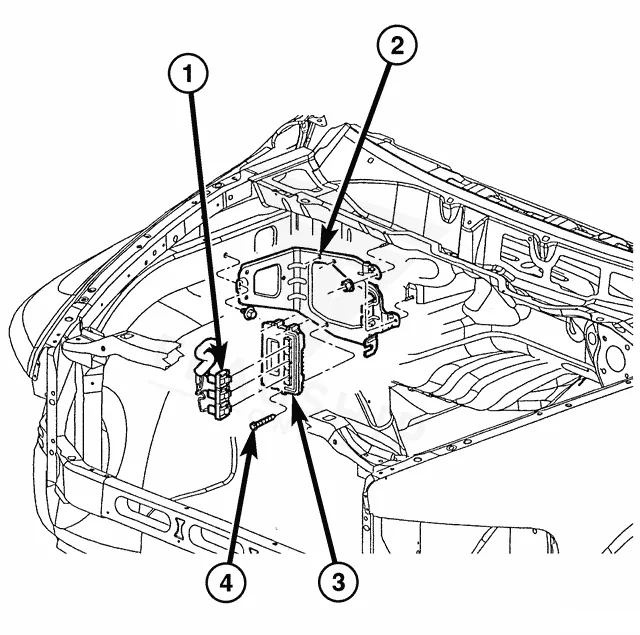
Work with the ignition off, and treat the module as static-sensitive: avoid touching the connector pins at any point.
| Operation | Configuration | Book Time |
|---|---|---|
| Engine Control Module Relearn | Ram 1500 | 0.5 hr |
| Engine Control Module Relearn | Ram 2500 | 0.5 hr |
| Engine Control Module Reset | Ram 1500 | 0.3 hr |
| Engine Control Module Reset | Ram 2500 | 0.3 hr |
| Engine Control Module R&R | 3.7L | 0.8 hr |
| Engine Control Module R&R | 4.7L | 0.8 hr |
| Engine Control Module R&R | 5.7L | 0.8 hr |
| Engine Control Module R&R | GAS | 0.8 hr |
After replacing the PCM, the factory procedure requires using a DRB scan tool to program the new module with your vehicle’s original identification number and current odometer reading. This step is critical—failing to perform it will likely set a diagnostic trouble code and may cause communication issues with other modules on the bus network. Additionally, the factory recommends temporarily disconnecting the ABS controller during PCM replacement to prevent VIN broadcast conflicts. A VIN-programmed replacement unit from Flagship One arrives pre-loaded with your specific VIN, eliminating the need for you to perform these programming steps using a scan tool. This means the module can be installed and the vehicle returned to service without requiring dealer-level tooling or programming equipment.
Every VIN-programmed replacement unit from Flagship One arrives with these steps already completed.
When the PCM on your 2003 Dodge Ram begins to fail, you may experience a no-start condition where the engine cranks but won’t fire, or intermittent stalling during acceleration. Common diagnostic trouble codes associated with module failure include communication faults, sensor circuit malfunctions, and checksum errors. In some cases, the scan tool may not communicate with the vehicle at all, or you may notice erratic transmission shifting behavior despite otherwise normal engine operation. The check engine light may illuminate with multiple unrelated codes appearing simultaneously. If your truck displays these symptoms along with module-internal trouble codes like P0601 indicating internal memory integrity concerns, the PCM likely requires replacement.
The 2003 Dodge Ram with the 5.9L Cummins engine may store module-internal trouble codes indicating various levels of internal PCM failure. These codes signal problems within the module itself rather than external sensor or wiring issues, and they typically cannot be cleared through normal means without addressing the underlying hardware fault.
| Code | Meaning | Full Guide |
|---|---|---|
| P0600 | Module-internal fault | Full P0600 guide → |
| P0601 | Internal memory checksum error | Full P0601 guide → |
| P0606 | Module processor failure | Full P0606 guide → |
Factory service bulletin #18-019-02 Rev. A addresses the flash process for new Engine Control Modules sourced from Cummins for this vehicle. This bulletin provides updated programming procedures that technicians must follow when installing a replacement ECM. The revision clarifies specific steps for ensuring proper module initialization and prevents common post-replacement issues that can occur when the flash programming sequence is not completed correctly.
| Bulletin | Subject | What It Addresses |
|---|---|---|
| 18-019-02 Rev. A | 18-019-02 Rev. A Revision Of Flash Process for New Engine Control Module (ECM) From Cummins | — |
No. The PCM must be matched to your specific engine size, transmission type, and vehicle configuration. A unit programmed for a gas engine will not work properly in a diesel application, and vice versa.
You can perform the physical replacement yourself if you have basic mechanical skills. However, the factory programming requires a DRB scan tool. Purchasing a pre-programmed unit from Flagship One eliminates this requirement.
This often occurs when the new module wasn’t programmed with the correct VIN or mileage, or when the ABS controller wasn’t temporarily disconnected during installation. Verify the programming steps were followed or consider a pre-programmed replacement unit.
When your 2003 Dodge Ram requires a PCM replacement, you have two primary options: repairing your existing module or purchasing a refurbished replacement. Repairs may be possible for some internal faults, but this is typically more expensive and less reliable than installing a known-good replacement unit. A refurbished PCM comes with a warranty and arrives ready for installation. Given the factory programming requirements and the need for specialized scan tools, many owners find that ordering a pre-programmed replacement unit is the most straightforward path to getting their truck back on the road.
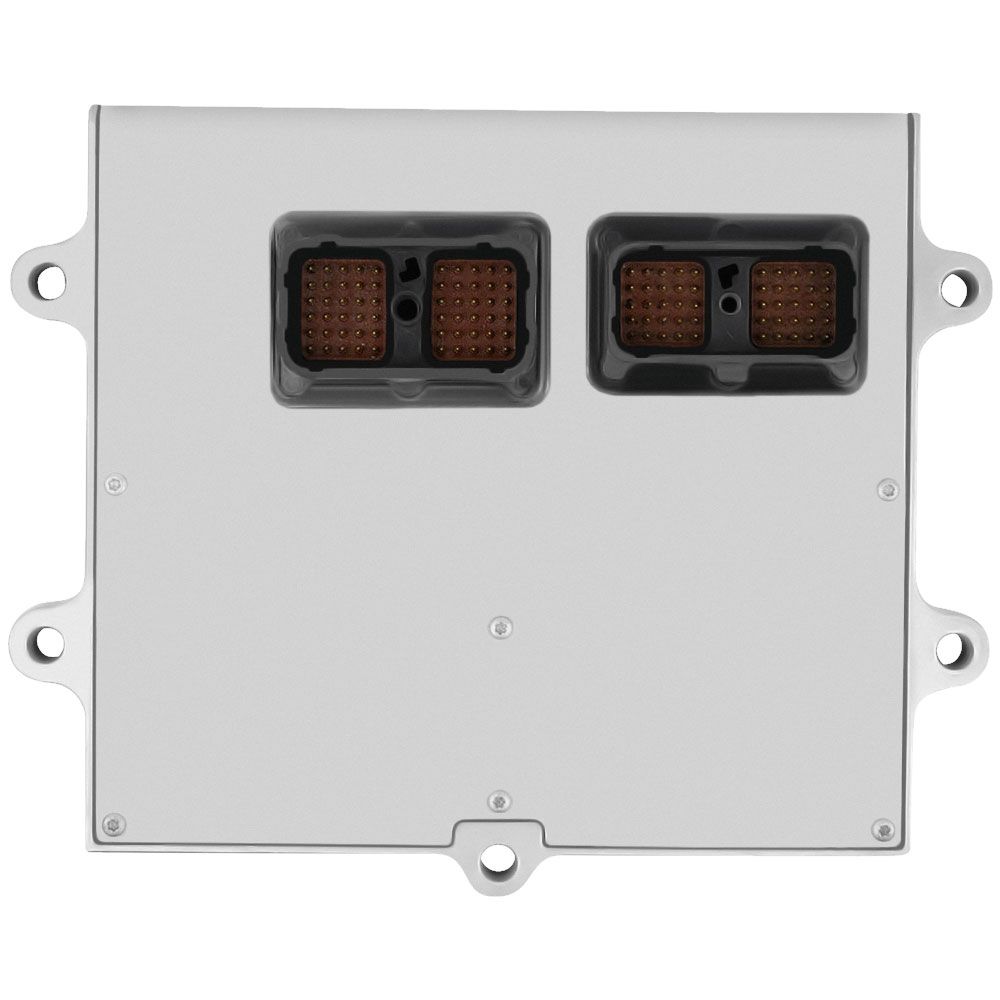
Flagship One stocks a refurbished, VIN-programmed PCM for the 2003 Dodge Ram Truck (Cummins) with a lifetime warranty, free shipping and no core charge. The full Dodge Ram Truck (Cummins) module lineup covers other engine configurations as well.
The PCM in your 2003 Dodge Ram with the 5.9L Cummins diesel is a critical component that manages your engine and transmission operation. Understanding the location, programming requirements, and common failure symptoms helps you make informed decisions about repair options. Whether you choose to install the unit yourself or have it professionally installed, ensuring the module is properly programmed with your vehicle’s VIN prevents diagnostic trouble codes and communication issues down the road.