
Last updated on August 25th, 2026 at 12:51 pm
The Powertrain Control Module in a 1992 Dodge RAM 350 manages engine timing, fuel delivery, and transmission coordination. Failure typically results from internal circuitry loss, voltage spikes, or connector corrosion, leading to loss of engine control and diagnostic communication.
When a 1992 Dodge RAM 350 begins to exhibit hard starting, unexpected stalls, or irregular transmission behavior, the Powertrain Control Module (PCM) is a likely suspect. This guide explains what the PCM does in this particular truck, where it lives, how technicians restore its calibration, and what you can expect from a replacement. By the end, you will understand the typical symptoms, the factory‑approved repair steps, and how a Flagship One replacement can simplify the process, helping you decide between a fresh install or a refurbished unit.
In the 1992 Dodge RAM 350 the Powertrain Control Module serves as the central computer that monitors sensor inputs and commands fuel injectors, ignition timing, and transmission solenoids. It interprets data from the crankshaft position sensor, throttle position, and other engine monitors to keep the engine running smoothly and to coordinate gear shifts. Because the vehicle predates OBD‑II, the PCM also stores proprietary diagnostic information that service tools read directly. Maintaining a functional PCM is crucial for reliable power delivery and emissions compliance. For owners seeking a replacement, replacement powertrain control modules for the 1992 Dodge RAM 350 provide a direct fit and factory‑level performance.
Engine computer (ECM/PCM)
OEM programmed replacements — plug & play, no dealer visit.
Find yours by year, make & model →
Free shipping · Lifetime warranty
The PCM in a 1992 Dodge RAM 350 is mounted beneath the dash on the driver’s side, secured with bolts accessible after removing the lower instrument panel. Installation typically involves disconnecting the battery, unplugging the module harness, and removing the mounting hardware. Replacement requires the same steps in reverse, and the factory book time for a Powertrain Control Module relearn on this model is listed as 0.5 hours for each variant, including the D150, D250, D350, Ram 50, Ramcharger, W150, W250, and W350. After the unit is seated and fastened, technicians perform the relearn procedure to synchronize the new PCM with the vehicle’s sensors.
| Operation | Configuration | Book Time |
|---|---|---|
| Powertrain Control Module Relearn | D150 | 0.5 hr |
| Powertrain Control Module Relearn | D250 | 0.5 hr |
| Powertrain Control Module Relearn | D350 | 0.5 hr |
| Powertrain Control Module Relearn | Ram 50 | 0.5 hr |
| Powertrain Control Module Relearn | Ramcharger | 0.5 hr |
| Powertrain Control Module Relearn | W150 | 0.5 hr |
| Powertrain Control Module Relearn | W250 | 0.5 hr |
| Powertrain Control Module Relearn | W350 | 0.5 hr |
Following a PCM swap in a 1992 Dodge RAM 350 the factory procedure calls for a Powertrain Control Module relearn specific to the model variant, each documented at 0.5 hours of labor. Flagship One supplies units that arrive already VIN‑programmed, so those relearn steps are effectively completed before the part reaches your shop. This reduces shop time and eliminates the need for a separate flash programming session. Installing a Flagship One a VIN‑programmed replacement unit therefore streamlines the repair while ensuring the module matches the vehicle’s original specifications.
When the PCM in a 1992 Dodge RAM 350 begins to fail, owners may notice the engine refusing to start, intermittent stalling while driving, rough idle, or unexpected transmission shifts. Diagnostic scans often show loss of communication with the module, and you might see erratic sensor readings on a scan tool. In some cases, the vehicle may exhibit reduced power output or a sudden surge of fuel consumption. These symptoms arise because the PCM can no longer process sensor data correctly or command the actuators needed for smooth operation.
Factory Service Bulletin #18-037-05 describes a flash programming failure recovery method using the DRBIII® tool. This bulletin provides guidance for technicians when the PCM does not accept a new flash image, outlining steps to reset the module and re‑apply the correct software version.
| Bulletin | Subject | What It Addresses |
|---|---|---|
| 18-037-05 | 18-037-05 Flash Programming Failure Recovery Using DRBIII® | — |
Common causes include exposure to voltage spikes, corrosion of connectors, and internal component wear over time. Environmental factors and electrical anomalies are typical contributors.
The factory process requires a relearn procedure that takes about 0.5 hour of labor. A Flagship One unit arrives VIN‑programmed, so additional programming tools are not required for installation.
Refurbished units that have been tested and VIN‑programmed can provide comparable reliability to new modules, provided they are installed correctly and the vehicle’s electrical system is in good condition.
Routine checks are not typically required, but if you notice symptoms like hard starting or erratic shifting, a diagnostic scan should be performed promptly.
Because the 1992 Dodge RAM 350 predates OBD‑II, emissions compliance is managed by the PCM’s internal programming. A correctly programmed replacement will maintain the original emissions performance.
When the Powertrain Control Module in your 1992 Dodge RAM 350 needs attention, you can choose a brand‑new factory unit or a Flagship One refurbished replacement. Both options restore engine control and transmission coordination, but a VIN‑programmed Flagship One part can reduce shop time by eliminating the relearn step. Evaluate your budget, the condition of your vehicle’s electrical system, and the availability of parts to decide the best path forward.
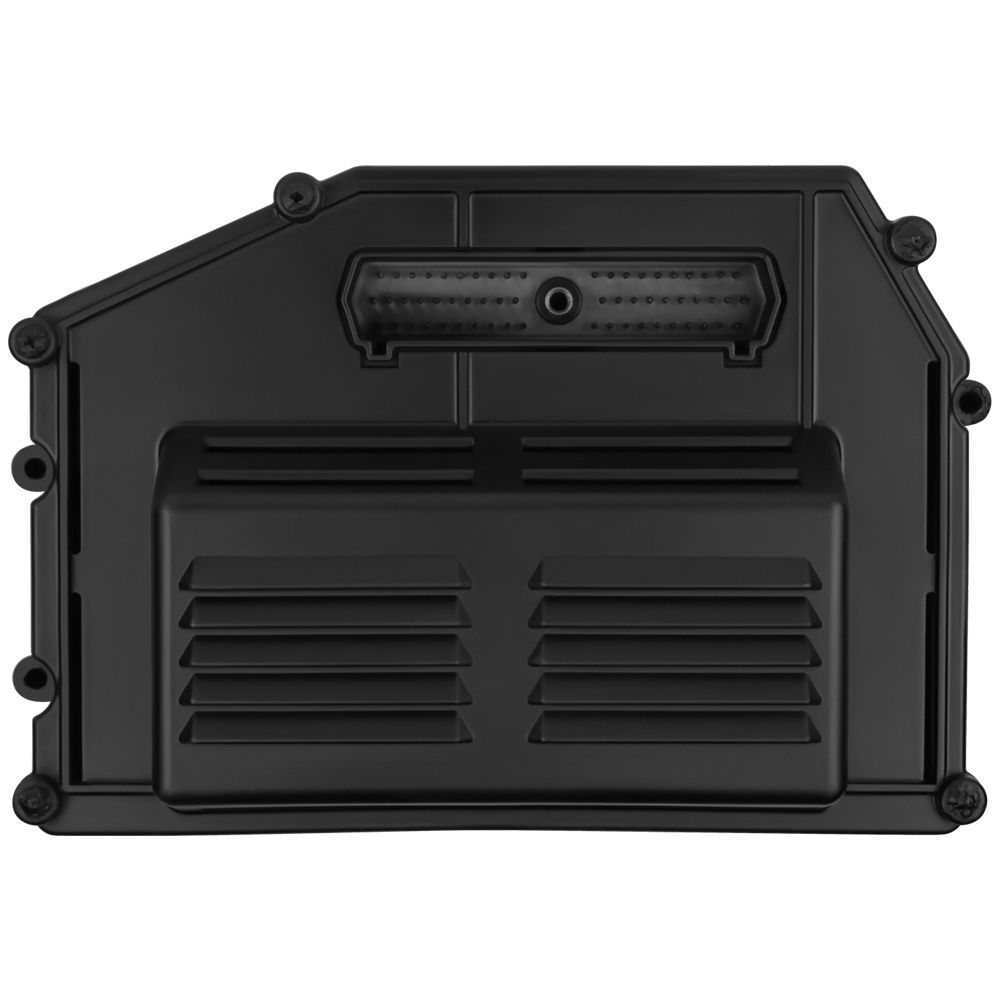
Flagship One stocks a refurbished, VIN-programmed PCM for the 1992 Dodge RAM 350 with a lifetime warranty, free shipping and no core charge. The full Dodge RAM 350 module lineup covers other engine configurations as well.
A malfunctioning PCM can undermine the reliability of your 1992 Dodge RAM 350, but understanding the symptoms and repair process helps you address the issue confidently. Consider a Flagship One replacement to simplify installation while ensuring proper programming.