
Last updated on August 25th, 2026 at 12:22 pm
The powertrain control module (PCM) in your 2005 Chrysler PT Cruiser manages engine and transmission functions. Failures may cause erratic performance, no-start conditions, or stored trouble codes related to internal processor faults.
If your 2005 Chrysler PT Cruiser has been acting up—stalling at stops, refusing to start, or throwing cryptic engine codes—it may be signaling a powertrain control module (PCM) issue. This small but critical computer oversees everything from fuel delivery to transmission shifts, and when it fails, your vehicle’s performance can suffer in frustrating ways. Understanding the role of the PCM, recognizing failure symptoms, and knowing what replacement involves can save you time and guesswork. Whether you’re diagnosing a no-start condition or addressing persistent trouble codes, this guide explains what the PCM does, where it’s located, and how to restore reliable operation. You’ll also learn why a pre-programmed replacement unit can simplify the process and get you back on the road faster.
The powertrain control module in your 2005 Chrysler PT Cruiser is the brain behind the engine and transmission. It continuously monitors sensors for data like engine speed, throttle position, and air intake, then adjusts fuel injection, ignition timing, and shift points to keep everything running smoothly. Without a functioning PCM, your vehicle may struggle to start, idle roughly, or shift erratically. This module also communicates with other systems, such as the anti-lock brakes and emissions controls, ensuring compliance with factory specifications. When the PCM fails, it often triggers replacement engine computers for the PT Cruiser that are pre-programmed to match your vehicle’s VIN, eliminating the need for manual configuration. Given its central role, a faulty PCM can lead to a cascade of issues, from poor fuel economy to complete drivability failures.
The PCM in your 2005 Chrysler PT Cruiser is located inside the engine compartment, typically mounted near the firewall or on the passenger side fender well. Accessing it requires removing a protective cover or air intake duct, but the process is straightforward and doesn’t involve complex disassembly. Replacement involves disconnecting the battery, unplugging the wiring harness, and removing the mounting bolts. The labor time for removing and reinstalling the module is approximately 0.4 to 0.5 hours, depending on whether you’re working with the PCM or the engine control module (ECM). Once the new unit is in place, the wiring harness is reconnected, and the battery is restored. However, the job isn’t complete until the module is programmed to recognize your vehicle’s specific configuration.
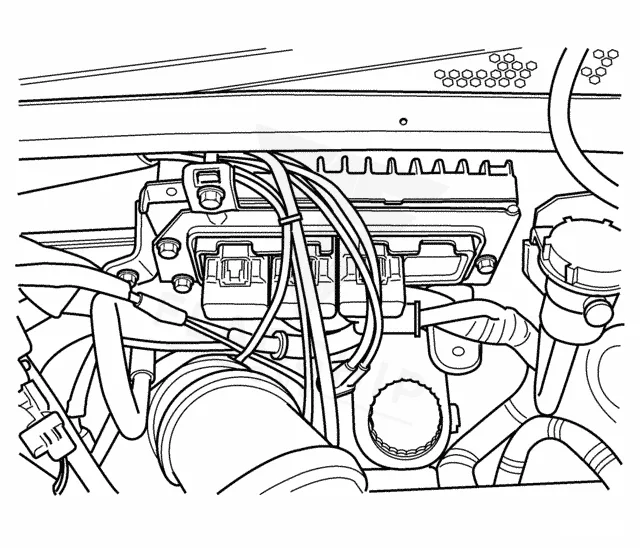
Work with the ignition off, and treat the module as static-sensitive: avoid touching the connector pins at any point.
| Operation | Configuration | Book Time |
|---|---|---|
| Powertrain Control Module Relearn | All configurations | 0.5 hr |
| Powertrain Control Module R&R | All configurations | 0.4 hr |
| Engine Control Module Relearn | All configurations | 0.5 hr |
| Engine Control Module R&R | All configurations | 0.5 hr |
2005 Chrysler PT Cruiser
OEM programmed replacements — plug & play, no dealer visit.
Find yours by year, make & model →
Free shipping · Lifetime warranty
After installing a new PCM in your 2005 Chrysler PT Cruiser, the factory procedure requires a relearn process to synchronize the module with the vehicle’s systems. This typically involves using a scan tool to initiate a series of steps, including clearing old data and recalibrating the module to match your engine and transmission. The relearn process can add 0.5 hours to the job, depending on the tools and software used. However, opting for a VIN-programmed replacement unit eliminates this step entirely, as the module arrives pre-configured for your specific vehicle. This not only saves time but also reduces the risk of errors during programming, ensuring your PT Cruiser starts and runs as expected right after installation.
A failing PCM in your 2005 Chrysler PT Cruiser can manifest in several ways, often mimicking other issues like fuel pump failure or transmission problems. Common symptoms include intermittent stalling, especially at idle or during deceleration, and difficulty starting the engine, which may require multiple attempts. You might also notice erratic shifting patterns, such as harsh or delayed gear changes, or the transmission slipping unexpectedly. Electrical gremlins, like flickering dashboard lights or accessories behaving unpredictably, can also point to PCM trouble. Another telltale sign is the illumination of the check engine light, often accompanied by codes like internal control module memory checksum error, which indicates a fault within the module itself. In some cases, the vehicle may enter a limp-home mode, limiting engine power to prevent further damage. If your scan tool fails to communicate with the PCM, that’s a strong indicator of a complete module failure, requiring immediate attention.
The codes below point to the PCM itself rather than to a sensor or circuit it monitors. Each one links through to its full diagnostic guide.
| Code | Meaning | Full Guide |
|---|---|---|
| P0600 | Module-internal fault | Full P0600 guide → |
| P0601 | Internal memory checksum error | Full P0601 guide → |
| P0606 | Module processor failure | Full P0606 guide → |
| P0615 | Module-internal fault | Full P0615 guide → |
| P0620 | Module-internal fault | Full P0620 guide → |
| P0641 | Module-internal fault | Full P0641 guide → |
| P0645 | Module-internal fault | Full P0645 guide → |
| P0651 | Module-internal fault | Full P0651 guide → |
| P0685 | Module-internal fault | Full P0685 guide → |
| P1601 | Module-internal fault | — |
| P1605 | Module-internal fault | — |
| P1606 | Module-internal fault | — |
Stalling at stoplights can stem from several issues, including a faulty PCM. The module controls idle speed and fuel delivery, so if it’s failing, the engine may not receive the correct signals to maintain idle. Check for stored trouble codes, as these can help pinpoint whether the PCM is the culprit or if another component, like the idle air control valve, is to blame.
A bad PCM often triggers multiple codes related to internal faults, such as P0601 or P0606, rather than isolated sensor codes. If your scan tool can’t communicate with the PCM at all, that’s a strong sign of module failure. Sensor issues, on the other hand, typically generate codes specific to the failing sensor, like a mass airflow or oxygen sensor.
Driving with a failing PCM is risky, as it may cause erratic engine behavior, stalling, or even a no-start condition. In some cases, the vehicle may enter limp-home mode, limiting performance to prevent further damage. If you suspect PCM trouble, it’s best to address it promptly to avoid being stranded or causing additional issues.
In your 2005 Chrysler PT Cruiser, the terms PCM (powertrain control module) and ECM (engine control module) are often used interchangeably, as the vehicle’s computer integrates both engine and transmission control functions. However, some diagnostic procedures may distinguish between the two, with slight variations in labor times for replacement or relearn processes.
Yes, the factory procedure requires a relearn process after installing a new PCM to ensure it synchronizes with your vehicle’s systems. This typically involves using a scan tool to clear old data and recalibrate the module. However, a pre-programmed replacement unit eliminates this step, as it arrives ready to install and drive.
If your 2005 Chrysler PT Cruiser is showing signs of PCM failure, you have options for repair or replacement. While a dealership or repair shop can handle the installation and programming, this often involves additional labor time and costs. A refurbished or new replacement unit, pre-programmed to your vehicle’s VIN, can simplify the process and get you back on the road faster. Consider the age and condition of your PT Cruiser when deciding whether to invest in a replacement module or explore other potential causes of your symptoms.
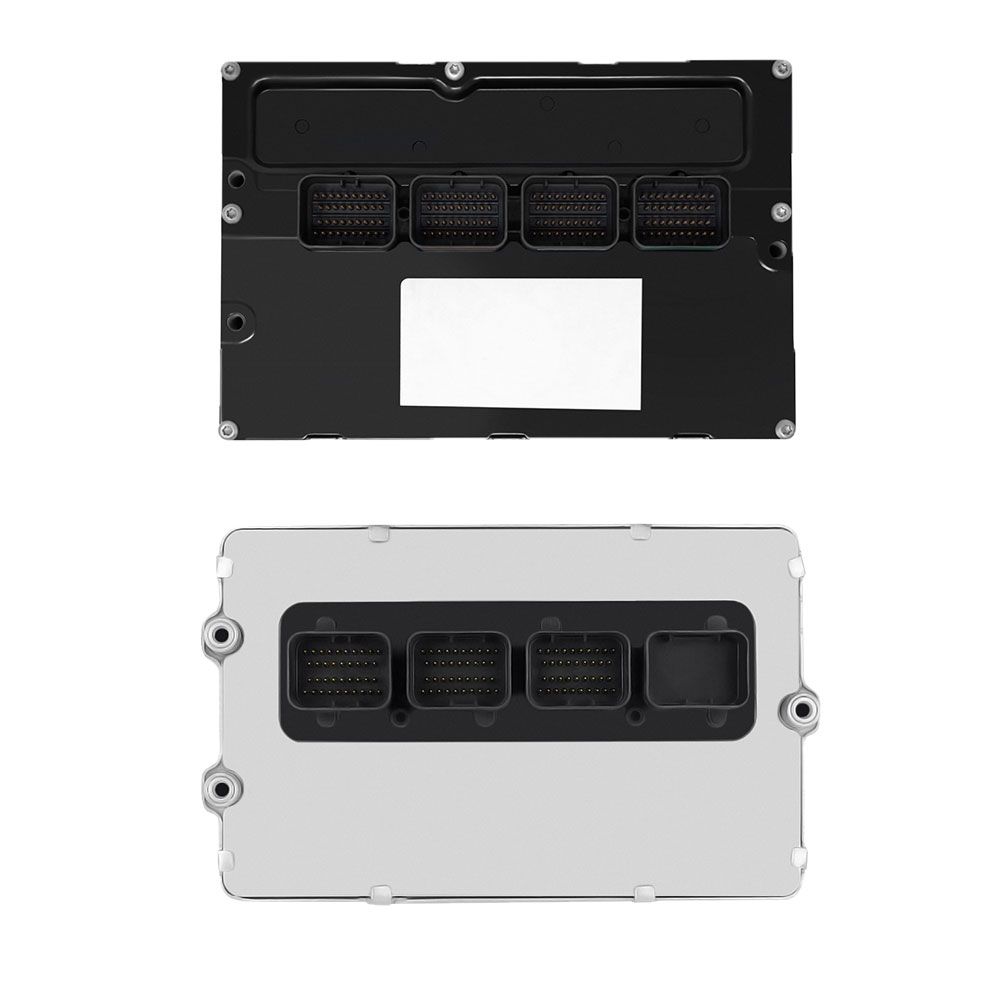
Flagship One stocks a refurbished, VIN-programmed PCM for the 2005 Chrysler PT Cruiser with a lifetime warranty, free shipping and no core charge. The full Chrysler PT Cruiser module lineup covers other engine configurations as well.
The PCM in your 2005 Chrysler PT Cruiser plays a critical role in keeping your engine and transmission running smoothly. If you’re experiencing stalling, no-start conditions, or persistent trouble codes, it may be time to consider a replacement. Opting for a pre-programmed unit can save you the hassle of post-install programming and ensure a seamless transition. Addressing PCM issues promptly can restore your vehicle’s reliability and prevent further complications down the road.