
Last updated on August 25th, 2026 at 12:55 pm
The Powertrain Control Module in the 2019 Audi TT RS manages engine timing, fuel delivery, and transmission shift logic. A failure interrupts these functions, potentially causing stalling, misfires, or loss of power.
When a 2019 Audi TT RS exhibits erratic engine behavior—such as sudden stalls, rough idling, or a check‑engine light—mechanics often look to the Powertrain Control Module as the source. This article explains what the PCM does in your vehicle, why a replacement may be necessary, and how a Flagship One unit can be installed with confidence. You’ll learn the exact steps to remove the module, what to expect during the swap, and why the factory programming steps are already handled. By the end, you’ll understand how a new PCM restores smooth operation and reduces the risk of lingering faults.
The Powertrain Control Module in the 2019 Audi TT RS orchestrates the engine’s fuel and ignition timing while also coordinating shift points in the automatic transmission. It processes inputs from crankshaft, camshaft, throttle position, and pressure sensors, then outputs signals to injectors, spark plugs, and the transmission control unit. This coordination is critical for achieving optimal performance and fuel economy. Powertrain Control Module Audi TT RS The PCM’s failure disrupts this harmony, causing the engine to misfire, stall, or shift incorrectly, which can compromise safety and efficiency. Understanding its role helps you assess whether a replacement is warranted when diagnostic trouble codes appear.
2019 Audi TT RS
OEM programmed ECM for your 2019 Audi TT RS — plug & play, no dealer visit.
Free shipping · Lifetime warranty
The PCM is located under the passenger side of the engine bay, adjacent to the intake manifold. Removing it requires disconnecting the battery, freeing the mounting bolts, and extracting the module with care. The replacement procedure mirrors the removal: install the new unit, re‑torque the mounting bolts, and reconnect the battery. According to the labor book, the entire R&R task takes 0.9 hours. No additional tools or specialized procedures are required beyond standard diagnostic equipment.
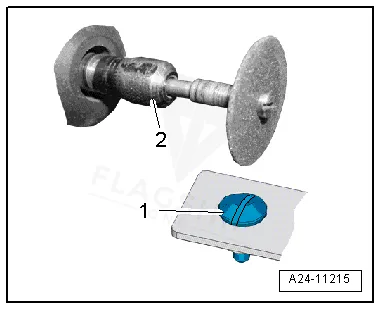
Work with the ignition off, and treat the module as static-sensitive: avoid touching the connector pins at any point.
| Operation | Configuration | Book Time |
|---|---|---|
| Powertrain Control Module R&R | TT Quattro | 0.9 hr |
| Powertrain Control Module R&R | TT RS Quattro | 0.9 hr |
| Powertrain Control Module R&R | TTS Quattro | 0.9 hr |
| Powertrain Control Module Relearn | TT Quattro | 0.5 hr |
| Powertrain Control Module Relearn | TT RS Quattro | 0.5 hr |
| Powertrain Control Module Relearn | TTS Quattro | 0.5 hr |
| Engine Control Module Relearn | TT Quattro | 0.5 hr |
| Engine Control Module Relearn | TT RS Quattro | 0.5 hr |
After the new PCM is installed, the factory requires a relearn procedure to align the engine and transmission parameters. Flagship One units arrive VIN‑programmed, meaning the relearn steps are already completed during manufacturing. Consequently, no post‑install tuning or calibration is needed. This saves time and eliminates the chance of incomplete programming. VIN‑programmed replacement unit The technician simply verifies power‑on readiness and conducts a brief diagnostic check.
A failing PCM in the 2019 Audi TT RS often manifests as a sudden loss of power, stalling during acceleration, or irregular idle speed. The engine may also misfire, leading to a rough running condition. When the PCM cannot communicate with the rest of the vehicle, a scan tool may read codes such as P0605, indicating a malfunction in the engine control module. These symptoms suggest that the PCM is not properly controlling the engine’s fuel and ignition systems, which can degrade performance and increase emissions.
The following internal trouble codes are specific to the PCM in the 2019 Audi TT RS and indicate issues that may warrant a module replacement.
| Code | Meaning | Full Guide |
|---|---|---|
| P0605 | Internal ROM error | Full P0605 guide → |
| P0606 | Module processor failure | Full P0606 guide → |
| P0607 | Module performance fault | Full P0607 guide → |
| P060A | Module-internal fault | — |
| P064F | Module-internal fault | — |
| U0100 | Module-internal fault | Full U0100 guide → |
| U0103 | Module-internal fault | Full U0103 guide → |
The replacement is straightforward, requiring 0.9 hours of labor. It involves disconnecting the battery, removing the module, installing the new unit, and reconnecting the battery. No special tools beyond standard diagnostic equipment are needed.
No. Flagship One units come VIN‑programmed, so the factory relearn steps are already complete. A quick diagnostic check is sufficient to confirm readiness.
If your 2019 Audi TT RS stalls, misfires, or shows a check‑engine light with codes like P0605, it is advisable to inspect the PCM. These symptoms suggest a communication or control issue.
Excessive voltage from a jump‑start can stress the PCM. Using a proper jump‑start procedure and ensuring the battery is in good condition helps protect the module.
Yes, the PCM sits under the passenger side of the engine bay near the intake manifold, making it relatively accessible for removal and installation.
When the PCM in your 2019 Audi TT RS shows signs of failure, you have a choice between a traditional repair or a refurbished replacement. A refurbished unit from Flagship One matches the original specifications, is pre‑VIN‑programmed, and comes with a warranty. Both options aim to restore reliable engine performance and reduce downtime.
Flagship One stocks a refurbished, VIN-programmed PCM for the 2019 Audi TT RS with a lifetime warranty, free shipping and no core charge. The full Audi TT RS module lineup covers other engine configurations as well.
Addressing PCM issues in your 2019 Audi TT RS promptly can prevent further engine damage and maintain the vehicle’s performance. A reliable replacement or repair ensures that the powertrain operates smoothly and safely.