
Last updated on August 25th, 2026 at 12:58 pm
If your 2012 Audi TT RS has developed an intermittent stumble, a sudden loss of power, or a refusal to start, the engine control module may be the culprit. This compact computer sits inside the engine bay, continuously adjusting fuel delivery, spark timing, and turbocharger boost to keep the high-revving 2.5L inline-five running smoothly. Over time, heat cycles and voltage spikes can degrade its internal circuits, leading to erratic behavior or a complete shutdown. Replacing the module itself is straightforward, but the factory requires a specific relearn procedure to synchronize the new unit with the rest of the vehicle’s electronics. Understanding these steps—and the symptoms that signal a failing module—can help you avoid unnecessary diagnostic delays and get your TT RS back on the road with minimal downtime.
The engine control module in your 2012 Audi TT RS serves as the brain of the powertrain, interpreting signals from sensors throughout the engine and transmission to optimize performance. It calculates the precise amount of fuel to inject, the ideal moment to fire each spark plug, and how much boost the turbocharger should generate, all while maintaining emissions compliance. Without this module functioning correctly, the engine may run poorly or fail to start at all. When replacement becomes necessary, you’ll need a unit designed specifically for the TT RS, as replacement engine computers for the Audi TT RS must match the vehicle’s unique calibration to ensure seamless operation. The module’s role extends beyond basic engine management; it also communicates with the transmission control unit to coordinate shifts, particularly under hard acceleration, which is critical for the TT RS’s responsive driving dynamics.
2012 Audi TT RS
OEM programmed ECM for your 2012 Audi TT RS — plug & play, no dealer visit.
Free shipping · Lifetime warranty
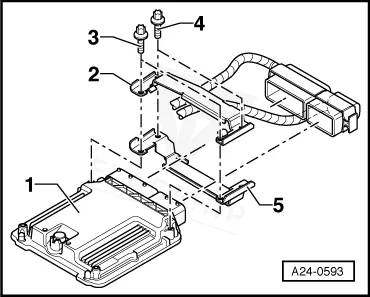
In the 2012 Audi TT RS, the engine control module is mounted on the driver’s side of the engine bay, secured to the firewall behind a protective cover. Accessing it requires removing the cover and disconnecting the wiring harness, which may involve releasing a few clips or fasteners. The factory labor guide allocates 1.3 hours for removal and reinstallation of the module, accounting for the time needed to carefully disconnect and reconnect the electrical connectors without damaging the pins. Once the old unit is removed, the new module is bolted into place, and the wiring harness is reattached. No special torque specifications are provided for the mounting bolts, but they should be tightened securely to prevent vibration-related issues. After installation, the vehicle may require a relearn procedure to ensure proper communication with other onboard systems.
| Operation | Configuration | Book Time |
|---|---|---|
| Powertrain Control Module R&R | All configurations | 1.3 hr |
| Powertrain Control Module Relearn | All configurations | 0.5 hr |
| Engine Control Module Relearn | All configurations | 0.5 hr |
| Engine Control Module Reset | All configurations | 0.3 hr |
| Engine Control Module R&R | All configurations | 1.3 hr |
After installing a new engine control module in your 2012 Audi TT RS, the factory procedure typically requires a 0.5-hour relearn process to synchronize the unit with the vehicle’s immobilizer and other control modules. This step ensures the engine starts and runs correctly, as the module must recognize the ignition key and match the vehicle’s unique calibration. However, when you install a VIN-programmed replacement unit, these steps are already completed at the factory. The module arrives pre-configured to your vehicle’s specific VIN, eliminating the need for additional programming or relearn procedures. This not only saves time but also reduces the risk of errors during the setup process, allowing you to focus on verifying that the engine operates smoothly post-installation.
A failing engine control module in your 2012 Audi TT RS may produce a range of symptoms, some of which can mimic other issues like fuel pump failure or ignition coil problems. One of the most common signs is a no-start condition, where the engine cranks but refuses to fire, often due to incorrect fuel or spark timing signals. Stalling at idle or during acceleration is another frequent complaint, particularly if the module loses communication with critical sensors. Misfires may also occur, leading to rough running or a noticeable loss of power, especially under load. In some cases, the vehicle may enter a limp-home mode, limiting turbo boost and throttle response to prevent further damage. Diagnostic trouble codes related to internal module faults, such as an internal control module memory check error, may appear during a scan, indicating corruption within the module’s memory. Other codes may point to sensor signal discrepancies, even if the sensors themselves are functioning correctly. Additionally, you might experience issues with the transmission shifting erratically or failing to engage gears smoothly, as the module’s communication with the transmission control unit becomes unreliable.
Common signs include a no-start condition, stalling, misfires, or the vehicle entering limp mode. Diagnostic trouble codes related to internal module faults, such as P0601, may also appear during a scan. If these symptoms persist after checking other potential causes, the module may need replacement.
While the physical replacement is straightforward, the factory requires a relearn procedure to synchronize the new module with the vehicle’s systems. If you’re not equipped to perform this step, it’s best to have the work done by a professional to avoid starting or drivability issues.
The relearn procedure ensures the new module recognizes the vehicle’s immobilizer system and matches its calibration to the engine and transmission. Without this step, the engine may not start or may run poorly, as the module won’t communicate correctly with other onboard systems.
Skipping the relearn procedure may result in a no-start condition or poor engine performance, as the module won’t be properly synchronized with the vehicle’s electronics. In some cases, the engine may start but run erratically or enter limp mode to prevent damage.
The factory labor guide allocates 1.3 hours for removal and reinstallation of the module, plus an additional 0.5 hours for the relearn procedure. If you install a pre-programmed unit, the relearn step is unnecessary, reducing the total time required.
If your 2012 Audi TT RS is experiencing symptoms of a failing engine control module, you have options for replacement. A new unit from the dealership will require programming and a relearn procedure, adding time and cost to the repair. Alternatively, a refurbished or pre-programmed replacement can simplify the process, as it arrives ready to install and eliminates the need for additional programming steps. Consider your budget and timeline when deciding which route to take, and ensure the replacement unit is compatible with your vehicle’s specific calibration.
Flagship One stocks a refurbished, VIN-programmed PCM for the 2012 Audi TT RS with a lifetime warranty, free shipping and no core charge. The full Audi TT RS module lineup covers other engine configurations as well.
The engine control module in your 2012 Audi TT RS plays a critical role in maintaining the vehicle’s performance and drivability. If you’re experiencing symptoms like stalling, misfires, or a no-start condition, the module may be the source of the problem. Replacing it involves straightforward labor, but the factory relearn procedure is essential for proper operation. By understanding these steps and the symptoms of failure, you can address the issue efficiently and get your TT RS back on the road with confidence.