
Last updated on August 25th, 2026 at 12:56 pm
The Engine Control Module (ECM) and Powertrain Control Module (PCM) in your 2017 Audi TTS serve as the central brains managing fuel delivery, ignition timing, turbocharger boost, and transmission shifting. When these processors fail internally, the vehicle may not run at all or may run erratically.
If your 2017 Audi TTS has stopped running or is exhibiting erratic behavior, the engine computer may have failed. The Powertrain Control Module and Engine Control Module in this vehicle control virtually every aspect of engine operation, from turbo boost pressure to fuel injection timing to automatic transmission shift points. When these modules suffer internal failures, the result can be a no-start condition, stalling, limp-home mode, or any number of diagnostic trouble codes setting. This guide explains what these modules do, where they are located, the labor involved in replacement, and what symptoms to watch for. You will also learn the factory programming requirements and why choosing a pre-programmed replacement can simplify the repair process significantly.
The 2017 Audi TTS relies on two distinct but interconnected control modules. The Engine Control Module handles internal combustion functions: air-fuel mixture, variable valve timing, knock detection, and emissions control systems. The Powertrain Control Module coordinates transmission behavior, stability control integration, and certain drive-by-wire throttle functions. Together they form the computational backbone of the 2.0L turbocharged four-cylinder engine. When either module experiences an internal processor fault, memory corruption, or voltage spike damage, the result is immediate and often severe. The vehicle may not start, may run rough, or may enter a reduced-power mode designed to prevent further damage. Replacing these modules is not a matter of swapping a simple relay; the new unit must be matched to your specific vehicle identification number and configured with the correct software calibration. If you are searching for replacement engine computers for the TTS, understanding this factory programming requirement is essential before purchasing any part.
2017 Audi TTS
OEM programmed ECM for your 2017 Audi TTS — plug & play, no dealer visit.
Free shipping · Lifetime warranty
The Engine Control Module on your 2017 Audi TTS is located in the passenger-side footwell, behind the glove box and associated trim panels. Access requires removal of the lower dashboard panel and potentially the glove box assembly itself. The Powertrain Control Module is typically mounted in the engine compartment, often near the battery or on the driver-side firewall. Both locations require careful connector manipulation and proper torque specification when reinstalling. The factory book time for ECM R&R is 0.9 hours, and PCM R&R requires the same 0.9 hours. These times assume a trained technician with the proper factory scan tool and wiring diagram access. Plan for additional time if corrosion is present on connectors or if the mounting hardware proves difficult. Always use factory-specified connectors and seals when reassembling to maintain the original environmental protection rating.
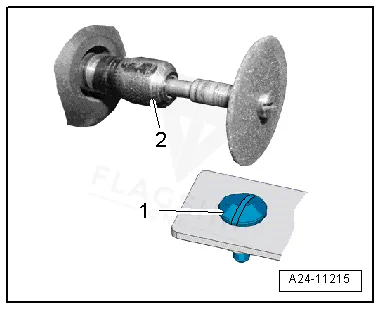
Work with the ignition off, and treat the module as static-sensitive: avoid touching the connector pins at any point.
| Operation | Configuration | Book Time |
|---|---|---|
| Powertrain Control Module R&R | All configurations | 0.9 hr |
| Powertrain Control Module Relearn | All configurations | 0.5 hr |
| Engine Control Module Relearn | All configurations | 0.5 hr |
| Engine Control Module Reset | All configurations | 0.3 hr |
| Engine Control Module R&R | All configurations | 0.9 hr |
After installing a replacement ECM or PCM in your 2017 Audi TTS, the factory procedure requires a complete module reset followed by a relearn procedure. The ECM reset takes 0.3 hours, while the ECM relearn procedure requires 0.5 hours. The PCM relearn is a separate 0.5-hour procedure. These steps synchronize the new module with your vehicle’s specific sensors, transmission adaptive tables, and immobilizer system. Without completing these factory procedures, the engine may run poorly or not at all. This is why purchasing a replacement unit that arrives already programmed to your VIN is advantageous. When you order a VIN-programmed replacement unit, the module comes from Flagship One with your specific vehicle identification number already burned in, meaning the initial programming step is complete before the part ever arrives at your shop.
When the ECM or PCM in your 2017 Audi TTS begins to fail, the symptoms often appear suddenly and are sometimes mistaken for other component failures. A no-start condition with no cranking response is common when the processor loses communication with the starter control circuit. Stalling shortly after startup, especially at idle, frequently occurs when the module can no longer maintain proper idle air control. Misfire codes such as P0300 through P0304 may appear across multiple cylinders even when spark plugs and injectors are functioning normally. In some cases, a scan tool may not communicate with the engine at all, displaying a U0100 (lost communication with ECM) or U0103 (lost communication with PCM) code. The vehicle may also exhibit harsh shifting, default to limp mode, or display multiple unrelated fault codes simultaneously. If your TTS has set internal memory fault or similar processor codes, the module will likely require replacement rather than repair.
The following module-internal diagnostic trouble codes were documented for this specific 2017 Audi TTS. These codes indicate various levels of internal processor or memory failure within the Engine Control Module and Powertrain Control Module, each requiring different diagnostic approaches.
A used unit will require dealer programming to match your vehicle’s VIN and immobilizer system. This service often costs as much or more than purchasing a new or refurbished unit, and the used part carries unknown remaining life. Additionally, some used modules may have the same internal failure mode that caused the original part to fail.
Skipping the factory relearn procedure will likely result in poor idle quality, hesitation on acceleration, incorrect fuel trims, and potentially triggering the check engine light again. The relearn procedure allows the new module to adapt to your specific engine’s characteristics and the transmission shift adaptives.
These codes indicate internal module failures within the ECM processor itself. P0605 typically signifies a read-only memory fault, while P0606 indicates a processor communication failure. Both usually require module replacement as the internal circuitry has been compromised. Voltage spikes from jump-starting or a weak charging system are common root causes.
The specific fault code determines which module has failed. Codes in the P0600-P0699 range generally indicate ECM internal faults, while U0100 and U0103 codes specifically point to communication loss with the ECM and PCM respectively. A qualified scan tool can isolate which module is not responding.
Module repair is generally not a viable option for modern vehicles like the 2017 Audi TTS. The internal processor and memory circuits are not serviceable components. Attempting repair voids any warranty and may introduce reliability issues. Replacement with a properly programmed unit is the standard factory-approved solution.
When your 2017 Audi TTS requires a new engine computer, you have two primary paths: repair the vehicle at a dealership using all-new genuine OEM parts, or source a refurbished or new replacement unit that arrives VIN-programmed. The dealership route ensures exact factory specifications but often carries significantly higher labor and parts costs. The second option, using a pre-programmed replacement from Flagship One, can reduce overall repair time by eliminating the dealer programming wait. Consider your budget, timeline, and warranty preferences when choosing which path suits your situation.
Flagship One stocks a refurbished, VIN-programmed PCM for the 2017 Audi TTS with a lifetime warranty, free shipping and no core charge. The full Audi TTS module lineup covers other engine configurations as well.
The 2017 Audi TTS depends on properly functioning ECM and PCM modules to operate its sophisticated 2.0L turbocharged engine. If your vehicle is experiencing no-start conditions, stalling, multiple fault codes, or communication failures, the control module is likely the culprit. Understanding the labor involved, the programming requirements, and the importance of VIN-matching helps you make an informed repair decision. Whether you choose dealer service or a quality programmed replacement, addressing the issue promptly prevents further damage to your vehicle.