
Last updated on August 25th, 2026 at 01:03 pm
The Powertrain Control Module (PCM) in the 1999 Mercury Tracer 2.0L is the primary computer that manages engine timing, fuel delivery, and transmission operation. Failure often results from voltage spikes, moisture intrusion, or age-related component degradation, leading to drivability issues.
If your 1999 Mercury Tracer 2.0L is experiencing intermittent stalling, a no-start condition, or the check engine light stays on, the Powertrain Control Module (PCM) may be at fault. The PCM is the brain of your engine and transmission, controlling fuel injection, ignition timing, and shift points. Over time, internal components can fail due to heat, vibration, or electrical surges. Replacing the PCM is a straightforward repair, but it requires careful handling and a post-installation relearn procedure to synchronize the module with your vehicle’s systems. This article explains what the PCM does in your Tracer, where it is located, the replacement labor times, and the factory-recommended steps after installation. You will also learn about common symptoms, relevant service bulletins, and how a pre-programmed replacement unit can simplify the process. Understanding these details helps you make an informed decision about repairing or replacing your PCM.
The Powertrain Control Module (PCM) in your 1999 Mercury Tracer 2.0L is a single unit that combines engine and transmission control. It receives input from sensors such as the crankshaft position sensor, oxygen sensors, and throttle position sensor, then adjusts fuel mixture, spark timing, and transmission shift patterns in real time. This module also monitors emissions systems and stores diagnostic trouble codes when a fault is detected. A failing PCM can cause a range of problems because it no longer processes sensor data accurately. For example, incorrect fuel trim may lead to poor fuel economy or hesitation. The PCM is also responsible for communicating with the scan tool during diagnostics; if it fails, the tool may not connect. When you need a replacement, you can choose from replacement PCMs for the Mercury Tracer that are pre-programmed to match your vehicle’s VIN and original calibration. This avoids the need for a dealer visit and ensures the module is ready to install. The PCM’s role is critical to drivability, so addressing failure symptoms promptly can prevent further issues.
1999 Mercury Tracer
OEM programmed ECM for your 1999 Mercury Tracer — plug & play, no dealer visit.
Free shipping · Lifetime warranty
The replacement procedure for the PCM on the 1999 Mercury Tracer 2.0L is assigned a book time of 0.7 hours for removal and replacement. An additional 0.5 hours is required for the factory relearn procedure. The module is sensitive to static electrical charges; if exposed, damage may result. During installation, ensure you are grounded and avoid touching the connector pins. The PCM is typically mounted in the engine bay or behind the glove box, but the exact location may vary. Always disconnect the battery before starting work. After installing the new module, the relearn procedure must be performed to allow the PCM to adapt to the vehicle’s specific sensors and actuators. This step is critical for proper operation.
Work with the ignition off, and treat the module as static-sensitive: avoid touching the connector pins at any point.
| Operation | Configuration | Book Time |
|---|---|---|
| Engine Control Module Relearn | All configurations | 0.5 hr |
| Engine Control Module R&R | All configurations | 0.7 hr |
| Powertrain Control Module R&R | All configurations | 0.7 hr |
| Powertrain Control Module Relearn | All configurations | 0.5 hr |
After replacing the PCM in your 1999 Mercury Tracer 2.0L, the factory procedure requires a relearn process that takes 0.5 hours. This involves driving the vehicle through a specific sequence of speeds and throttle positions so the PCM can learn idle, fuel trim, and transmission shift points. Without this step, the vehicle may run poorly or set false trouble codes. To simplify the process, you can choose a VIN-programmed PCM from Flagship One that arrives with the correct calibration already loaded. This eliminates the need for a dealer visit and the relearn procedure is still required, but the module is ready to install and communicate with your vehicle’s systems immediately. The pre-programming ensures that the PCM matches your Tracer’s original specifications, reducing the risk of compatibility issues.
A failing PCM in your 1999 Mercury Tracer 2.0L can produce a variety of symptoms. The most common include a no-start condition where the engine cranks but does not fire, or intermittent stalling while driving. You may also notice rough idle, hesitation during acceleration, or poor fuel economy. The check engine light may illuminate with codes such as small EVAP leak which, according to TSB 99-23-04, may appear without any driveability concerns. Other symptoms include erratic transmission shifting, failure of the scan tool to communicate with the PCM, or the engine running in a limp-home mode. Because the PCM controls multiple systems, a single failure can mimic other component faults. If you experience these issues and have ruled out common causes like bad sensors or wiring, the PCM should be tested. Static discharge during handling can also damage the module, so always take precautions.
Three factory service bulletins apply to the 1999 Mercury Tracer 2.0L. TSB 99-04-03 covers reprogramming of Powertrain Control Modules on EEC V vehicles, which includes your Tracer. TSB 99-14-07 provides calibration information for vehicles built through January 29, 1999, and applies to engines including the 2.0L. TSB 99-23-04 addresses diagnostic trouble codes P0442 and P0455, which may cause the malfunction indicator lamp to illuminate without any driveability concerns. These bulletins indicate that the manufacturer has issued guidance for PCM reprogramming and calibration updates, as well as for EVAP system fault diagnosis.
| Bulletin | Subject | What It Addresses |
|---|---|---|
| 99-04-03 | EEC V VEHICLES ONLY – OUT-OF-VEHICLE – REPROGRAMMING POWERTRAIN CONTROL MODULES (PCMS) | — |
| 99-14-07 | APPLICABLE ENGINES ARE 2.0L, 2.5L, 3.0L, 3.4L, 3.8L, 4.0L, 4.2L, 4.6L, 5.0L, 5.4L, 6.8L, AND 7. | — |
| 99-23-04 | DIAGNOSTIC TROUBLE CODES (DTCS) P0442 AND P0455 – MALFUNCTION INDICATOR LAMP (MIL) – NO DRIVEAB | — |
Common signs include a no-start condition, stalling, rough idle, or the check engine light on. You may also notice erratic transmission shifting or a scan tool that cannot communicate with the module. If you have ruled out other components, the PCM may be at fault.
Yes, replacement is straightforward with basic hand tools. The book time is 0.7 hours for removal and replacement. However, you must handle the module carefully to avoid static damage, and after installation a relearn procedure is required. A pre-programmed PCM can simplify the process.
The factory relearn takes 0.5 hours and involves driving the vehicle through a specific sequence of speeds and throttle positions. This allows the PCM to learn idle, fuel trim, and shift points. Without it, the vehicle may run poorly or set false codes.
A used PCM may work, but it must be from the same engine and model year, and it will need to be reprogrammed to your vehicle’s VIN and calibration. Used modules also carry the risk of unknown failure history. A new pre-programmed unit is often more reliable.
TSB 99-23-04 addresses diagnostic trouble codes P0442 and P0455, which indicate small and large EVAP system leaks. The bulletin states that these codes may illuminate the check engine light without causing driveability concerns. It provides guidance for diagnosis and repair.
When your 1999 Mercury Tracer 2.0L needs a new PCM, you have options. Repairing the original module is sometimes possible, but replacement with a new or refurbished unit is often more reliable. A pre-programmed PCM from Flagship One arrives ready to install, saving you the time and cost of a dealer visit. Consider the condition of your vehicle and your budget when choosing the best path forward.
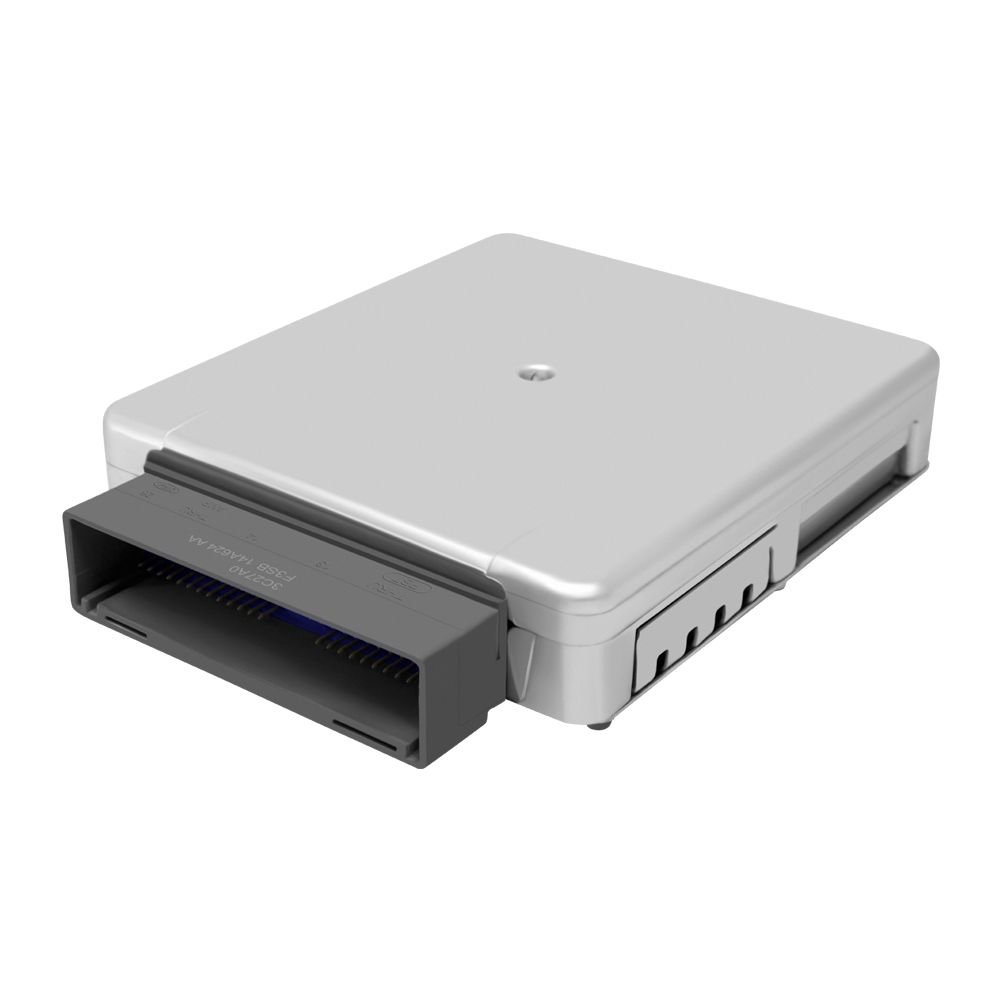
Flagship One stocks a refurbished, VIN-programmed PCM for the 1999 Mercury Tracer with a lifetime warranty, free shipping and no core charge. The full Mercury Tracer module lineup covers other engine configurations as well.
The PCM in your 1999 Mercury Tracer 2.0L is essential for proper engine and transmission operation. Recognizing symptoms early and following the correct replacement and relearn procedures can restore drivability. Whether you choose a repair or a pre-programmed replacement, addressing PCM issues promptly keeps your Tracer on the road.