
Last updated on August 25th, 2026 at 12:11 pm
The powertrain control module on the 1993 Mercury Tracer 1.9L manages fuel delivery, ignition timing, and transmission signals; the engine control module handles spark and injector pulses for the 1.9‑liter engine. When either unit fails, the vehicle can experience a lit malfunction lamp, rough idle, stalling, or a complete no‑start condition.
Owners of a 1993 Mercury Tracer equipped with the 1.9‑liter engine often encounter a glowing malfunction indicator lamp, unexpected stalling, or a refusal to start. These symptoms frequently trace back to the powertrain control module or the engine control module, the two computers that coordinate fuel, spark, and transmission functions. Understanding where each module lives, how long a shop typically needs to swap them, and what the factory expects after installation can save time and prevent repeat visits. This guide walks through the physical location of the PCM, the labor allowances for both modules, the relearn procedures that follow a replacement, and the relevant service bulletin that highlights a known connector‑retention issue. By the end you will know what to expect during a module change, why the relearn steps matter, and how a pre‑programmed replacement can streamline the job. The guide also separates PCM and ECM labor values, letting you confirm that a shop quote matches the published 0.6‑hour PCM removal, 0.5‑hour PCM relearn, 1.1‑hour ECM removal, and 0.5‑hour ECM relearn.
The powertrain control module in the 1993 Mercury Tracer 1.9L acts as the central brain for the drivetrain, coordinating fuel injection, ignition timing, and automatic transmission shift points based on sensor inputs such as throttle position, engine speed, and vehicle speed. The engine control module, dedicated to the 1.9‑liter four‑cylinder, directly commands the distributorless ignition system and the fuel injectors, ensuring each cylinder receives the correct spark and fuel pulse for efficient combustion. When either computer develops an internal fault or loses communication with its sensor network, the vehicle may exhibit a persistent malfunction indicator lamp, rough running, sudden loss of power, or a complete failure to start. Heat, vibration, and moisture intrusion through the connector seals are common contributors to module degradation over time. Because the PCM sits behind the middle of the dashboard, it is exposed to cabin temperature swings and occasional condensation, while the ECM resides in the engine bay where it endures higher thermal cycling. Replacing a faulty unit restores proper command signals, but the factory requires a relearn routine so the new module can synchronize with the vehicle’s existing sensors and actuators, replacement engine computers for the Tracer are programmed to match the original calibration, which eliminates the need for a separate dealer flash after installation. The relearn typically involves cycling the ignition on and off while the module records sensor baselines, a process that takes about half an hour in the shop.
1993 Mercury Tracer 1.9L
OEM programmed ECM for your 1993 Mercury Tracer 1.9L — plug & play, no dealer visit.
Free shipping · Lifetime warranty
The PCM on the 1993 Mercury Tracer 1.9L sits behind the middle of the dashboard. Access requires taking off the air duct that sits ahead of the unit, then unbolting the computer from its bracket. The published removal and installation time for the PCM is 0.6 hours, and the required relearn after installation adds another 0.5 hours. For the engine control module on the 1.9‑liter engine, the book time for removal and replacement is 1.1 hours, with a separate 0.5‑hour relearn. The 1.8‑liter version would call for 1.0 hours, but this vehicle uses the 1.9L, so the 1.1‑hour figure applies. No torque specifications are listed for the mounting fasteners in the available data, so the shop should follow standard practice for similar brackets. Because the PCM sits inside the cabin, the work area is relatively clean, while the ECM is accessed from the engine compartment where heat and debris are more prevalent.
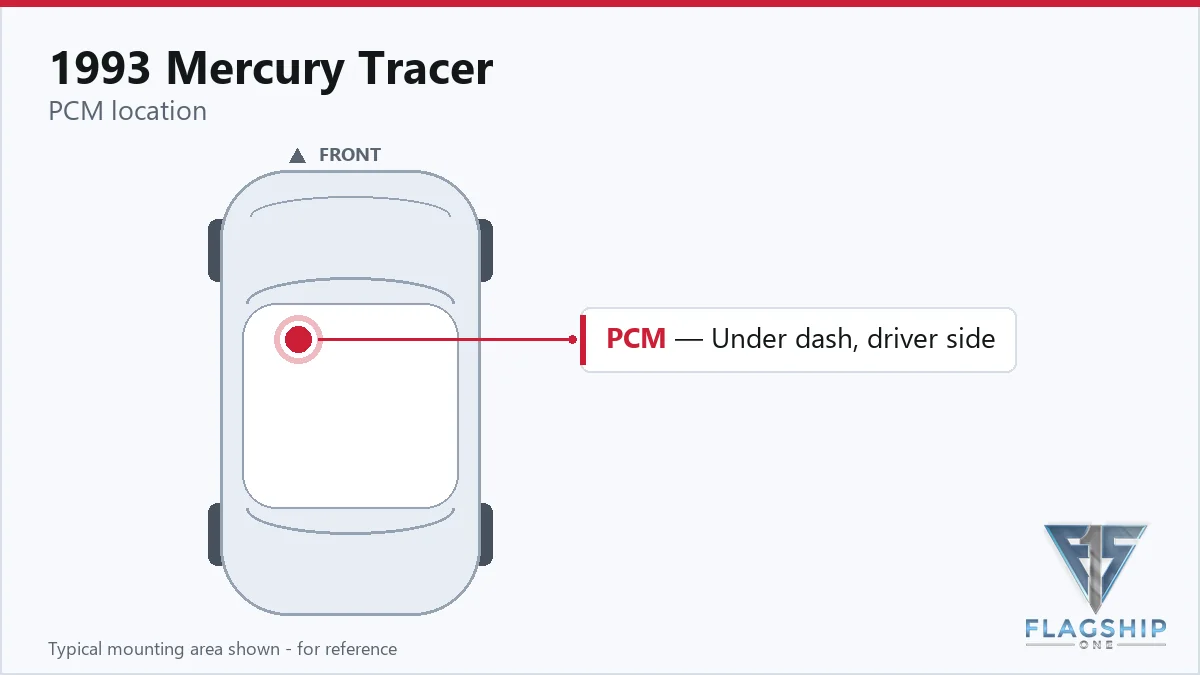
Work with the ignition off, and treat the module as static-sensitive: avoid touching the connector pins at any point.
| Operation | Configuration | Book Time |
|---|---|---|
| Engine Control Module Relearn | All configurations | 0.5 hr |
| Engine Control Module R&R | 1.8L | 1.0 hr |
| Engine Control Module R&R | 1.9L | 1.1 hr |
| Powertrain Control Module R&R | All configurations | 0.6 hr |
| Powertrain Control Module Relearn | All configurations | 0.5 hr |
After a PCM or ECM is swapped on the 1993 Mercury Tracer 1.9L, the factory service manual calls for a relearn routine that lets the new computer learn sensor baselines and adapt its fuel‑and‑spark maps; the PCM relearn is allotted 0.5 hours and the ECM relearn also 0.5 hours. Performing this procedure normally requires a scan tool and a specific ignition‑on/off sequence. However, when the replacement module is supplied already calibrated to the vehicle identification number, the relearn can be skipped because the unit arrives with the correct calibration stored in memory. a VIN-programmed replacement unit eliminates the need for the dealer‑level flash and reduces shop time to the basic removal and installation figures. Technicians should still verify that the malfunction indicator lamp extinguishes and that the engine runs smoothly after the install, but the programmed unit removes the extra half‑hour relearn steps for both modules.
Drivers of the 1993 Mercury Tracer 1.9L may notice the malfunction indicator lamp staying on after startup, a condition that often points to a communication loss between the powertrain control module and the engine control module. Intermittent stalling at idle or during low‑speed maneuvers can arise when the PCM fails to deliver the correct transmission shift commands or when the ECM cannot maintain a stable injector pulse width. A hard no‑start situation, where the engine cranks but never fires, frequently traces back to an ECM that no longer triggers the distributorless ignition system. Rough running, misfires felt as a shudder under acceleration, and a sudden drop in fuel economy are also typical when the fuel‑map calculations become corrupted. In some cases the vehicle may exhibit erratic speedometer behavior or unexpected gear‑holding because the PCM’s output to the transmission control circuit is compromised. Because the PCM sits behind the middle of the dashboard, moisture intrusion through the connector seals can cause intermittent electrical faults that appear and disappear with temperature changes. The ECM, exposed to engine‑bay heat, can develop solder‑joint fatigue that leads to sporadic loss of injector drive. Recognizing these patterns helps a technician decide whether to test the modules in‑circuit or proceed directly to replacement.
The 1995 technical service bulletin 95-10-02 addresses a malfunction indicator lamp that remains illuminated on distributorless ignition system equipped Tracers. The bulletin describes a revised connector retention clip and seal for the ignition control module, as well as an updated wiring arrangement to prevent the clip from loosening. Dealers were instructed to replace the original clip with the new design and to verify that the connector seals are intact, which eliminates the intermittent lamp condition caused by a poor electrical connection at the ICM.
| Bulletin | Subject | What It Addresses |
|---|---|---|
| 95-10-02 | “MALFUNCTION INDICATOR LAMP” (MIL) ILLUMINATED – DISTRIBUTORLESS IGNITION SYSTEM (DIS) ONLY – I | — |
The PCM removal and installation is listed at 0.6 hours with an additional 0.5 hours for relearn. The ECM on the 1.9L engine requires 1.1 hours for removal and replacement plus a separate 0.5‑hour relearn.
The PCM sits behind the middle of the dashboard; the air duct positioned in front of the module must be taken off before the computer can be unbolted.
No, this model predates OBD‑II, so the modules do not store standardized P‑codes; diagnosis relies on the malfunction indicator lamp, live data, and the relevant service bulletin.
It covers a malfunction indicator lamp that stays on due to a loose ignition control module connector clip, providing a revised clip, seal, and wiring update to correct the condition.
Yes, a module that arrives pre‑programmed to the vehicle identification number already contains the correct calibration, so the 0.5‑hour relearn for each computer can be omitted.
When a PCM or ECM fails on the 1993 Mercury Tracer 1.9L, you can either have the original unit repaired by a specialist or install a refurbished replacement that matches the factory calibration. A repaired unit may cost less upfront but often requires the full relearn sequence, adding shop time. A pre‑programmed refurbished module arrives ready to run, letting the technician finish the job after the basic removal and installation steps.
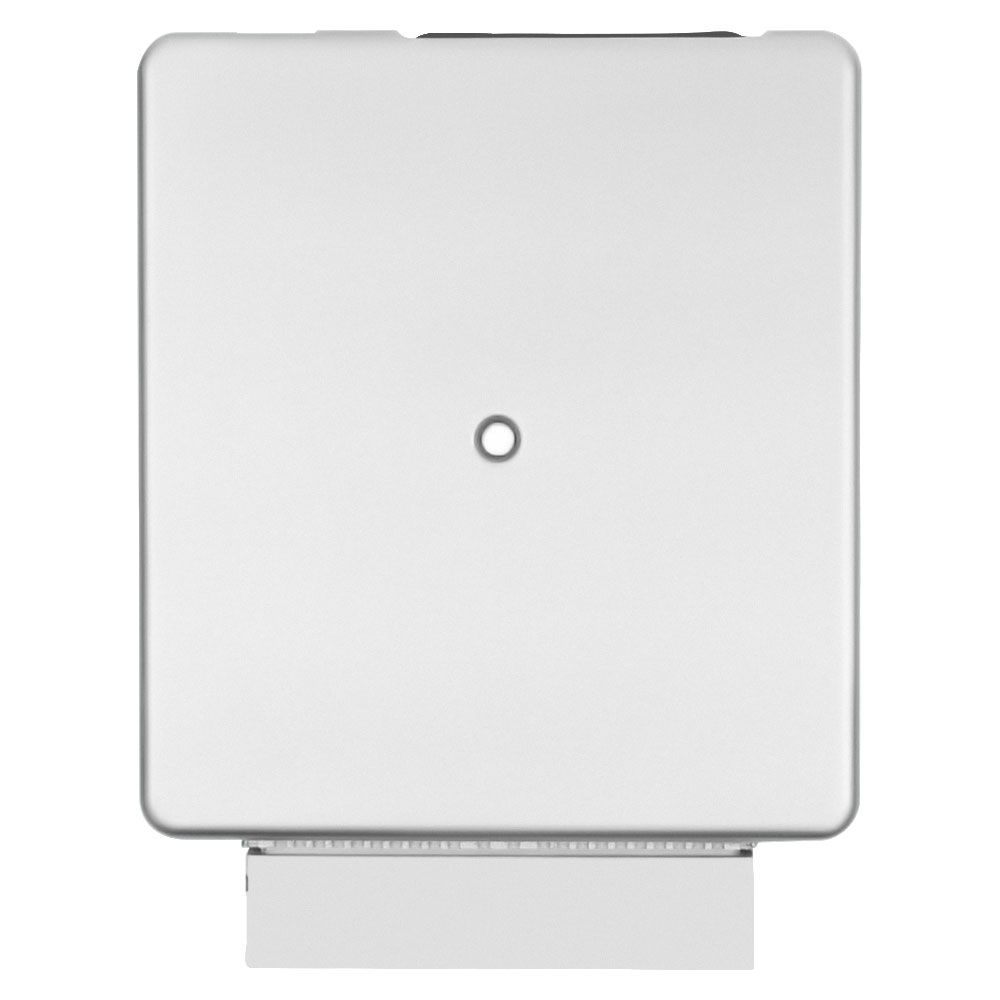
Flagship One stocks a refurbished, VIN-programmed PCM for the 1993 Mercury Tracer with a lifetime warranty, free shipping and no core charge. The full Mercury Tracer module lineup covers other engine configurations as well.
The 1993 Mercury Tracer 1.9L relies on two critical computers that are straightforward to access once you know the dashboard location and the required air‑duct removal. Understanding the published labor allowances and the relearn requirements helps you evaluate repair estimates accurately. If you prefer a faster turnaround, a VIN‑matched replacement can skip the relearn altogether and get you back on the road sooner.