
Last updated on August 25th, 2026 at 01:10 pm
The Powertrain Control Module on the 2001 Jeep Wrangler manages engine and transmission functions through sensors and actuators. Internal memory failures may generate fault codes and cause drivability problems or no-start conditions.
If your 2001 Jeep Wrangler has triggered a check engine light, lost communication with diagnostic tools, or developed drivability problems, the powertrain control module may be at fault. This guide explains what the module does, where it sits in your vehicle, and what replacement and programming involve. You will learn the factory-recommended steps, understand why proper configuration matters, and see how pre-programmed replacement units simplify the process. The information draws from documented service procedures and factory guidance for this specific model.
The Powertrain Control Module serves as the primary computer for your Jeep’s engine and transmission. It receives data from numerous sensors throughout the powertrain and uses that information to adjust fuel delivery, ignition timing, and transmission shifting. On the 2001 Jeep Wrangler with the 2.5L engine, the module also monitors emissions control components and governs idle speed. When this module fails or develops internal memory errors, the vehicle may exhibit poor performance, stalling, or fail to start entirely. Replacing the unit requires careful attention to programming requirements that restore proper vehicle operation. If you are shopping for replacement engine computers for the Wrangler, understanding these functions helps you evaluate whether a given unit meets your vehicle’s needs.
Flagship One keeps Jeep Wrangler replacement engine computers in stock for exactly this failure pattern.
2001 Jeep Wrangler
OEM programmed ECM for your 2001 Jeep Wrangler — plug & play, no dealer visit.
Free shipping · Lifetime warranty
The Powertrain Control Module mounts in the engine compartment of the 2001 Jeep Wrangler, allowing relative access for service. Removing and reinstalling the module typically requires disconnecting the battery, releasing the electrical connectors, and securing the new unit in the mounting location. Documented labor times for this vehicle list 0.4 hours for powertrain control module removal and replacement, plus 0.4 hours for engine control module removal and replacement, with an additional 0.5 hours for the relearn procedure. These times reflect the mechanical steps involved and may vary depending on technician experience and specific vehicle conditions. Proper connector seating and mounting bolt torque, if specified, affect long-term reliability.
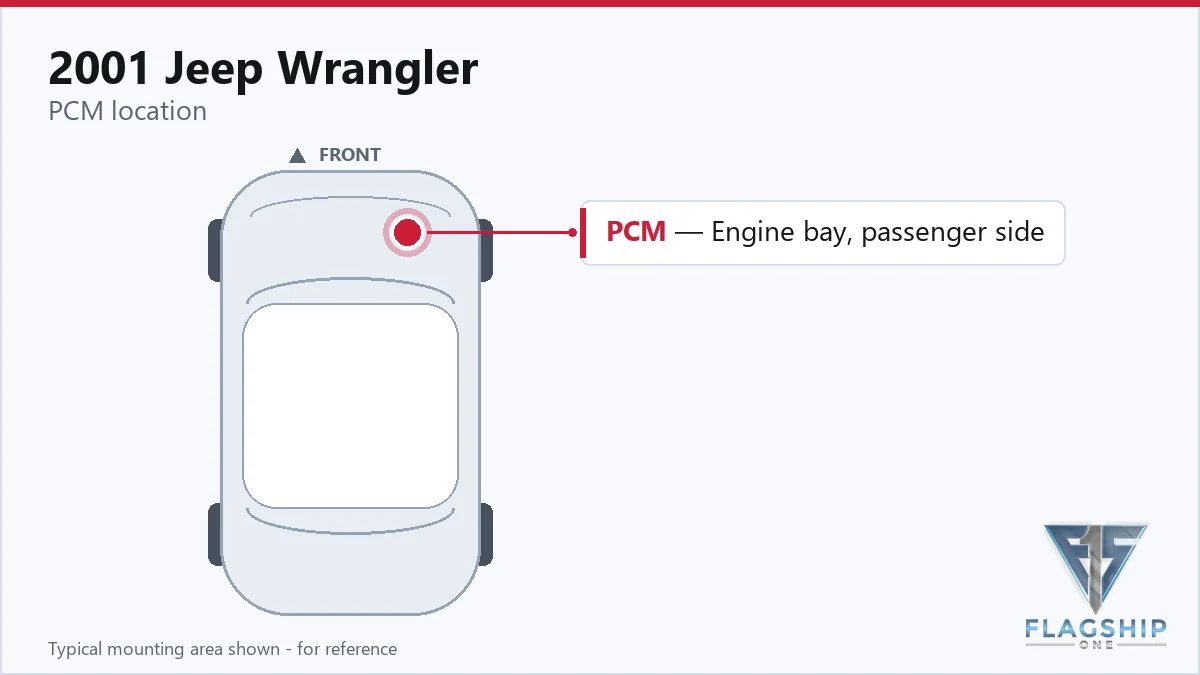
Work with the ignition off, and treat the module as static-sensitive: avoid touching the connector pins at any point.
| Operation | Configuration | Book Time |
|---|---|---|
| Powertrain Control Module R&R | All configurations | 0.4 hr |
| Engine Control Module Relearn | All configurations | 0.5 hr |
| Engine Control Module R&R | All configurations | 0.4 hr |
Factory procedure for this vehicle specifies using the DRB scan tool to reprogram the new Powertrain Control Module with your vehicle’s original identification number and original mileage after installation. This step is mandatory for proper module operation and must not be skipped. The programming establishes communication between the module and other vehicle systems while preserving vehicle identity information. Units that arrive from Flagship One arrive with your specific VIN and mileage already programmed, which means the scan tool steps may already be completed depending on your diagnostic workflow. Always verify configuration after installation to ensure all systems respond correctly.
Every VIN-programmed replacement unit from Flagship One arrives with these steps already completed.
A failing Powertrain Control Module on the 2001 Jeep Wrangler may produce several symptoms that vary in presentation. Common indications include a no-start condition where the engine cranks but fails to fire, intermittent stalling during driving, and rough running with multiple misfire codes set. Some vehicles lose communication with scan tools, preventing code reading entirely. Transmission shifting may become erratic or fail to shift properly. If your vehicle has stored internal memory checksum fault, the module has detected an error in its internal programming or data storage, suggesting physical failure of the memory system within the controller.
The following table lists module-internal trouble codes documented for this vehicle, along with their likely含义. These codes indicate faults within the controller itself rather than problems with external sensors or wiring.
| Code | Meaning | Full Guide |
|---|---|---|
| P0601 | Internal memory checksum error | Full P0601 guide → |
Factory documentation includes Service Bulletin number 08-030-06 Rev. A, which addresses Powertrain Control Module Initialization. This bulletin provides guidance on proper procedures for initializing replacement modules on affected vehicles. Following factory-recommended steps ensures the module functions correctly within your vehicle’s systems and maintains proper communication with all related controllers.
| Bulletin | Subject | What It Addresses |
|---|---|---|
| 08-030-06 Rev. A | 08-030-06 Rev. A Powertrain Control Module Initialization | — |
When the Powertrain Control Module fails on your 2001 Jeep Wrangler, you face a choice between repair and replacement with a refurbished unit. The module contains proprietary programming tied to your vehicle’s identification, which complicates aftermarket options. Remanufactured controllers offer a middle ground, though they may require the same programming procedures as new units. Evaluate your diagnostic findings and consider whether a unit programmed specifically for your VIN provides the most straightforward path to getting your vehicle running again.
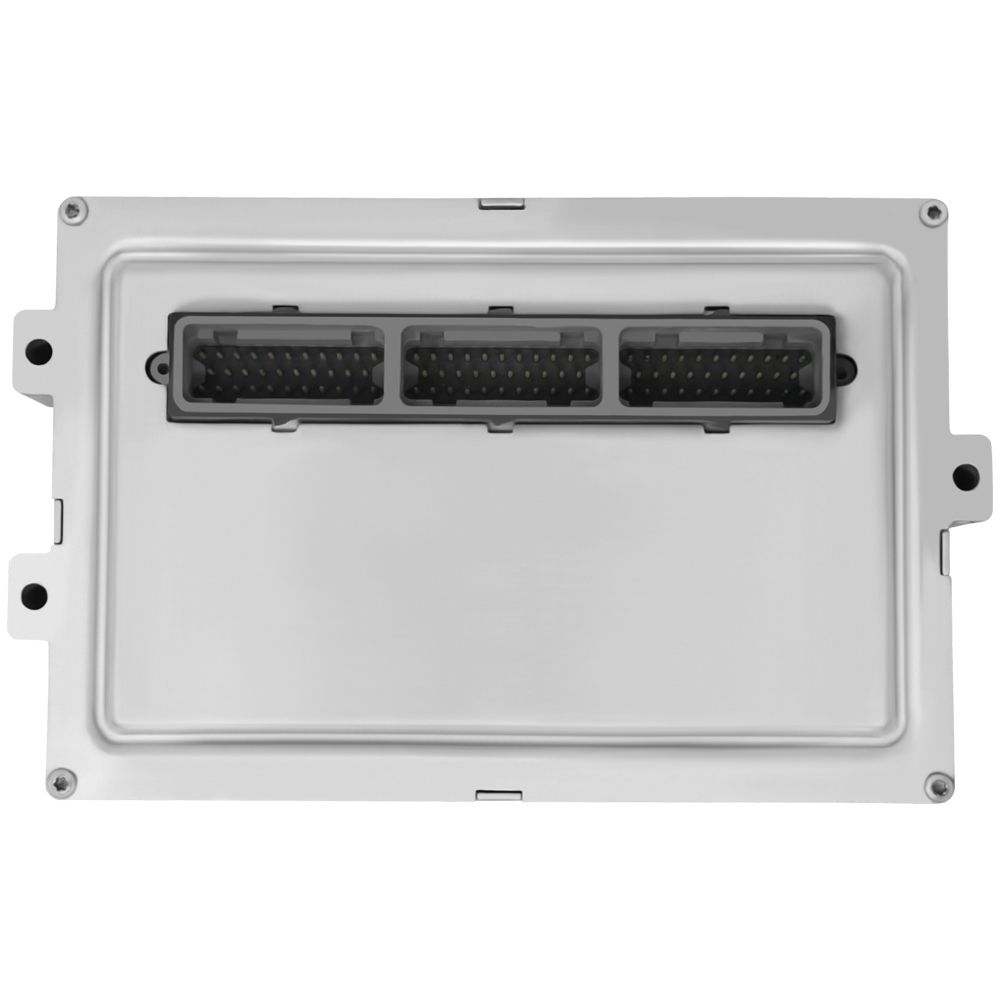
Flagship One stocks a refurbished, VIN-programmed PCM for the 2001 Jeep Wrangler with a lifetime warranty, free shipping and no core charge. The full Jeep Wrangler module lineup covers other engine configurations as well.
The Powertrain Control Module plays an essential role in your 2001 Jeep Wrangler’s operation, managing everything from fuel delivery to transmission behavior. When internal faults occur, proper replacement and programming restore normal function. Understanding the location, labor involved, and programming requirements helps you make informed decisions about repair options for your vehicle.