
Last updated on August 25th, 2026 at 01:11 pm
The Powertrain Control Module (PCM) in your 1997 Jeep Wrangler manages engine performance and emissions by controlling fuel injection, ignition timing, and transmission shifts. Failure may cause stalling, poor acceleration, or a no-start condition.
If your 1997 Jeep Wrangler has been stalling, misfiring, or refusing to start, the Powertrain Control Module (PCM) may be the culprit. This critical component acts as the brain of your vehicle’s engine and transmission, managing everything from fuel delivery to ignition timing. When it fails, symptoms can range from subtle performance issues to complete engine shutdown. Replacing the PCM isn’t just about swapping a part—it involves understanding its role, locating it in your Jeep, and ensuring proper programming afterward. Knowing these details helps you make informed decisions, whether you’re tackling the job yourself or working with a mechanic. This guide covers what the PCM does, how to replace it, and why choosing the right replacement can save you time and frustration.
The Powertrain Control Module (PCM) in your 1997 Jeep Wrangler is a combined engine and transmission control unit. It monitors sensors throughout the vehicle to adjust fuel injection, ignition timing, and shift points for optimal performance and emissions compliance. Without a functioning PCM, your Jeep may struggle to start, run roughly, or even enter a limp-home mode to prevent further damage. This module is particularly important in older vehicles like yours, where wear and tear on sensors and wiring can lead to erratic signals. When replacement becomes necessary, you’ll want to consider replacement engine computers for the Wrangler that are designed to match your vehicle’s original specifications. A faulty PCM can also trigger a cascade of issues, from poor fuel economy to transmission shifting problems, making timely replacement essential for reliable operation.
1997 Jeep Wrangler
OEM programmed replacements — plug & play, no dealer visit.
Find yours by year, make & model →
Free shipping · Lifetime warranty
In your 1997 Jeep Wrangler, the PCM is located inside the engine compartment, typically mounted near the firewall or inner fender. Accessing it requires removing a protective cover or panel, though the exact steps may vary depending on your Jeep’s configuration. Replacement involves disconnecting the battery, unplugging the wiring harness, and removing the mounting bolts. The labor time for removing and reinstalling the PCM is typically 0.4 hours, according to factory estimates. Once the old module is out, the new one is bolted into place, and the wiring harness is reconnected. It’s important to ensure all connections are secure and free of corrosion, as poor electrical contact can lead to intermittent issues or module failure.
Work with the ignition off, and treat the module as static-sensitive: avoid touching the connector pins at any point.
| Operation | Configuration | Book Time |
|---|---|---|
| Powertrain Control Module R&R | All configurations | 0.4 hr |
| Engine Control Module Relearn | All configurations | 0.5 hr |
| Engine Control Module R&R | All configurations | 0.4 hr |
After replacing the PCM in your 1997 Jeep Wrangler, the factory procedure typically requires a relearn process to synchronize the module with the vehicle’s sensors and transmission. This step, which takes about 0.5 hours, ensures the PCM recognizes the engine’s operating parameters and adjusts fuel and ignition settings accordingly. However, if you install a VIN-programmed replacement unit, this relearn step is often unnecessary, as the module arrives pre-configured for your specific Jeep. This not only saves time but also reduces the risk of calibration errors that can occur during manual programming. Always verify that the replacement module matches your vehicle’s original part number to avoid compatibility issues.
A failing PCM in your 1997 Jeep Wrangler can manifest in several ways, often mimicking other mechanical or electrical problems. One of the most common signs is a no-start condition, where the engine cranks but refuses to fire. Stalling at idle or during acceleration is another frequent symptom, often accompanied by rough running or misfires. You may also notice poor fuel economy or a check engine light, which could indicate internal module faults like memory corruption. In some cases, the transmission may shift erratically or fail to engage gears properly, as the PCM controls both engine and transmission functions. Dead scan-tool communication is another red flag, suggesting the module isn’t responding to diagnostic requests. If your Jeep sets a memory integrity fault, it’s a strong indicator that the PCM’s internal programming has degraded and replacement may be necessary. Other symptoms include intermittent electrical gremlins, such as flickering dashboard lights or erratic gauge behavior, which can occur when the PCM struggles to regulate voltage or sensor inputs.
Factory service bulletins for the 1997 Jeep Wrangler highlight potential PCM-related issues and required updates. Bulletin #18-21-98 advises caution when servicing the Powertrain Control Module, likely due to its sensitivity to electrical surges or improper handling. Additionally, recall Rc-E22-06 (also listed as Rc-Ie22-06) mandates reprogramming the PCM and inspecting the catalytic converter to address emissions compliance. This recall applies to certain Wranglers and may require dealer intervention to ensure the PCM is updated to the latest calibration. If your Jeep hasn’t undergone this recall, it’s worth checking with a dealer to see if the updates apply to your vehicle.
| Bulletin | Subject | What It Addresses |
|---|---|---|
| 18-21-98 | 18-21-98 Powertrain Control Module (PCM) Service Caution | — |
| — | Rc-Ie22-06 Emissions Recall E22 – Reprogram PCM and Inspect Catalytic Converter | — |
| — | Rc-E22-06 Emissions Recall E22 – Reprogram PCM and Inspect Catalytic Converter | Form after the recall service is performed. Be sure to save this form since the California Department of Motor Vehicles may require that you supply it as proof… |
Stalling after PCM replacement often occurs if the module wasn’t properly programmed or if a relearn procedure wasn’t performed. The PCM needs to synchronize with the vehicle’s sensors and transmission to regulate fuel and ignition correctly. A pre-programmed replacement module can help avoid this issue by arriving ready to install.
Driving with a faulty PCM is risky, as it can lead to poor engine performance, stalling, or even a no-start condition. In some cases, the vehicle may enter a limp-home mode, limiting power to prevent damage. If you suspect PCM issues, it’s best to address them promptly to avoid further complications.
Common signs include a no-start condition, stalling, rough idling, or a check engine light with codes like P0601. Dead scan-tool communication is another strong indicator. If basic diagnostics rule out sensor or wiring issues, the PCM itself may be faulty.
In your Jeep, the PCM (Powertrain Control Module) combines the functions of an ECM (Engine Control Module) and a transmission control module. It manages both engine performance and transmission shifting, whereas an ECM would only handle engine-related tasks. This integration is common in vehicles from this era.
A full tune isn’t typically required, but a relearn procedure is often necessary to ensure the PCM adapts to your Jeep’s specific operating conditions. This step helps the module calibrate fuel, ignition, and transmission settings. Using a pre-programmed replacement module can eliminate the need for this step.
If your 1997 Jeep Wrangler is experiencing PCM-related issues, you have a few options. A repair may be possible if the problem is limited to wiring or connectors, but if the module itself is faulty, replacement is often the most reliable solution. Refurbished or new PCMs designed for your Jeep can restore performance without the hassle of manual programming. Consider your vehicle’s age and usage when deciding between a basic replacement or a pre-programmed unit to simplify the process.
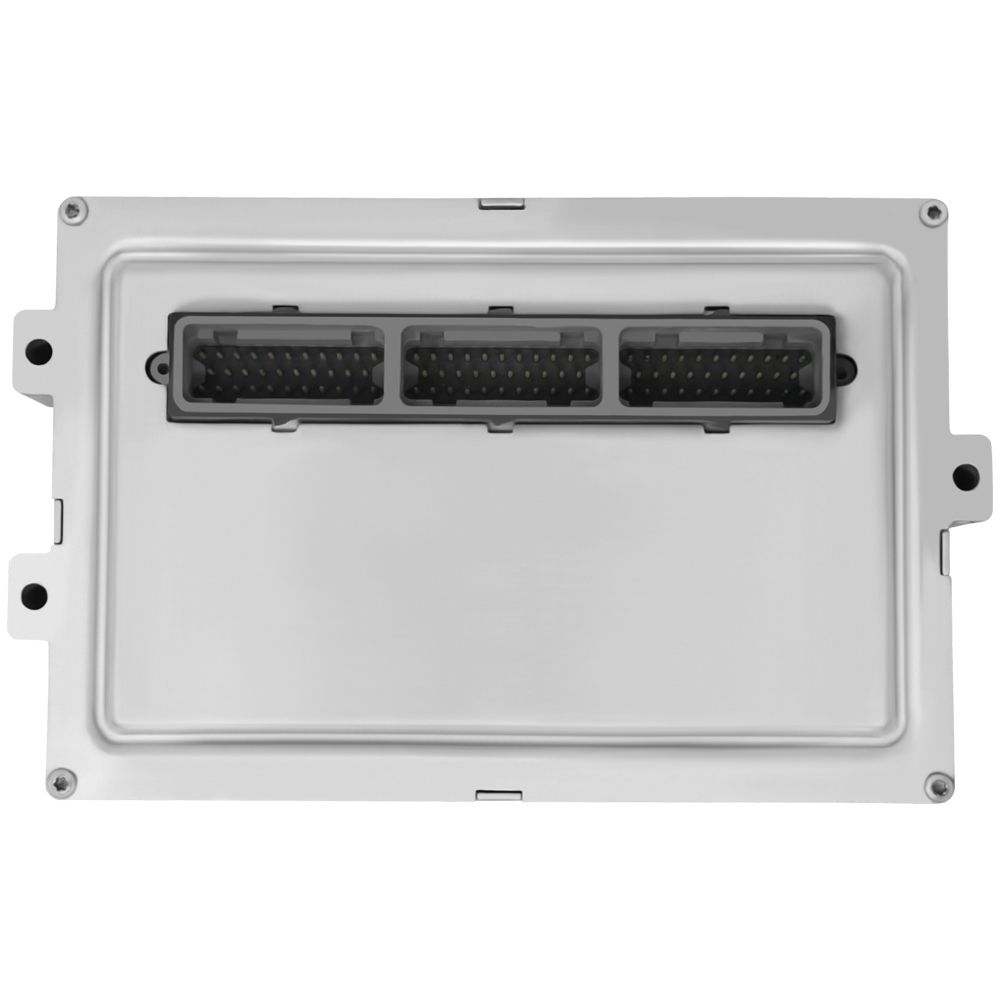
Flagship One stocks a refurbished, VIN-programmed PCM for the 1997 Jeep Wrangler with a lifetime warranty, free shipping and no core charge. The full Jeep Wrangler module lineup covers other engine configurations as well.
The PCM in your 1997 Jeep Wrangler plays a critical role in keeping your engine running smoothly and your transmission shifting correctly. If you’re dealing with stalling, no-start conditions, or erratic performance, the PCM may be the root cause. Replacing it involves straightforward steps, but ensuring proper programming is key to avoiding further issues. Whether you opt for a DIY approach or professional installation, addressing PCM problems promptly will help keep your Jeep reliable for years to come.