
Last updated on August 25th, 2026 at 01:31 pm
The Powertrain Control Module (PCM) in your 2017 Ford Fusion 2.0L acts as the vehicle’s central computer, managing engine performance, transmission shifts, and emissions systems. Failures may trigger drivability issues, warning lights, or complete no-start conditions.
If your 2017 Ford Fusion 2.0L has developed unexplained stalling, rough idling, or a stubborn check-engine light, the Powertrain Control Module (PCM) may be the source. This compact computer integrates engine and transmission control into a single unit, making it critical for smooth operation. When it fails, symptoms can range from subtle performance hiccups to a complete no-start scenario. Understanding the role of the PCM, how to identify potential failures, and what replacement involves can help you make informed decisions. This guide covers labor times, common symptoms, and the steps required to restore your Fusion’s reliability without unnecessary diagnostic guesswork.
The Powertrain Control Module in your 2017 Ford Fusion 2.0L serves as the brain of the vehicle’s drivetrain. It processes data from sensors to optimize fuel delivery, ignition timing, and transmission shifts in real time. This integration allows for precise control over emissions and performance, which is why a malfunctioning PCM can disrupt multiple systems simultaneously. For example, if the module fails to communicate with the transmission control unit, you may experience harsh or delayed shifts. Similarly, incorrect fuel calculations can lead to poor acceleration or increased fuel consumption. When replacement becomes necessary, replacement engine computers for the Fusion are designed to restore factory-level functionality, but proper installation and programming are essential to avoid recurring issues.
In the 2017 Ford Fusion 2.0L, the PCM is located in the engine bay, typically mounted on the passenger-side inner fender or firewall. Accessing it requires removing the plastic engine cover and possibly disconnecting nearby wiring harnesses or air intake components. The replacement process involves unbolting the old unit, transferring any necessary connectors or brackets to the new module, and securing it in place. According to labor guides, the job typically takes 0.8 hours for the 2.0L engine. No specialized tools are required beyond basic hand tools, but care must be taken to avoid damaging connectors or misaligning the module during reinstallation. Always disconnect the battery before beginning work to prevent electrical shorts or accidental airbag deployment.
Work with the ignition off, and treat the module as static-sensitive: avoid touching the connector pins at any point.
| Operation | Configuration | Book Time |
|---|---|---|
| Engine Control Module Relearn | All configurations | 0.5 hr |
| Engine Control Module R&R | 1.5L | 0.6 hr |
| Engine Control Module R&R | 2.0L | 0.8 hr |
| Engine Control Module R&R | 2.5L | 0.7 hr |
| Engine Control Module R&R | 2.7L | 0.7 hr |
| Engine Control Module Reset | All configurations | 0.3 hr |
| Powertrain Control Module R&R | 1.5L | 0.6 hr |
| Powertrain Control Module R&R | 2.0L | 0.8 hr |
2017 Ford Fusion 2.0L: When Your
OEM programmed replacements — plug & play, no dealer visit.
Find yours by year, make & model →
Free shipping · Lifetime warranty
After installing a new PCM in your 2017 Ford Fusion 2.0L, the factory procedure requires reprogramming the Passive Anti-Theft System (PATS) to ensure the vehicle recognizes the new module. This step is critical because an unprogrammed PCM will prevent the engine from starting, even if the hardware is correctly installed. Additionally, the new module must be calibrated to the vehicle’s specific VIN to ensure proper communication with other onboard systems. Flagship One units arrive as a VIN-programmed replacement unit, meaning the PATS and VIN calibration steps are already completed. This eliminates the need for dealership visits or additional programming tools, allowing your Fusion to be back on the road as soon as the physical installation is finished.
A failing PCM in your 2017 Ford Fusion 2.0L may produce a variety of symptoms, often mimicking other mechanical or electrical issues. Common signs include intermittent stalling, especially at idle or during deceleration, as the module struggles to maintain consistent fuel and spark delivery. You might also notice the engine cranking but failing to start, which can indicate a communication breakdown between the PCM and the fuel or ignition systems. Transmission-related symptoms, such as erratic shifting or the transmission defaulting to a single gear, may also point to PCM problems. On the diagnostic side, internal module faults like internal control module ROM error often appear alongside communication codes, such as U0100 (lost communication with ECM/PCM). These codes can help narrow down the issue, but they don’t always rule out other potential causes, such as wiring or sensor failures.
The 2017 Ford Fusion 2.0L PCM may log specific internal trouble codes when the module itself is failing. These codes typically indicate faults within the PCM’s circuitry or software, rather than issues with external sensors or actuators. Reviewing these codes can help confirm whether the PCM is the root cause of your vehicle’s symptoms.
| Code | Meaning | Full Guide |
|---|---|---|
| P0605 | Internal ROM error | Full P0605 guide → |
| P0606 | Module processor failure | Full P0606 guide → |
| P0607 | Module performance fault | Full P0607 guide → |
| P164E | Module-internal fault | — |
| P166B | Module-internal fault | — |
| U0100 | Module-internal fault | Full U0100 guide → |
| U0103 | Module-internal fault | Full U0103 guide → |
| U0121 | Module-internal fault | Full U0121 guide → |
| U0140 | Module-internal fault | Full U0140 guide → |
| U0151 | Module-internal fault | Full U0151 guide → |
| U0155 | Module-internal fault | Full U0155 guide → |
| U019E | Module-internal fault | — |
A no-start condition after battery replacement may indicate the PCM lost its programming or the Passive Anti-Theft System (PATS) needs to be reset. The PCM relies on continuous power to retain critical data, and disconnecting the battery can sometimes trigger this issue. A VIN-programmed replacement unit can resolve this without additional programming steps.
Yes, the PCM in your Fusion controls both engine and transmission functions. If it fails to send or receive correct signals, the transmission may default to a single gear or shift erratically. This is often accompanied by a check-engine light and transmission-related trouble codes.
Start by scanning for trouble codes. Internal PCM codes like P0606 or P164E often point to module faults, while communication codes (e.g., U0100) may indicate wiring or connector problems. A professional diagnostic tool can help isolate the issue by checking for proper voltage and signal continuity at the PCM connectors.
Driving with a P0605 code (internal control module ROM error) is not recommended. This code indicates a serious fault within the PCM that can lead to unpredictable behavior, such as stalling or sudden loss of power. Addressing the issue promptly can prevent further damage or unsafe driving conditions.
A PCM reset (0.3 hours) clears temporary data, such as fuel trims or learned shift patterns, but doesn’t reprogram the module. A relearn (0.5 hours) involves recalibrating the PCM to the vehicle’s specific parameters, which is often required after battery disconnects or module replacements. Neither process replaces full VIN programming or PATS initialization.
If your 2017 Ford Fusion 2.0L is exhibiting symptoms of PCM failure, you have two primary options: repair or replacement. While repairs may be possible for minor issues, such as connector or wiring faults, a failing module often requires a full replacement. Opting for a VIN-programmed unit can save time and eliminate the need for post-install programming, allowing you to restore your Fusion’s performance quickly and reliably.
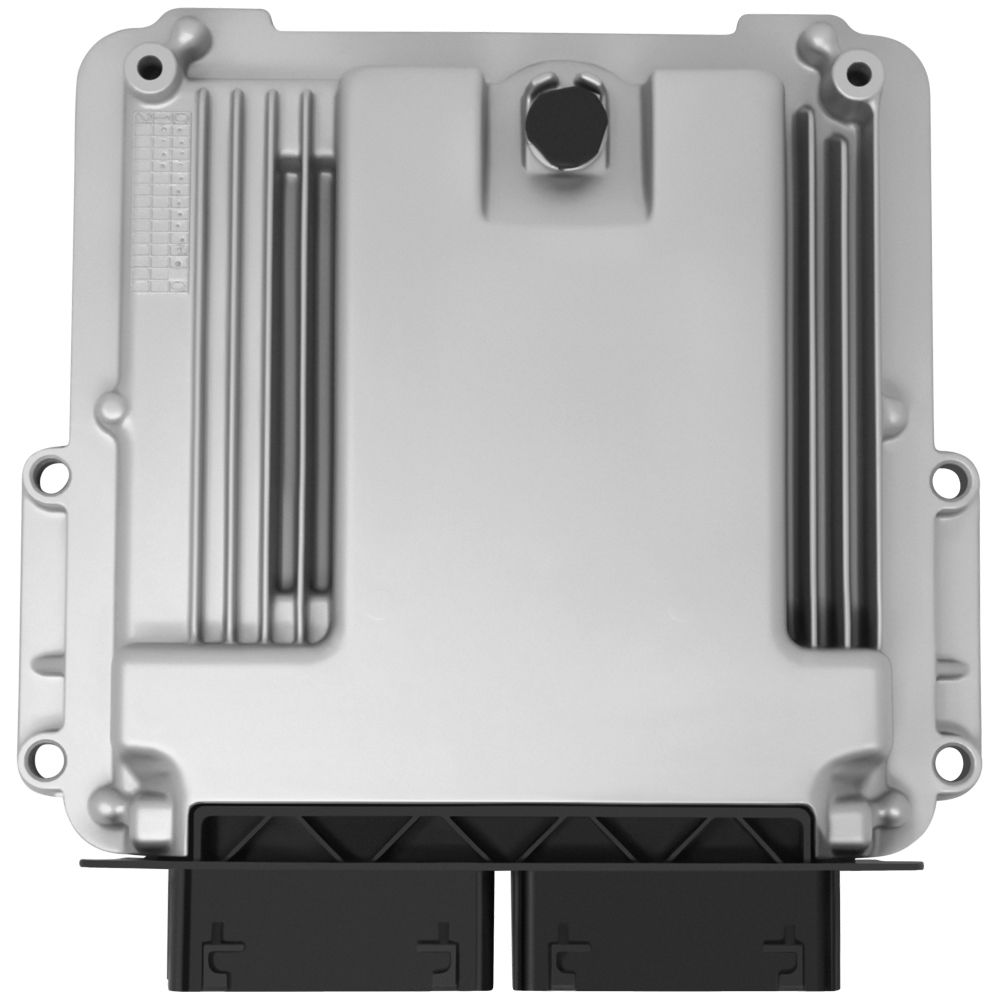
Flagship One stocks a refurbished, VIN-programmed PCM for the 2017 Ford Fusion with a lifetime warranty, free shipping and no core charge. The full Ford Fusion module lineup covers other engine configurations as well.
The Powertrain Control Module in your 2017 Ford Fusion 2.0L plays a critical role in ensuring smooth operation, from fuel delivery to transmission shifts. Recognizing the signs of PCM failure early can help you avoid costly diagnostic delays or unnecessary repairs. Whether you’re dealing with a no-start condition, rough shifting, or persistent trouble codes, understanding the replacement process and labor requirements can guide you toward a practical solution. With the right approach, your Fusion can regain its reliability and performance.