
Last updated on August 25th, 2026 at 01:31 pm
The Powertrain Control Module (PCM) on your 2017 Ford Explorer is the central computer managing engine operation, transmission shifting, and emissions systems. When this module fails internally, it typically sets a P0606 code and leaves the vehicle inoperable.
If your 2017 Ford Explorer has stopped running or is setting an illuminated check engine light, you may be dealing with a failed Powertrain Control Module. The PCM serves as the brain of your vehicle’s powertrain, and when this unit experiences an internal processor fault, it can leave you stranded or running in a limited-performance mode. Many owners discover this problem after the vehicle suddenly fails to start, stalls while driving, or displays multiple unrelated diagnostic trouble codes that point toward communication failures between control modules. Understanding what the PCM does, where it is located, and what the replacement process involves helps you make informed decisions about repair options. This guide walks you through the function of this critical computer, common failure symptoms, labor considerations, and the programming requirements specific to your 2017 Ford Explorer equipped with the 2.3L EcoBoost engine.
The Powertrain Control Module in your 2017 Ford Explorer represents the primary engine computer responsible for coordinating virtually every aspect of powertrain operation. Unlike simpler vehicles that separate engine and transmission controls, your Explorer integrates these functions into a single PCM unit that receives input from dozens of sensors throughout the engine bay and interprets that data to adjust fuel injection timing, ignition advance, variable valve timing, and transmission shift points in real time. This module also interfaces with the Engine Control Module functions, meaning it handles both the core engine management and the communication links to other vehicle systems including the anti-lock brakes, stability control, and the instrument cluster warning systems. The 2.3L EcoBoost engine in your Explorer relies heavily on precise electronic control to deliver its combination of power and fuel efficiency, making the PCM’s role particularly critical. When this computer experiences an internal processor failure—often indicated by code P0606—it loses the ability to execute its programming properly, which can result in no-start conditions, random stalling, or severely degraded performance. Replacement engine computers for the Explorer must be matched to your specific vehicle identification number to ensure compatibility with the factory security programming and the transmission control strategy.
Flagship One keeps Ford Explorer replacement engine computers in stock for exactly this failure pattern.
2017 Ford Explorer
OEM programmed ECM for your 2017 Ford Explorer — plug & play, no dealer visit.
Free shipping · Lifetime warranty
The Powertrain Control Module on your 2017 Ford Explorer is located in the engine compartment, typically mounted on the front of the firewall near the left side of the engine bay. Access requires removing the engine cover and potentially the air intake ducting to reach the unit. The module is secured to its mounting bracket with bolts, and the electrical connector uses a multi-pin design that requires careful disconnection to avoid damaging the pins. For replacement, the book time for PCM R&R is 1.0 hour, which covers the physical removal and installation of the unit. After the new module is installed, the vehicle requires a relearn procedure to allow the PCM to calibrate to your specific engine’s characteristics—this powertrain control module relearn accounts for 0.5 hours of additional labor time. The total book time for complete replacement including relearn procedures totals the hours specified in the labor guide. Technicians will need to connect a diagnostic scan tool to initiate the relearn process once the new module is secured and all electrical connections are verified torqued to specification.
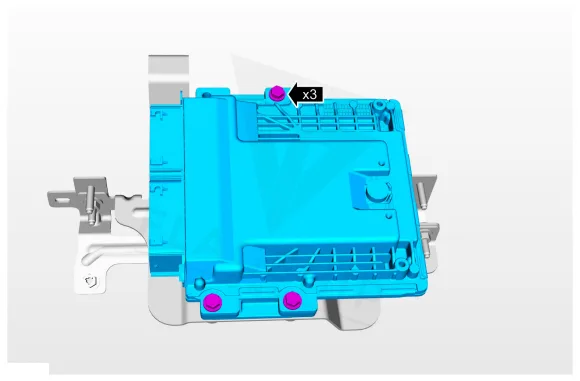
Work with the ignition off, and treat the module as static-sensitive: avoid touching the connector pins at any point.
| Operation | Configuration | Book Time |
|---|---|---|
| Powertrain Control Module R&R | All configurations | 1.0 hr |
| Powertrain Control Module Relearn | All configurations | 0.5 hr |
| Engine Control Module Relearn | All configurations | 0.5 hr |
| Engine Control Module R&R | All configurations | 1.0 hr |
After replacing the Powertrain Control Module in your 2017 Ford Explorer, the factory procedure requires reprogramming the Passive Anti-Theft System (PATS) to recognize the new module as an authorized component. This security programming prevents stolen modules from being installed in other vehicles and ensures that your Explorer will only start with an authorized PCM. The PATS reprogramming process involves using factory-level diagnostic equipment to register the new PCM’s unique identification code into the vehicle’s anti-theft memory. Additionally, the engine control module relearn procedure—book timed at 0.5 hours—must be performed to allow the new computer to establish communication with your specific engine’s sensors and learn its operating parameters. Flagship One addresses this requirement by shipping a VIN-programmed replacement unit that is pre-configured with your vehicle’s identification number, which significantly reduces the programming steps required at installation. However, the PATS relearn procedure may still need to be performed by your installer to complete the security handshake between your vehicle and the replacement module.
Every VIN-programmed replacement unit from Flagship One arrives with these steps already completed.
When the Powertrain Control Module on your 2017 Ford Explorer fails internally, the symptoms often appear suddenly and can be confusing because they may mimic failures in other components. The most common presentation is a no-start condition where the engine cranking normally but fails to fire, or the vehicle starts and then immediately stalls due to the PCM losing control of fuel delivery or ignition timing. Many owners report that the check engine light illuminates accompanied by multiple diagnostic trouble codes that seem unrelated, including communication codes between the PCM and other modules—this happens because the processor fault corrupts data transmission on the vehicle network. Code P0606 indicates a processor internal fault within the PCM itself, which is a definitive indicator that the module requires replacement rather than repair of external sensors or wiring. Other symptoms may include rough idle, hesitation under acceleration, erratic transmission shifting, or the vehicle entering a limp-home mode that severely limits engine RPM. In some cases, the scan tool may fail to communicate with the PCM entirely, or the instrument cluster may display multiple warning lights including the check engine, anti-lock brake, and traction control indicators simultaneously.
Your 2017 Ford Explorer has documented module-internal trouble codes that indicate specific types of processor or memory failures within the Powertrain Control Module. These codes differ from typical sensor-related codes in that they point directly to internal module faults rather than faults in external components.
| Code | Meaning | Full Guide |
|---|---|---|
| P0606 | Module processor failure | Full P0606 guide → |
A used PCM from another vehicle will not work in your Explorer without extensive reprogramming. The replacement unit must be matched to your specific VIN, and the PATS anti-theft system must recognize the new module. Additionally, the transmission adaptive learning and engine calibration data stored in the original module is vehicle-specific, making used units unreliable without proper programming by a dealer or qualified locksmith.
While mechanically skilled DIYers can perform the physical replacement, the post-install programming typically requires factory-level diagnostic equipment. The PATS security relearn and powertrain control module relearn procedures are not accessible through standard OBD-II scan tools. Many independent shops offer these programming services at lower rates than dealerships.
If your vehicle sets a P0606 code or multiple unrelated communication codes, displays multiple warning lights simultaneously, experiences no-start or immediate stalling, and a scan tool cannot communicate with the powertrain module, the PCM is likely the culprit. A professional diagnosis is recommended to rule out wiring issues or low battery voltage that can produce similar symptoms.
Skipping the relearn procedure can result in poor idle quality, hesitation under acceleration, incorrect transmission shift points, and reduced fuel efficiency. The engine may run but will not optimize its operation for your specific engine’s characteristics. The vehicle may also remain in a reduced-performance mode until the relearn is completed.
Refurbished units typically come from original equipment manufacturers who repair and tested the circuit boards, offering a balance between cost and reliability. New aftermarket units vary significantly in quality. Reputable suppliers like Flagship One provide units that meet or exceed original specifications with VIN programming included.
When facing a failed PCM on your 2017 Ford Explorer, you have two primary repair paths: purchasing a new or refurbished unit from a specialty supplier like Flagship One that arrives pre-programmed with your VIN, or sourcing a used PCM and paying for dealer programming separately. The first option typically reduces overall cost and downtime since the unit arrives ready for installation with only the PATS relearn required. A quality replacement module carries a warranty and eliminates the uncertainty of used parts with unknown service histories. Consider your budget, timeline, and access to programming services when deciding which path best suits your situation.
Flagship One stocks a refurbished, VIN-programmed PCM for the 2017 Ford Explorer with a lifetime warranty, free shipping and no core charge. The full Ford Explorer module lineup covers other engine configurations as well.
The Powertrain Control Module in your 2017 Ford Explorer is a critical component that manages engine and transmission functions through sophisticated electronic control. When internal failure occurs, indicated often by code P0606, replacement is the only reliable solution. Understanding the labor requirements, programming needs, and your options for obtaining a pre-programmed unit helps ensure a smooth repair. Whether you choose professional installation or tackle the physical replacement yourself, securing a quality replacement PCM programmed for your specific VIN minimizes the complexity of getting your Explorer back on the road.