
Last updated on August 25th, 2026 at 01:30 pm
The powertrain control module (PCM) in your 2019 Ford Explorer acts as the vehicle’s central computer, managing engine performance, transmission shifts, and emissions systems. When it fails, you may experience stalling, poor acceleration, or a complete no-start condition.
If your 2019 Ford Explorer has been stalling unexpectedly, refusing to start, or throwing cryptic engine codes, the powertrain control module (PCM) may be at fault. This small but critical component acts as the brain of your vehicle, coordinating everything from fuel delivery to transmission shifts. When it malfunctions, the effects can range from subtle performance issues to a complete breakdown. Replacing the PCM isn’t just about swapping a part—it involves precise labor steps, factory programming requirements, and post-installation procedures to ensure your Explorer runs smoothly again. Understanding these details helps you avoid unnecessary delays and ensures the repair is done correctly the first time. Whether you’re a DIY enthusiast or working with a mechanic, knowing what to expect can save time, money, and frustration.
The powertrain control module (PCM) in your 2019 Ford Explorer is a sophisticated computer that oversees nearly every aspect of the engine and transmission’s operation. It processes data from sensors throughout the vehicle to optimize fuel injection, ignition timing, and emissions control, ensuring the engine runs efficiently and meets regulatory standards. The PCM also manages the transmission’s shift points, adapting to driving conditions to provide smooth acceleration and fuel economy. Without a properly functioning PCM, your Explorer may struggle with poor performance, reduced fuel efficiency, or even fail to start. Because the PCM integrates with the vehicle’s security system, replacing it isn’t as simple as plugging in a new unit—it requires careful handling and programming to avoid triggering anti-theft measures. If you’re considering a replacement, replacement engine computers for the Explorer are designed to restore full functionality, but they must be matched to your vehicle’s specifications to work correctly.
2019 Ford Explorer
OEM programmed ECM for your 2019 Ford Explorer — plug & play, no dealer visit.
Free shipping · Lifetime warranty
In the 2019 Ford Explorer, the PCM is located in the engine bay, typically mounted on the passenger side near the firewall. Accessing it requires removing the air intake duct and possibly some surrounding components to reach the module’s mounting bracket. The replacement process involves disconnecting the battery, unplugging the wiring harness, and removing the module from its bracket. Once the old unit is out, the new PCM is installed in reverse order, ensuring all connectors are securely fastened. The labor time for this procedure is typically 1.0 hours, according to factory estimates. After installation, the module must be relearned to the vehicle’s systems, which adds another 0.5 hours of labor. Proper torque on the mounting bolts is essential to prevent vibration or moisture intrusion, though specific torque values aren’t always provided in standard labor guides.
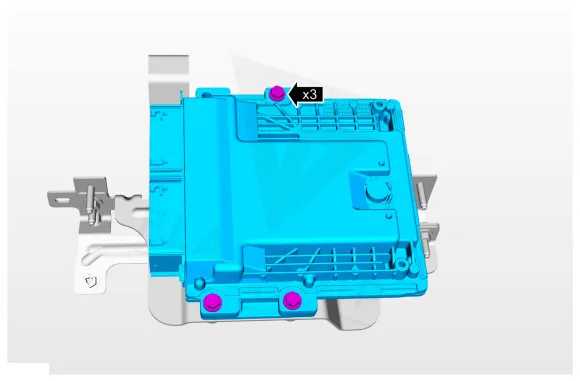
Work with the ignition off, and treat the module as static-sensitive: avoid touching the connector pins at any point.
| Operation | Configuration | Book Time |
|---|---|---|
| Powertrain Control Module R&R | All configurations | 1.0 hr |
| Powertrain Control Module Relearn | All configurations | 0.5 hr |
| Engine Control Module Relearn | All configurations | 0.5 hr |
| Engine Control Module R&R | All configurations | 1.0 hr |
After replacing the PCM in your 2019 Ford Explorer, the factory procedure requires reprogramming the Passive Anti-Theft System (PATS) to ensure the vehicle starts and runs correctly. This step is critical because the PCM communicates with the anti-theft system to validate the key and prevent unauthorized engine starts. Without proper programming, your Explorer may crank but fail to start, or it may stall shortly after ignition. The process typically involves using a dealer-level scan tool to reset the PATS and synchronize the new module with the vehicle’s existing systems. However, if you install a VIN-programmed replacement unit, these steps are already completed, saving you the time and expense of a dealer visit. This pre-programming ensures the module is ready to function immediately after installation, reducing downtime and potential frustration.
A failing PCM in your 2019 Ford Explorer can manifest in several ways, often mimicking other mechanical or electrical issues. One of the most common symptoms is a no-start condition, where the engine cranks but refuses to fire. This may be accompanied by a security warning light on the dashboard, indicating a communication breakdown between the PCM and the anti-theft system. Stalling at idle or during acceleration is another frequent complaint, often caused by the PCM losing its ability to regulate fuel or ignition timing. You may also notice poor engine performance, such as rough idling, hesitation, or a lack of power, particularly under load. Transmission shifting issues, like delayed or harsh gear changes, can also point to a PCM problem, as the module controls the transmission’s hydraulic and electronic functions. Onboard diagnostics may reveal trouble codes related to internal PCM failures, such as an internal control module memory check sum error, which signals corruption in the module’s programming. Additionally, a dead scan tool communication—where the diagnostic tool fails to connect to the PCM—is a strong indicator of a complete module failure. If you experience any of these symptoms, it’s worth having the PCM checked, especially if other potential causes have been ruled out.
A failing PCM often causes multiple symptoms at once, such as stalling, no-start conditions, and transmission shifting problems. If individual sensors have been tested and replaced without resolving the issue, the PCM may be the culprit. A scan tool can help confirm by checking for internal module codes or communication errors.
Replacing the PCM is a straightforward mechanical process, but the programming requirements make it more complex. If you’re comfortable with basic tools and following instructions, you can install the module yourself. However, if you don’t have access to a dealer-level scan tool for PATS reprogramming, a pre-programmed unit is the easiest solution.
Without PATS reprogramming, your Explorer’s anti-theft system won’t recognize the new PCM, and the vehicle may crank but fail to start. In some cases, it may start briefly before stalling. This security feature is designed to prevent theft, so bypassing it isn’t an option—proper programming is required.
A used PCM may physically fit, but it won’t function correctly unless it’s reprogrammed to match your vehicle’s VIN and anti-theft system. Even then, there’s a risk of inheriting the previous vehicle’s issues or programming errors. A new or remanufactured unit is a more reliable choice.
The mechanical replacement typically takes 1.0 hours, while the PATS relearn procedure adds another 0.5 hours. If the module isn’t pre-programmed, you may need to account for additional time at the dealer for reprogramming, depending on their schedule.
If your 2019 Ford Explorer is experiencing PCM-related issues, you have a few options for repair. A dealer can replace and reprogram the module, but this often involves higher costs and potential wait times for programming. Alternatively, a remanufactured or new replacement unit that’s already VIN-programmed can save time and reduce the complexity of the repair. This approach ensures the module is ready to install and eliminates the need for additional programming steps, getting your Explorer back on the road faster.
Flagship One stocks a refurbished, VIN-programmed PCM for the 2019 Ford Explorer with a lifetime warranty, free shipping and no core charge. The full Ford Explorer module lineup covers other engine configurations as well.
The 2019 Ford Explorer relies on its PCM to keep the engine and transmission running smoothly, so addressing any issues promptly is key to avoiding breakdowns. Whether you opt for a dealer repair or a pre-programmed replacement unit, understanding the process helps you make an informed decision. With the right approach, you can restore your Explorer’s performance and reliability without unnecessary delays or complications.