
Last updated on August 25th, 2026 at 01:31 pm
The Powertrain Control Module (PCM) and Engine Control Module (ECM) in your 2014 Ford Taurus serve as the central computer that manages engine operation, transmission shifting, emissions controls, and fuel delivery. When these modules fail internally, your vehicle may not run at all.
If your 2014 Ford Taurus is experiencing starting problems, stalling, or unexpected transmission behavior, the Powertrain Control Module or Engine Control Module may be the culprit. These are the central computing units that manage your vehicle’s engine and drivetrain operations, and when they fail internally, the results range from frustrating intermittent issues to a completely dead vehicle that will not start. This guide explains what these modules do, where they are located, the labor involved in replacement, and what the post-install programming procedure requires. Whether you are diagnosing a no-start condition or deciding between repair options, you will find the technical details needed to understand the process and make informed decisions about your vehicle’s repair.
The Powertrain Control Module in your 2014 Ford Taurus is the primary computer that manages the engine and transmission as a unified system. It receives input from dozens of sensors throughout the vehicle and uses that data to control fuel injection timing, ignition advance, transmission shift points, emissions systems, and throttle response. The Engine Control Module, while sometimes used interchangeably, in Ford’s architecture often handles the engine-specific functions separately from the transmission control logic stored in the PCM. These modules communicate constantly with the vehicle’s other control units, including the instrument cluster, anti-theft system, and body control module. In your 3.5L Taurus, the PCM processes data from the mass airflow sensor, crankshaft position sensor, camshaft position sensors, and dozens of other inputs to maintain proper air-fuel ratios and shift the automatic transmission at the correct times. When the internal processor or memory within these modules fails, the result is a vehicle that may crank normally but not start, run roughly, stall unexpectedly, or refuse to communicate with a scan tool. The replacement engine computers for the Taurus must be programmed with your vehicle’s unique VIN and security data to function properly.
2014 Ford Taurus
OEM programmed ECM for your 2014 Ford Taurus — plug & play, no dealer visit.
Free shipping · Lifetime warranty
The Powertrain Control Module on your 2014 Ford Taurus is located inside the passenger compartment, mounted behind the glove box assembly on the right side of the vehicle. Access requires removing the glove box and the trim panel beneath it. The module itself is secured to its mounting bracket with several fasteners, and the electrical connector must be carefully disconnected to remove the old unit. Book time for Powertrain Control Module R&R is 0.9 hours, and the Engine Control Module R&R book time is also 0.9 hours. These times reflect the labor to remove the old module and install the new one, but they do not include programming or relearn procedures. The module sits in a relatively accessible location compared to some other Ford vehicles where the PCM is mounted in the engine bay, though working in the passenger footwell requires contorting into a tight space. After the new module is installed, the electrical connections must be torqued to specification and verified secure before buttoning up the interior trim.
| Operation | Configuration | Book Time |
|---|---|---|
| Powertrain Control Module R&R | All configurations | 0.9 hr |
| Powertrain Control Module Relearn | All configurations | 0.5 hr |
| Engine Control Module Relearn | All configurations | 0.5 hr |
| Engine Control Module R&R | All configurations | 0.9 hr |
| Engine Control Module Reset | All configurations | 0.3 hr |
After replacing either the PCM or ECM in your 2014 Ford Taurus, the factory procedure requires reprogramming the Passive Anti-Theft System (PATS) to recognize the new module. This security system prevents unauthorized engine starts, and when a new control module is installed, it must be synchronized with the PATS immobilizer circuit using dealer-level diagnostic equipment. Additionally, the powertrain and engine control modules require relearn procedures to calibrate the new unit to your specific vehicle’s engine and transmission. The book times show 0.5 hours for Powertrain Control Module Relearn, 0.5 hours for Engine Control Module Relearn, and 0.3 hours for Engine Control Module Reset. However, when you purchase a VIN-programmed replacement unit from Flagship One, the module arrives pre-programmed with your vehicle’s VIN and PATS data already configured, which eliminates the need for post-install programming at a dealership or specialty shop. This means the PATS reprogramming step is already completed before the module ever ships to you.
When the PCM or ECM fails on a 2014 Ford Taurus, the symptoms often begin subtly before progressing to complete failure. The most common indicators include a no-start condition where the engine cranks normally but will not fire, intermittent starting where the vehicle starts fine one day and refuses to start the next, and unexpected stalling while driving with no apparent pattern. Many owners report that their Taurus runs roughly, especially at idle, or experiences hesitation under acceleration. Transmission shifting may become erratic, with harsh shifts or a refusal to shift into certain gears. A scan tool may show no communication with the powertrain module, or may display multiple sensor-related trouble codes that do not correspond to actual sensor failures. The processor fault in the control module is a documented internal fault code for this vehicle, indicating a failure within the module’s internal processor or memory that renders the unit unreliable. Other symptoms may include illuminated check engine light, transmission fault messages in the instrument cluster, and complete loss of vehicle communication with diagnostic equipment.
The module-internal trouble code P0606 is documented for the 2014 Ford Taurus 3.5L. This code indicates a failure within the control module’s internal processor, and it is not caused by external sensor or wiring issues. When this code is present along with no-start or drivability symptoms, the module itself is the root cause and replacement is typically required.
| Code | Meaning | Full Guide |
|---|---|---|
| P0606 | Module processor failure | Full P0606 guide → |
A used or salvage yard PCM will not work in your vehicle without extensive reprogramming. Ford modules are VIN-specific, and even if you have the unit professionally programmed, the PATS immobilizer system may not accept it. Additionally, used modules may have internal damage or latent failures that are not immediately apparent.
Once the new module is installed and any required relearn procedures are performed, your Taurus should run and shift normally. If you purchase a VIN-programmed unit from Flagship One, it arrives ready to install with no additional dealer programming required.
When the PCM or ECM begins to fail, it may generate spurious sensor codes because it cannot process input signals correctly. These codes may point to real sensors that are actually functioning fine, which is why simply replacing sensors does not resolve the underlying problem.
Ford uses the term PCM (Powertrain Control Module) to describe the integrated unit that handles both engine and transmission control. Some documentation refers to ECM (Engine Control Module) specifically for the engine management portion, but in practice they may be the same physical unit with different functional references.
Driving with a failing module is not recommended because your vehicle may stall unexpectedly, fail to start leaving you stranded, or experience transmission shifting problems that could cause unsafe driving conditions. Additionally, a failing module may set internal fault codes that permanently damage the unit.
When your 2014 Ford Taurus requires a new control module, you have two primary paths: a genuine Ford replacement through the dealer with programming included, or a VIN-programmed aftermarket or refurbished unit from Flagship One. Dealer units are expensive and require your vehicle to remain at the shop for programming. Flagship One units ship pre-programmed with your VIN and PATS data, so you or your mechanic can install the module and perform the relearn procedure without dealer involvement. For the 3.5L Taurus specifically, the module location behind the glove box makes installation straightforward for anyone with moderate mechanical experience.
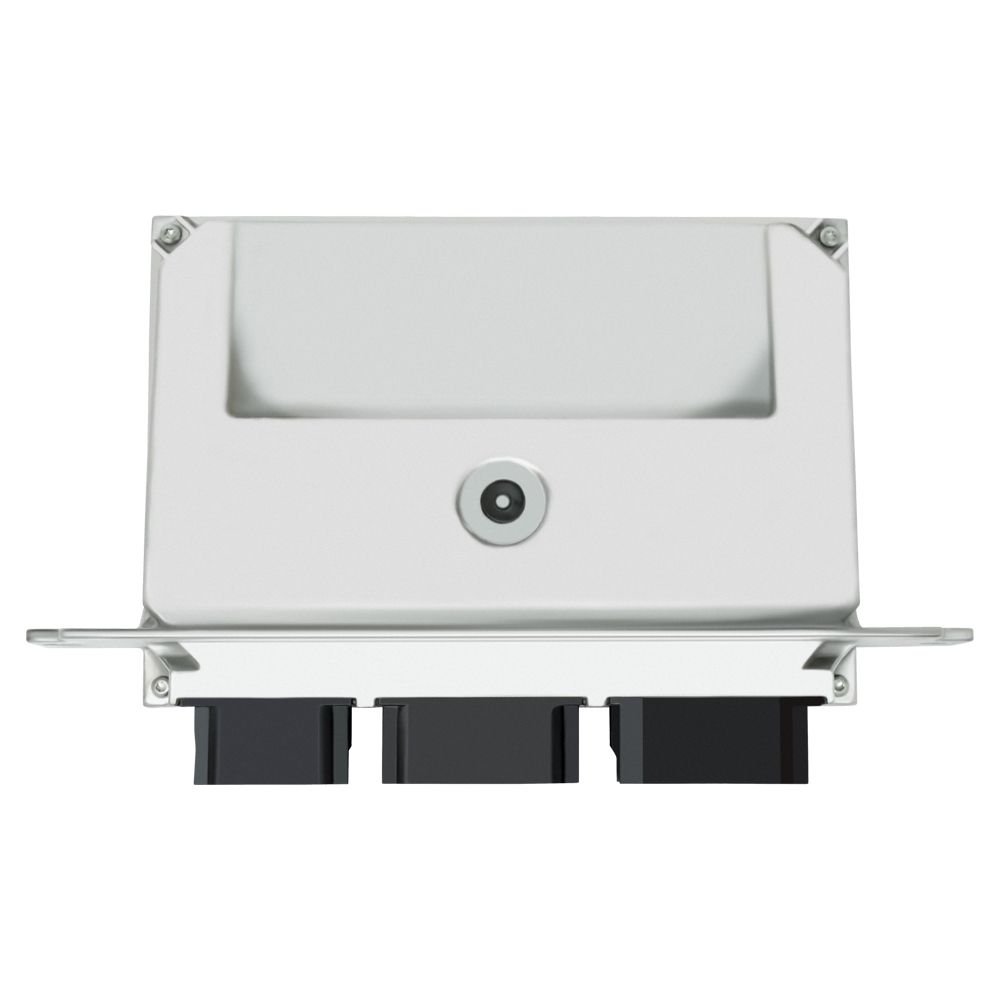
Flagship One stocks a refurbished, VIN-programmed PCM for the 2014 Ford Taurus with a lifetime warranty, free shipping and no core charge. The full Ford Taurus module lineup covers other engine configurations as well.
The Powertrain Control Module is the brain of your 2014 Ford Taurus, and when it fails, your vehicle simply does not work properly. Whether you are dealing with a no-start condition, intermittent stalling, or transmission shifting problems, the module is often the root cause. Understanding the location, programming requirements, and replacement options helps you make informed decisions about the repair. If your Taurus is experiencing these symptoms, consider a replacement module from Flagship One that arrives VIN-programmed and ready to install.