
Last updated on August 25th, 2026 at 01:32 pm
The Powertrain Control Module (PCM) in your 2014 Ford Explorer 3.5L is the central computer that manages engine timing, fuel delivery, transmission shifts, and emissions. When it fails, the vehicle may not start, run poorly, or log internal fault code P0606.
If your 2014 Ford Explorer 3.5L has suddenly become difficult to start, stalls at idle, or triggers a check-engine light with code P0606, the Powertrain Control Module (PCM) or Engine Control Module (ECM) may be failing. These modules are the brain of your vehicle’s drivetrain, governing everything from fuel injection and ignition timing to transmission shift patterns and emissions controls. A failing module can mimic other problems—bad sensors, fuel pump issues, or even a dead battery—so accurate diagnosis is critical. This guide explains what the PCM/ECM does in your Explorer, where it is located, the labor times involved in replacement, and the factory programming steps required afterward. You will also learn how a VIN-programmed replacement unit from Flagship One can save you time and money by arriving ready to install, with the Passive Anti-Theft System (PATS) already matched to your vehicle. Understanding these details helps you make an informed decision about repairing or replacing the module, keeping your Explorer on the road reliably.
The Powertrain Control Module (PCM) in your 2014 Ford Explorer 3.5L is a single computer that integrates engine and transmission control. It receives input from sensors like the crankshaft position, throttle position, oxygen sensors, and mass airflow sensor, then adjusts fuel injector pulse width, ignition timing, and transmission shift solenoids in real time. The PCM also manages the vehicle’s emissions systems, including the catalytic converter monitor and evaporative emissions control. Because the Explorer uses a 3.5L V6 engine with variable valve timing and a six-speed automatic transmission, the PCM must coordinate complex interactions between engine load, throttle response, and gear changes. When the module fails, it can cause a range of drivability issues, from a no-start condition to erratic shifting or stalling. The PCM is also responsible for storing diagnostic trouble codes (DTCs) when it detects a fault. One common internal failure is code P0606, which indicates a processor fault within the module itself. If you are considering replacement PCMs for the Explorer, it is important to know that the module must be programmed with your vehicle’s VIN and PATS security data to function correctly. A used or unprogrammed unit will not allow the engine to start. The PCM’s role is so central that a failure often leaves the vehicle undrivable, making prompt replacement essential.
2014 Ford Explorer 3.5L
OEM programmed ECM for your 2014 Ford Explorer 3.5L — plug & play, no dealer visit.
Free shipping · Lifetime warranty
The PCM/ECM in your 2014 Ford Explorer 3.5L is mounted in the engine compartment, typically near the battery or on the driver-side inner fender. Access requires removing the negative battery cable, then unbolting the module from its bracket and disconnecting the two large wiring harness connectors. The book time for removal and installation is 1.0 hour. After the new module is installed, a PCM relearn procedure (0.5 hour) or an ECM reset (0.3 hour) may be necessary to calibrate the module to your vehicle’s specific components. The relearn process involves turning the ignition on and off in a specific sequence, sometimes using a scan tool. If you are replacing the module yourself, ensure the battery is fully charged and all connections are clean and tight before starting. The labor times provided are standard book rates; actual time may vary depending on your skill level and any corrosion or access issues.
Work with the ignition off, and treat the module as static-sensitive: avoid touching the connector pins at any point.
| Operation | Configuration | Book Time |
|---|---|---|
| Powertrain Control Module R&R | All configurations | 1.0 hr |
| Powertrain Control Module Relearn | All configurations | 0.5 hr |
| Engine Control Module Relearn | All configurations | 0.5 hr |
| Engine Control Module R&R | All configurations | 1.0 hr |
| Engine Control Module Reset | All configurations | 0.3 hr |
After installing a new or replacement PCM/ECM in your 2014 Ford Explorer 3.5L, the factory procedure requires reprogramming the Passive Anti-Theft System (PATS). This step is critical because the module must learn the unique transponder key codes to allow the engine to start. Without PATS programming, the vehicle will crank but not fire. Additionally, the module must be configured with your vehicle’s VIN and calibration data for the 3.5L engine and transmission. Dealers typically use Ford’s IDS software to perform this programming, which can add significant cost and require a separate appointment. However, when you purchase a VIN-programmed replacement unit from Flagship One, the PATS reprogramming and VIN matching are already completed before shipping. The module arrives ready to install, and you can skip the dealer visit. The only post-install step may be a brief relearn procedure (0.5 hour) to adapt the module to your vehicle’s specific sensors and actuators. This eliminates the most time-consuming and expensive part of the replacement process.
A failing PCM/ECM in your 2014 Ford Explorer 3.5L can produce a variety of symptoms that may be mistaken for other issues. The most common sign is a no-start condition where the engine cranks but does not fire, often because the module is not sending fuel injector or ignition signals. You may also experience intermittent stalling while driving, especially under load or when coming to a stop. The check-engine light may illuminate with codes such as P0606, which indicates an internal control module fault. Other symptoms include erratic transmission shifting, where the transmission may slam into gear or refuse to shift at all. You might notice a sudden loss of power, hesitation during acceleration, or the engine running rough and misfiring. In some cases, the scan tool cannot communicate with the PCM at all, resulting in a ‘no communication’ error. This is a strong indicator that the module has failed internally. If you see internal control module fault stored in the system, it often means the PCM’s processor has malfunctioned and replacement is the only reliable fix. Do not ignore these symptoms, as a failing module can leave you stranded.
Your 2014 Ford Explorer 3.5L may log module-internal trouble codes when the PCM/ECM detects a fault within its own circuitry. The following code is documented for this vehicle:
| Code | Meaning | Full Guide |
|---|---|---|
| P0606 | Module processor failure | Full P0606 guide → |
Yes, a weak or failing battery can cause voltage fluctuations that stress the PCM. Low voltage may also prevent the module from completing its self-tests, leading to erratic behavior. Always test the battery and charging system before replacing the PCM.
A used PCM will need to be reprogrammed with your vehicle’s VIN and PATS data. Without that, the engine will not start. Additionally, used modules may have their own internal issues. A VIN-programmed unit from Flagship One is a more reliable option.
If the scan tool cannot communicate with the PCM, or if you have code P0606, the module itself is likely faulty. Sensor issues usually produce specific codes like P0171 or P0300. A professional diagnosis with a bidirectional scan tool can confirm.
In this vehicle, the PCM (Powertrain Control Module) controls both the engine and transmission. The term ECM (Engine Control Module) is sometimes used interchangeably, but the ECM typically refers to engine-only control. Your Explorer uses a single PCM for both functions.
It is not recommended. A failing PCM can cause sudden stalling, loss of power, or transmission issues that create a safety hazard. Continuing to drive may also damage other components. Replace the module as soon as possible.
When your 2014 Ford Explorer 3.5L needs a new PCM/ECM, you have two main options: have a dealer repair the original module (if possible) or replace it with a refurbished unit. Repair is often not cost-effective for internal failures like P0606. A refurbished replacement from Flagship One is a practical alternative, as it arrives VIN-programmed and PATS-ready, saving you the dealer programming cost and time.
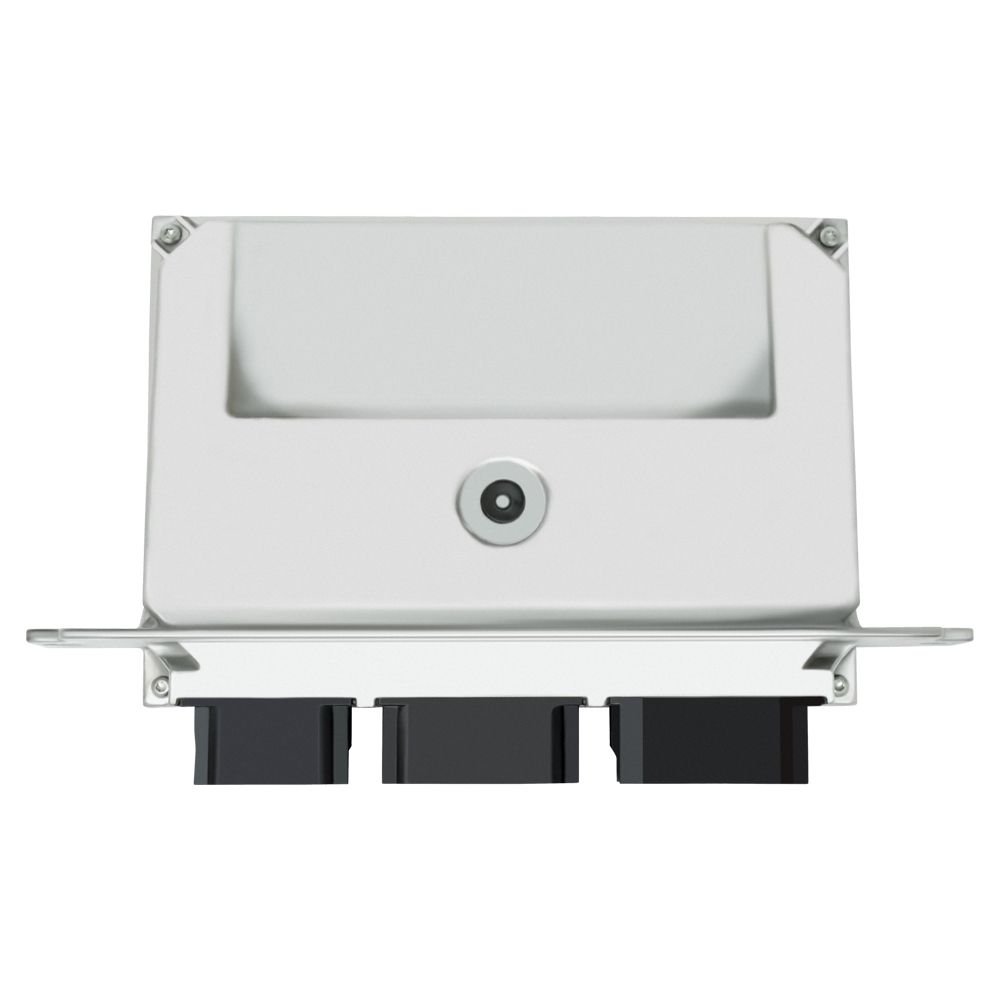
Flagship One stocks a refurbished, VIN-programmed PCM for the 2014 Ford Explorer with a lifetime warranty, free shipping and no core charge. The full Ford Explorer module lineup covers other engine configurations as well.
The PCM/ECM in your 2014 Ford Explorer 3.5L is a critical component that controls engine and transmission operation. When it fails, symptoms like no-start, stalling, and code P0606 are common. Replacement involves 1.0 hour of labor plus a relearn, but Flagship One’s VIN-programmed units eliminate the need for dealer programming. Get your Explorer back on the road reliably.