
Last updated on August 25th, 2026 at 01:32 pm
In the 2012 Ford Taurus the Powertrain Control Module and Engine Control Module manage engine timing, fuel delivery, and transmission shifting. A failure in either unit can cause loss of driveability, error codes, and loss of communication with diagnostic tools.
When a 2012 Ford Taurus begins to exhibit stalling, no‑start conditions, or erratic shifting, the powertrain and engine control modules are often suspects. Understanding what these computers do, how they are accessed, and what factory procedures follow their replacement can help you decide between a new OEM part or a refurbished alternative. This guide walks you through the location of the modules, the labor involved, the programming requirements, and the typical symptoms you may encounter, giving you a clear picture of the repair pathway and the benefits of a pre‑programmed replacement.
The Powertrain Control Module (PCM) and Engine Control Module (ECM) in the 2012 Ford Taurus act as the brain for engine and transmission operation, processing sensor data to adjust fuel injection, ignition timing, and shift points. They also store diagnostic information that helps pinpoint failures. Maintaining accurate control is essential for emissions compliance and fuel efficiency. A malfunction can interrupt communication with the vehicle’s network, leading to limp‑mode operation or a complete shutdown. Selecting a replacement PCM for 2012 Taurus ensures the vehicle retains its designed performance characteristics.
2012 Ford Taurus
OEM programmed ECM for your 2012 Ford Taurus — plug & play, no dealer visit.
Free shipping · Lifetime warranty
Both the PCM and ECM are mounted within the engine compartment, typically attached to the firewall or near the intake manifold. Access usually involves disconnecting the battery, removing the module mounting bolts, and unplugging the connector harnesses. According to the labor guide, removing and reinstalling the Powertrain Control Module takes about 0.9 hours, while the Engine Control Module requires the same amount of time. After each unit is secured, the factory recommends a relearn cycle of 0.5 hours for the PCM and another 0.5 hours for the ECM to re‑establish proper operation.
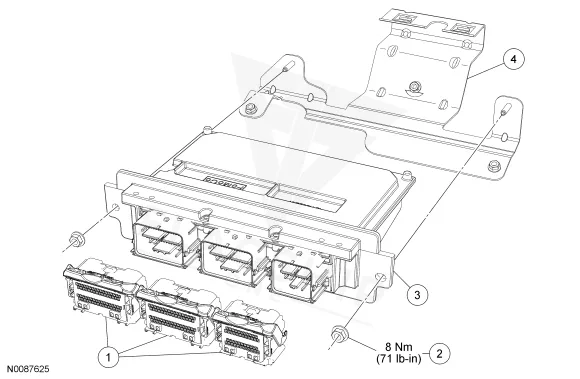
Work with the ignition off, and treat the module as static-sensitive: avoid touching the connector pins at any point.
| Operation | Configuration | Book Time |
|---|---|---|
| Powertrain Control Module R&R | All configurations | 0.9 hr |
| Powertrain Control Module Relearn | All configurations | 0.5 hr |
| Engine Control Module Relearn | All configurations | 0.5 hr |
| Engine Control Module R&R | All configurations | 0.9 hr |
| Engine Control Module Reset | All configurations | 0.3 hr |
Once the new module is in place, the factory procedure calls for a specific reprogramming of the Passive Anti‑Theft System and a flash of the EEPROM VID block for the replacement PCM. These steps are outlined in Section 2 of the service manual. Flagship One units arrive as a VIN-programmed replacement unit, meaning the necessary flash and relearn data are already applied, so the technician can skip the EEPROM programming and PATS re‑initialization, reducing shop time and the chance of error.
A failing PCM or ECM in a 2012 Ford Taurus may present as a no‑start condition, rough idle, unexpected stalling, or erratic transmission shifts. Drivers often notice a loss of power during acceleration or an illuminated Check Engine Light. When the internal communication breaks down, the system may log a P0606 communication error that prevents the scan tool from reading live data. These symptoms tend to appear intermittently at first, then become more consistent as the module deteriorates.
The following internal fault codes are commonly recorded by the 2012 Ford Taurus when its control modules experience issues:
| Code | Meaning | Full Guide |
|---|---|---|
| P0606 | Module processor failure | Full P0606 guide → |
The vehicle may limp in a reduced‑power mode, but continued operation can cause further damage and poor emissions performance.
Standard socket and torque tools are sufficient; the labor guide lists 0.9 hours for removal and installation.
The relearn process allows the new module to calibrate sensor inputs and adapt to the engine’s operating parameters.
While it often points to PCM communication issues, it can also result from wiring problems or connector corrosion.
A properly tested refurbished unit that is VIN‑programmed should meet the same functional requirements as a new part.
When the PCM or ECM in your 2012 Ford Taurus fails, you can choose a brand‑new OEM component or a certified refurbished replacement. Both options require the same access steps, but a pre‑programmed unit from Flagship One eliminates the post‑install flash and relearn procedures, potentially saving time and reducing the chance of re‑work.
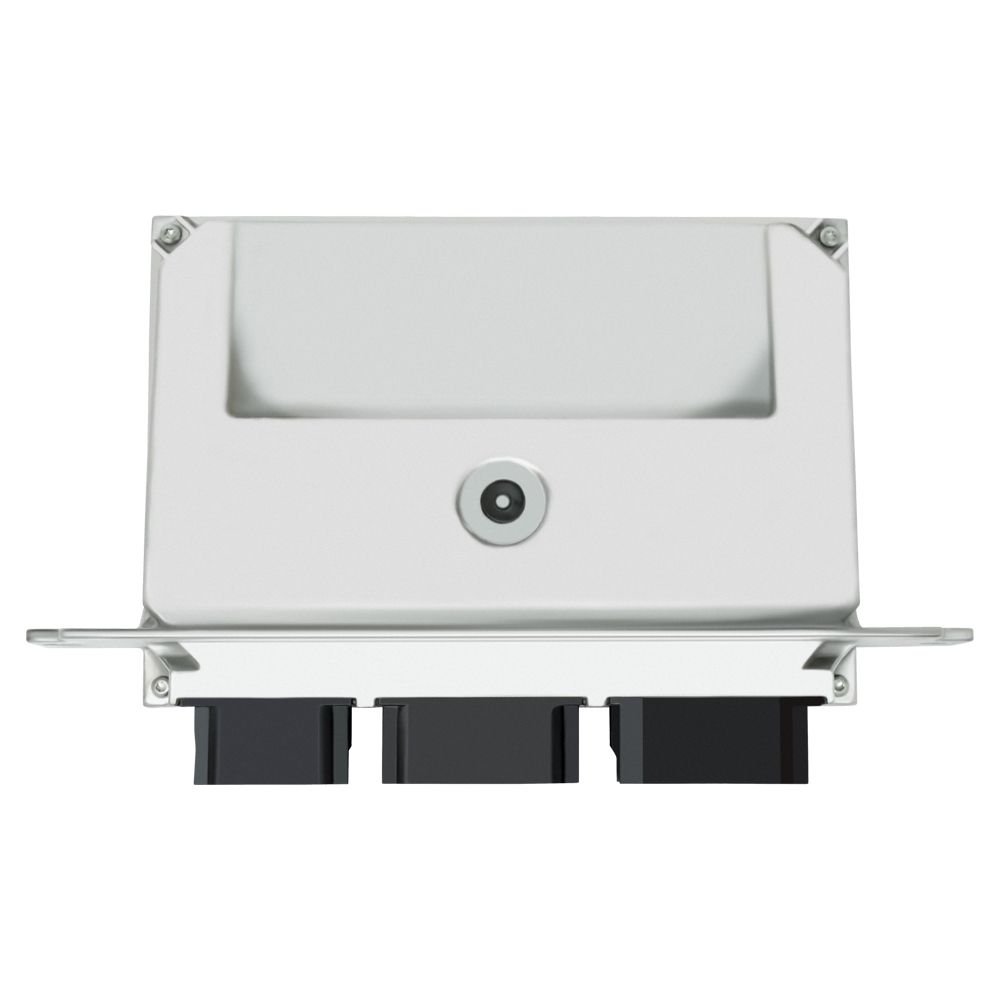
Flagship One stocks a refurbished, VIN-programmed PCM for the 2012 Ford Taurus with a lifetime warranty, free shipping and no core charge. The full Ford Taurus module lineup covers other engine configurations as well.
Replacing the control modules in a 2012 Ford Taurus restores reliable engine and transmission performance. Consider a VIN‑programmed replacement to streamline the repair, and follow preventive practices to keep the new unit functioning smoothly.