
Last updated on August 25th, 2026 at 01:36 pm
The Powertrain Control Module (PCM) in your 2005 Ford Expedition is the central computer managing engine combustion, transmission shifting, and emissions systems. When this module fails, your vehicle may not run properly or may not start at all, leaving you stranded.
If your 2005 Ford Expedition with the 5.4L engine runs poorly, stalls unexpectedly, or refuses to start, the Powertrain Control Module may be the culprit. The PCM serves as the brain of your vehicle’s powertrain, coordinating fuel delivery, ignition timing, and transmission behavior to keep your Expedition running smoothly. Unlike simpler electrical components, this module integrates multiple systems, meaning one failure can cascade into drivability problems across the entire vehicle. This guide explains what the PCM does in your specific model, the symptoms that indicate potential failure, the replacement process including factory programming requirements, and your options for getting back on the road. Whether you are diagnosing a check engine light or planning a repair, understanding the module’s role helps you make informed decisions about service and replacement parts.
The Powertrain Control Module in your 2005 Ford Expedition is the primary computer responsible for managing the 5.4L engine’s operation and the automatic transmission’s shifting behavior. This single unit replaces what older vehicles handled through separate computers, integrating engine management, transmission control, and emissions monitoring into one sophisticated package. The module receives input from dozens of sensors throughout the engine bay and transmission, processing this data in real time to adjust fuel injector pulse width, ignition coil firing, variable valve timing, and torque converter clutch engagement. For the replacement engine computers for the Ford Expedition, this integration means that a fault in any major sensor system can trigger protective mode, limiting power output to prevent mechanical damage. The PCM also stores diagnostic trouble codes that help technicians identify specific circuit failures, making it both a control center and a self-diagnostic tool. Because it directly controls fuel delivery and timing, a failing or corrupted module can cause your Expedition to run too rich or too lean, overheat under load, or default to limp-home mode that severely restricts acceleration.
2005 Ford Expedition
OEM programmed ECM for your 2005 Ford Expedition — plug & play, no dealer visit.
Free shipping · Lifetime warranty
The Powertrain Control Module on your 2005 Ford Expedition is located in the passenger-side front engine compartment, mounted to the front of the dash panel above the right-side footwell. Access requires removing the passenger-side kick panel and interior trim pieces to reach the module’s mounting bracket. The replacement procedure involves disconnecting the battery negative terminal first, then unplugging the main wiring harness connectors from the PCM before removing the mounting bolts. Installation reverses these steps, using the reverse torque sequence specified in the factory procedure. Book time for the removal and replacement work is 0.3 hours, with an additional 0.5 hour allowance for the PCM relearn procedure that must be performed after the new module is installed. This relearn process allows the new module to adapt to your vehicle’s specific engine characteristics and transmission behavior. The total labor allocation covers the physical replacement and the essential initialization that ensures proper communication between the new PCM and the rest of your Expedition’s systems.
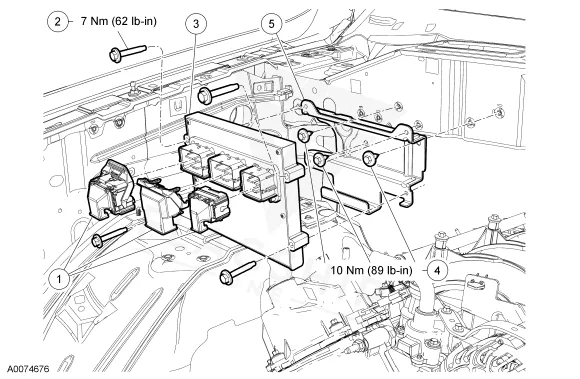
Work with the ignition off, and treat the module as static-sensitive: avoid touching the connector pins at any point.
| Operation | Configuration | Book Time |
|---|---|---|
| Powertrain Control Module R&R | All configurations | 0.3 hr |
| Powertrain Control Module Relearn | All configurations | 0.5 hr |
| Engine Control Module R&R | All configurations | 0.3 hr |
After installing a new Powertrain Control Module in your 2005 Ford Expedition, the factory procedure requires a relearn procedure to establish communication between the module and the vehicle’s various subsystems. This procedure takes approximately 0.5 hours of labor and uses dealer-grade diagnostic equipment to initialize the fuel system adaptive tables, transmission clutch adaptives, and idle control strategies specific to your engine. The new module must learn your engine’s unique combustion characteristics to deliver proper drivability and fuel economy. When you purchase a VIN-programmed replacement unit from Flagship One, the module arrives pre-programmed with your specific vehicle identification number already burned into the memory. This means the relearn procedure focuses on adaptation rather than initial programming, potentially reducing the time your vehicle spends at the service bay. The unit is configured to your Expedition’s exact specifications, including the 5.4L engine code and transmission combination, so it will communicate properly with your scan tool and all factory systems from the moment you turn the key.
When the Powertrain Control Module on your 2005 Ford Expedition begins to fail, the vehicle typically exhibits multiple symptoms that often appear suddenly rather than developing gradually. A common early warning is a no-start condition where the engine cranks normally but will not fire, or worse, a no-crank condition where the starter does not engage at all. Many owners report that their Expedition stalls unexpectedly shortly after starting, particularly when the engine is cold or when shifting into gear. The check engine light will illuminate, and scanning the vehicle often reveals multiple diagnostic trouble codes that may seem unrelated, such as misfire codes, oxygen sensor codes, and transmission fault codes appearing simultaneously. In some cases, the scan tool may not communicate with the PCM at all, indicating a failed module rather than a sensor problem. Some drivers experience a hard-start condition combined with idle speed that runs too fast when the engine is cold, a symptom pattern specifically called out in a factory bulletin for this model. Transmission symptoms include a lack of upshift, where the vehicle remains in a lower gear and refuses to shift up normally, along with harsh engagement when shifting between gears. If your Expedition displays any combination of these symptoms, particularly after a battery voltage spike from jump-starting or a weak charging system, the PCM should be considered as a potential cause.
Factory service bulletins document specific PCM-related issues for the 2005 Ford Expedition. TSB 05-06-03 addresses vehicles built before January 24, 2005, where the check engine light illuminates with codes P061B and P2106 following cold starts and rapid transmission gear engagement. TSB 06-13-09 covers hard starting, reduced power at 3500 RPM, and multiple fault codes including P0340, P0344, P0172, and P0175, specifically noting that affected Expeditions idle too fast when cold. TSB 05-23-01 describes a lack of upshift condition with check engine light on and ignition coil codes P0351 through P0358. These bulletins provide diagnostic and repair procedures that service technicians follow when addressing PCM-related complaints on this model year.
| Bulletin | Subject | What It Addresses |
|---|---|---|
| 05-06-03 | MIL ON WITH DTC P061B AND P2106 AFTER COLD START AND RAPID TRANSMISSION GEAR ENGAGEMENT – VEHIC | — |
| 06-13-09 | HARD START, LOW POWER AT 3500 RPM, MIL ON P0340, P0344, P0172, P0175 AND EXPEDITION ONLY – IDLE | — |
| 05-23-01 | LACK OF UPSHIFT – MIL ON WITH DTC P0351-P0358 | — |
The PCM must match your vehicle’s exact configuration including the 5.4L engine code and transmission type. Using an incorrect module can cause starting failures or trigger additional fault codes. Units from Flagship One are pre-programmed with your specific VIN, ensuring plug-and-play compatibility.
Technically skilled DIYers can perform the physical replacement, but the relearn procedure typically requires dealer-grade diagnostic software. Some independent shops offer this service at lower rates than dealerships. If you purchase a VIN-programmed unit, the initial programming is already complete, simplifying the post-install process.
Stalling immediately after start often points to PCM failure on this model year, particularly if multiple unrelated fault codes are present. However, a qualified diagnostic should verify whether the PCM is receiving proper input from sensors before concluding the module itself is at fault.
There is no definitive lifespan for these modules, as failure is typically event-driven rather than wear-related. A properly functioning PCM in a vehicle with healthy electrical systems can last the life of the vehicle. Voltage spikes from charging system failures or jump-starting accidents are the most common failure causes.
Original equipment repair is generally not cost-effective for this module type. Most service facilities recommend replacement with a new or refurbished unit. Flagship One offers remanufactured units that undergo factory-level testing, providing a balance between cost and reliability.
When your 2005 Ford Expedition requires a new Powertrain Control Module, you have two primary paths forward. You can purchase a brand-new unit from the dealer at significant cost, then pay additional labor for programming and relearn procedures. Alternatively, a remanufactured replacement unit from Flagship One arrives VIN-programmed to your exact vehicle, reducing the post-install procedure to the relearn step only. For this specific model year and engine combination, the remanufactured option provides substantial savings while delivering equivalent functionality. Consider your budget, timeline, and access to diagnostic equipment when choosing your path forward.
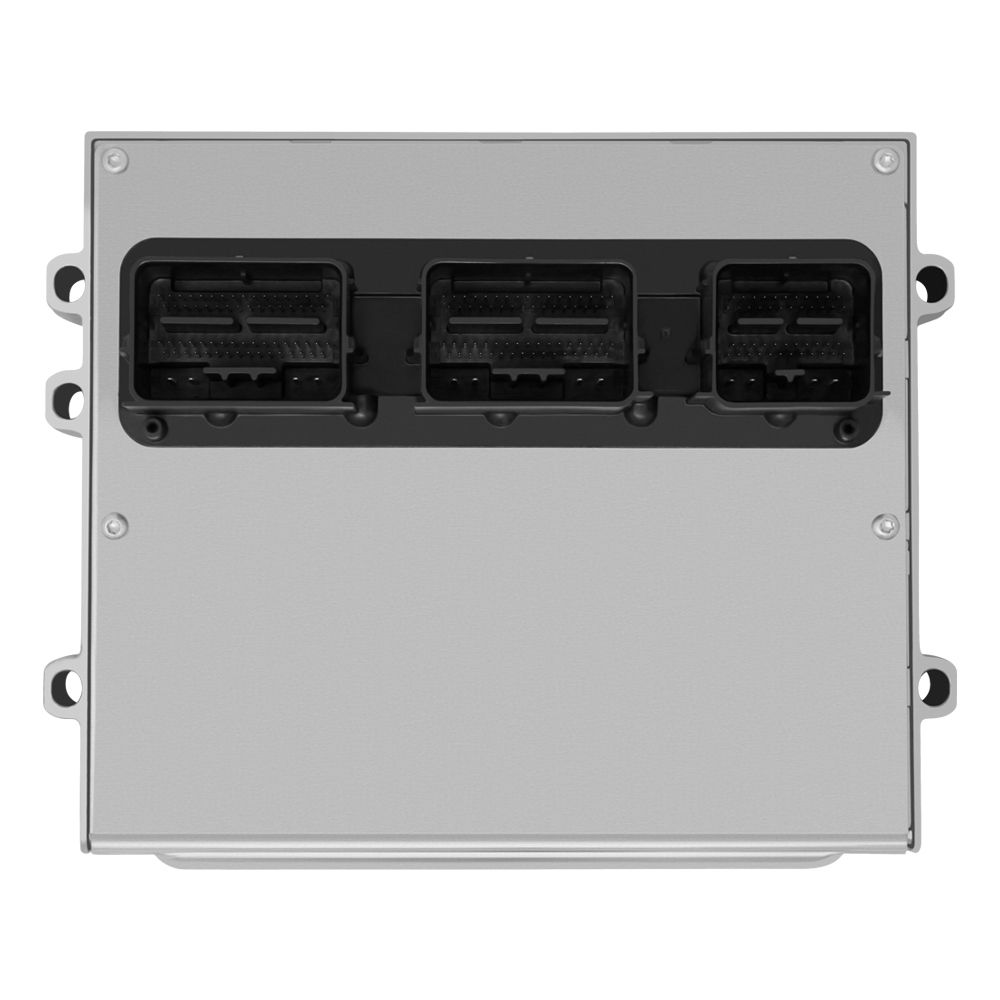
Flagship One stocks a refurbished, VIN-programmed PCM for the 2005 Ford Expedition with a lifetime warranty, free shipping and no core charge. The full Ford Expedition module lineup covers other engine configurations as well.
The Powertrain Control Module in your 2005 Ford Expedition is a critical component that manages the integrated operation of your 5.4L engine and automatic transmission. When this module fails, the resulting drivability issues can strand your vehicle and leave you facing potentially expensive repairs. Understanding the symptoms, factory service bulletins, and replacement options empowers you to make informed decisions about service. Whether you choose dealer replacement or a professionally remanufactured unit from Flagship One, addressing PCM failure promptly restores your Expedition’s reliability and gets you back on the road with confidence.