
Last updated on August 25th, 2026 at 01:40 pm
The Engine Control Module (ECM) or Powertrain Control Module (PCM) in your 1992 Ford Taurus is the central computer managing fuel injection, ignition timing, and emissions systems. When this unit fails, the engine may not run properly or at all.
If your 1992 Ford Taurus is experiencing drivability problems, the Engine Control Module (ECM) or Powertrain Control Module (PCM) may be the culprit. This guide explains what these computers do, where they’re located, common failure symptoms, and what replacement involves. Whether you’re diagnosing a no-start condition or planning a repair, understanding the module’s role helps you make informed decisions about your vehicle’s electronic control system.
The Powertrain Control Module in your 1992 Ford Taurus serves as the brain of the engine management system. It processes input from numerous sensors throughout the 3.0L V6 engine and uses that data to control fuel injection quantity, ignition timing advance, and emissions control devices in real time. This computer essentially translates driver demands into precise mechanical responses while maintaining acceptable exhaust emissions. Without proper communication from the module, the engine may run poorly, stall unexpectedly, or fail to start altogether. Replacement engine computers for the Taurus restore this critical communication network, allowing the powertrain to operate as the engineers designed.
Flagship One keeps Ford Taurus replacement engine computers in stock for exactly this failure pattern.
1992 Ford Taurus
OEM programmed ECM for your 1992 Ford Taurus — plug & play, no dealer visit.
Free shipping · Lifetime warranty
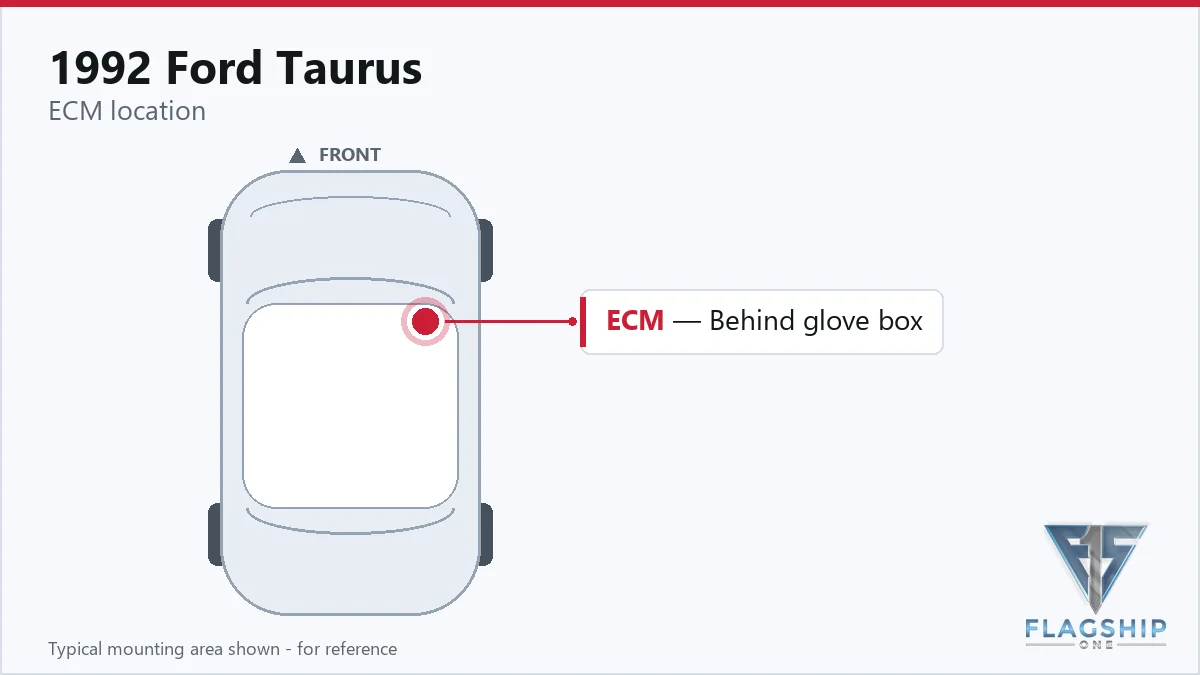
The computer control module on the 1992 Ford Taurus is located ahead of the glove box, mounted in the passenger compartment behind trim panels. Access requires removing the glove box assembly and any surrounding panels to reach the unit. According to factory labor times, ECM R&R requires 0.9 hours of book time while PCM R&R takes 0.4 hours. After the new module is installed, the relearn procedure adds an additional 0.5 hours. The factory caution emphasizes that the ignition switch must be OFF whenever disconnecting or reconnecting power to the module—this includes unplugging connectors, disconnecting the negative battery cable, removing fuses, or using jumper cables on a dead battery. Permanent module damage can result from ignoring this requirement.
| Operation | Configuration | Book Time |
|---|---|---|
| Engine Control Module R&R | All configurations | 0.9 hr |
| Powertrain Control Module R&R | All configurations | 0.4 hr |
| Powertrain Control Module Relearn | All configurations | 0.5 hr |
After replacing the PCM on your 1992 Ford Taurus, the factory service procedure requires a relearn procedure to establish communication between the new module and the vehicle’s sensors. This step calibrates the adaptive tables the computer uses for fuel delivery and idle control. Flagship One units arrive as a VIN-programmed replacement unit, meaning the module is pre-configured with your vehicle’s specific identification data before shipping. This eliminates the need for dealer programming equipment and allows you to complete the installation using standard hand tools.
Every VIN-programmed replacement unit from Flagship One arrives with these steps already completed.
When the PCM or ECM fails on a 1992 Ford Taurus, several symptoms commonly appear. The engine may refuse to start entirely, or it could start and then stall unexpectedly during operation. Misfire conditions often develop because the module cannot properly time fuel injection events. Some owners report that the scan tool cannot communicate with the vehicle’s OBD system, which points to a failed control module or loss of ground. Transmission shifting may become erratic or the vehicle may default to limp-home mode. Check engine lights that will not clear despite sensor replacements often indicate an underlying module fault rather than a sensor problem.
| Bulletin | Subject | What It Addresses |
|---|---|---|
| 93-12-09 | DIGITAL ELECTRONIC ODOMETERS – ELECTRONIC INSTRUMENT CLUSTERS, PROGRAMMABLE SPEEDOMETER/ODOMETE | — |
No. The PCM must be matched to your specific vehicle identification number. Flagship One provides VIN-programmed units pre-configured for your Taurus, eliminating programming requirements.
With proper tools and caution, a competent DIY mechanic can perform the R&R. The key is following the factory caution to keep ignition OFF during all electrical work. However, if your replacement unit arrives blank rather than VIN-programmed, dealer equipment would be required.
If the scan tool cannot communicate with the vehicle at all, or if multiple systems fail simultaneously with no obvious cause, the module itself is the likely culprit. Start with basic checks of power and ground to the PCM before assuming it needs replacement.
When your 1992 Ford Taurus requires a replacement computer, you have options. A new OEM unit from the dealer provides the latest calibration but carries a premium price. A quality refurbished replacement from Flagship One offers the same function at a lower cost, with the added benefit of VIN programming included. For this model year, either path restores proper engine management, though the pre-programmed option saves you from dealer programming fees.
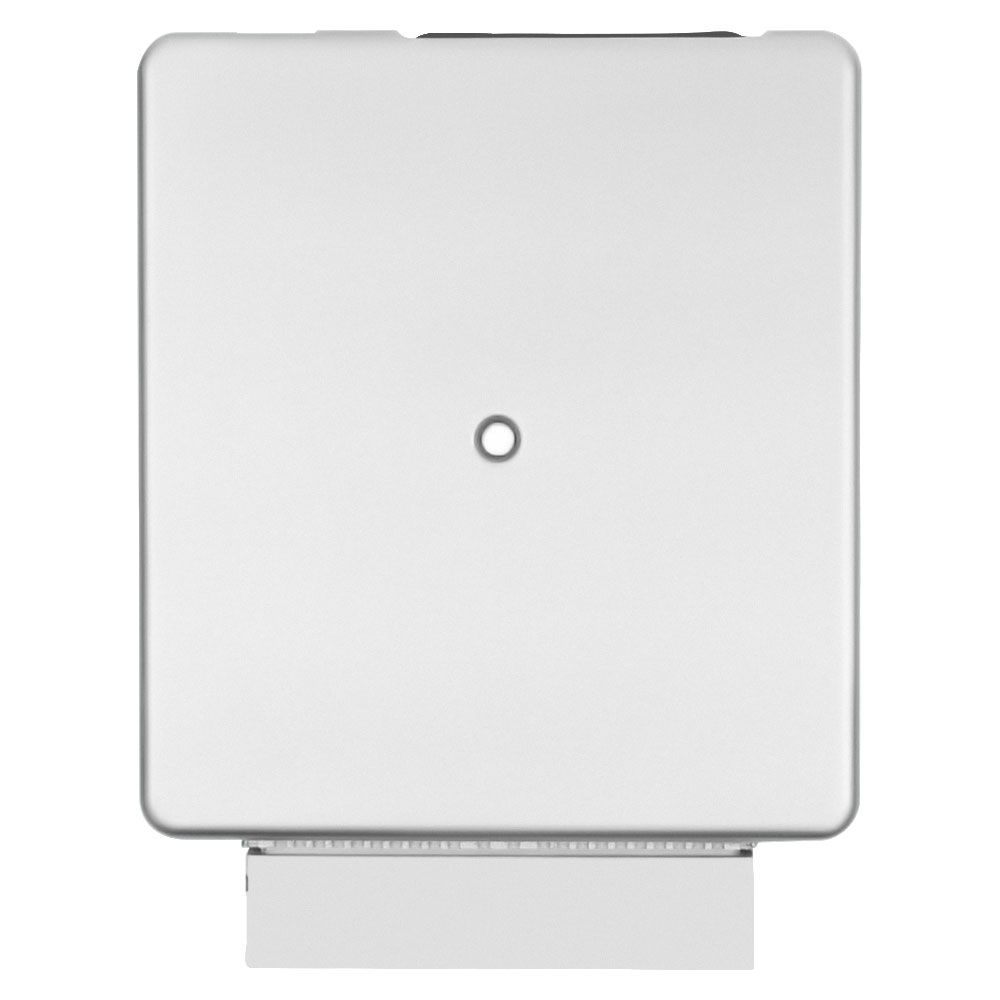
Flagship One stocks a refurbished, VIN-programmed PCM for the 1992 Ford Taurus with a lifetime warranty, free shipping and no core charge. The full Ford Taurus module lineup covers other engine configurations as well.
The 1992 Ford Taurus relies on its Powertrain Control Module to manage the 3.0L V6 engine’s performance. Understanding the module’s location, replacement procedure, and programming requirements helps you approach the repair with confidence. Whether you choose new or refurbished, a properly programmed replacement restores your Taurus to reliable operation.