
Last updated on August 25th, 2026 at 01:40 pm
The Powertrain Control Module on the 1992 Ford Escort (1.8L) serves as the primary computer managing engine and transmission functions. When this unit fails, symptoms often include hard starting, stalling, poor fuel economy, and illuminated warning lamps.
If your 1992 Ford Escort has developed starting problems, stalling, or erratic idling, the Powertrain Control Module may be at fault. This guide walks through the replacement process, relearn requirements, and what to expect from this repair on your specific vehicle. The PCM on this model integrates multiple engine management functions, and its failure can affect everything from fuel delivery to ignition timing. Understanding the location, proper installation sequence, and post-replacement programming needs will help you evaluate whether to tackle this as a DIY project or budget for professional installation. This guide covers the 1.8L engine variant found in this generation of the Escort.
The Powertrain Control Module in your 1992 Ford Escort acts as the central nervous system for the engine management system. It receives input from various sensors throughout the powertrain and adjusts fuel delivery, ignition timing, and other critical functions to maintain proper engine operation under varying conditions. On the 1.8L engine featured in this vehicle, the module also coordinates with the distributorless ignition system to control firing order and spark timing. Unlike later OBD-II systems, this pre-OBD-II computer has limited self-diagnostic capability, which means failure symptoms often manifest as drivability issues before any specific warning light appears. Replacement engine computers for the Escort must be properly matched to your vehicle’s specifications to ensure correct operation of all connected systems. The module processes inputs from the oxygen sensor, throttle position sensor, and other engine monitors to make real-time adjustments that affect your vehicle’s performance and emissions compliance.
Flagship One keeps Ford Escort replacement engine computers in stock for exactly this failure pattern.
1992 Ford Escort
OEM programmed ECM for your 1992 Ford Escort — plug & play, no dealer visit.
Free shipping · Lifetime warranty
The PCM on this vehicle is mounted behind the center of the instrument panel, requiring partial dashboard disassembly for access. To reach the unit, technicians must first remove the air duct that sits directly in front of the module. This access method means working in the cramped space beneath your dashboard, with multiple electrical connections to disconnect carefully. The factory labor standard assigns 1.0 hours for complete removal and installation of the ECM on the 1.8L engine, which accounts for connector disconnection, mounting bolt removal, and the reverse reinstallation process. After placing the new module in the same mounting location, all electrical connectors must be properly seated and secured. The air duct must be reinstalled to its original position to maintain proper ventilation to climate control systems. Working in this area may also require disconnection of nearby components that obstruct access to the module bay.
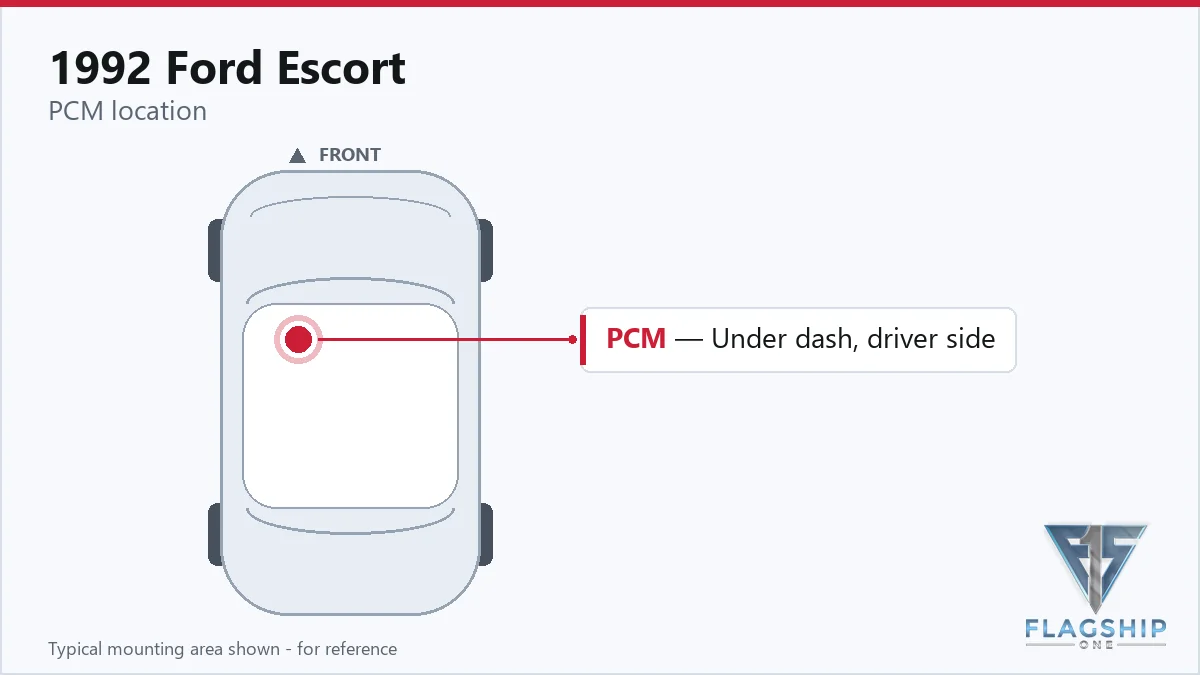
Work with the ignition off, and treat the module as static-sensitive: avoid touching the connector pins at any point.
| Operation | Configuration | Book Time |
|---|---|---|
| Powertrain Control Module R&R | All configurations | 0.6 hr |
| Powertrain Control Module Relearn | All configurations | 0.5 hr |
| Engine Control Module Relearn | All configurations | 0.5 hr |
| Engine Control Module R&R | 1.8L | 1.0 hr |
| Engine Control Module R&R | 1.9L | 1.1 hr |
After installing a replacement ECM, Ford specifies a relearn procedure that must be completed to restore proper operation. The factory assigns 0.5 hours for this post-installation relearn process, which allows the new module to adapt to your specific vehicle’s engine characteristics and sensor readings. This procedure typically involves running the engine through specific operating conditions while the module calibrates its fuel and spark maps to your engine. However, replacement units from Flagship One arrive already programmed with your 1992 Ford Escort’s specific VIN, effectively completing the most critical portion of this factory requirement before the module is even installed. This means your technician may need to perform a abbreviated relearn sequence focused on idle adaptation and sensor calibration rather than full VIN programming. The post-install procedure generally involves allowing the engine to idle for a period and then driving through light acceleration cycles to complete the adaptation process.
Every VIN-programmed replacement unit from Flagship One arrives with these steps already completed.
When the PCM on your 1992 Ford Escort begins to fail, you may notice the engine refusing to start or starting only after multiple attempts. Stalling, particularly at idle or when coming to a stop, often indicates module issues, especially if the problem occurs without other apparent causes. Misfire symptoms and rough running may accompany stored trouble codes in the module’s internal memory, though accessing these codes requires a capable scan tool. Some vehicles experience complete loss of communication with the PCM through the data link connector, preventing any diagnostic access. Transmission shifting problems may also stem from module failure, as the PCM controls shift timing and feel on this automatic-equipped model. Any combination of these symptoms in your Escort warrants investigation of the powertrain control system as a potential source.
Factory service bulletin 92-17-01 addresses core return procedures for remanufactured Powertrain Control Modules under a Ford program. This bulletin provides instructions for returning the old unit after replacement, which may be required to receive full credit on a core exchange. A separate bulletin, 95-10-02, covers revised ignition control module connector retention and sealing for distributorless ignition applications. While this second bulletin addresses the ICM rather than the PCM directly, the related connector and sealing improvements may be relevant during any work in the PCM area. Neither bulletin indicates a known defect with the PCM itself on this specific application.
| Bulletin | Subject | What It Addresses |
|---|---|---|
| 92-17-01 | CORE RETURN INSTRUCTIONS – FORD ENGINE CONTROL PROCESSOR – POWERTRAIN CONTROL MODULE – REMANUFA | — |
| 95-10-02 | “MALFUNCTION INDICATOR LAMP” (MIL) ILLUMINATED – DISTRIBUTORLESS IGNITION SYSTEM (DIS) ONLY – I | — |
Diagnosing a bad module versus a faulty sensor requires systematic testing. A professional scan tool can retrieve module-internal codes and live data. If multiple unrelated systems show failures simultaneously, or if communication with the module is lost entirely, the PCM itself may be at fault. Sensor failures typically produce codes for that specific circuit only.
DIY replacement is possible for experienced mechanics comfortable working in tight dashboard spaces. The primary challenges involve accessing the module behind the instrument panel, disconnecting all electrical connectors carefully, and completing the post-installation relearn procedure. If your replacement unit requires VIN programming that you cannot perform, professional installation may be necessary.
A used unit may work but typically requires programming to match your specific vehicle’s VIN and configuration. Unlike a remanufactured replacement that arrives ready to install, a junkyard unit may not be compatible without reprogramming. Additionally, used modules have unknown histories and may fail soon after installation.
Deciding between a remanufactured replacement and a repair for your 1992 Ford Escort’s computer involves considering cost, reliability, and downtime. Remanufactured units from Flagship One come VIN-programmed and ready to install, potentially reducing your repair time significantly. Professional installation ensures proper mounting, connector seating, and completion of any required relearn procedures. If you choose to install the unit yourself, verify you have the tools and diagnostic capability needed to complete the process correctly.
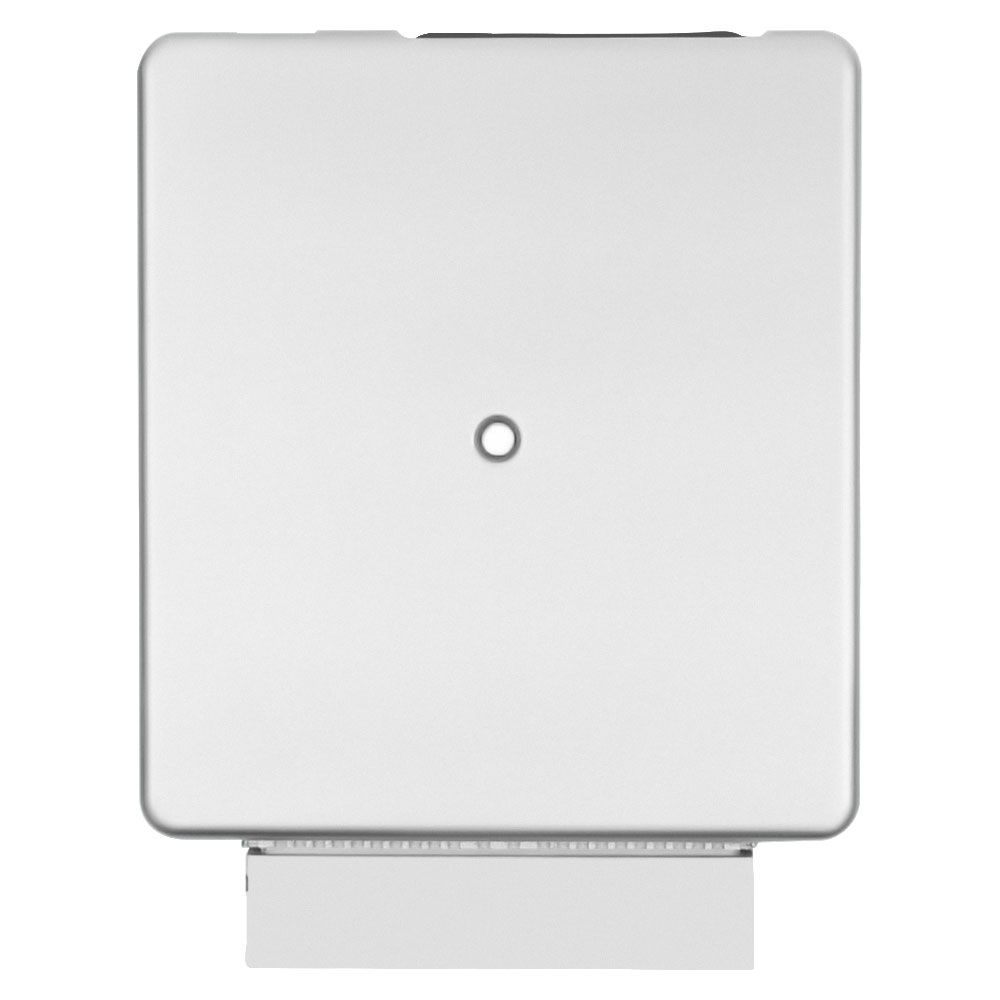
Flagship One stocks a refurbished, VIN-programmed PCM for the 1992 Ford Escort with a lifetime warranty, free shipping and no core charge. The full Ford Escort module lineup covers other engine configurations as well.
Replacing the Powertrain Control Module on your 1992 Ford Escort restores proper engine management when the original unit has failed. Understanding the module’s location, the time required for proper installation, and the post-replacement relearn procedure helps set realistic expectations for this repair. A quality replacement unit programmed to your vehicle’s specifications will have your Escort running properly again.