
Last updated on August 25th, 2026 at 01:43 pm
In the 2018 Nissan Maxima, the Powertrain Control Module (PCM) and Engine Control Module (ECM) manage engine timing, fuel delivery, and transmission shift strategy. A malfunction often triggers internal fault codes such as P0605, indicating a communication or processing error that can lead to loss of power, rough idle, or stalling. Replacing these modules restores the vehicle’s electronic command functions.
When a 2018 Nissan Maxima begins to exhibit erratic power delivery, unexpected shifting, or a stored P0605 trouble code, the underlying cause may involve the vehicle’s electronic control modules. Understanding how the Powertrain Control Module and Engine Control Module operate, what labor is involved in their removal, and the post‑install programming steps can help you decide whether to pursue a repair or a replacement. This guide walks you through the essential facts so you can evaluate the work required, anticipate the time commitment, and recognize the benefits of a properly programmed unit.
The Powertrain Control Module in the 2018 Nissan Maxima acts as the central computer that coordinates engine performance with transmission behavior, while the Engine Control Module focuses on fuel injection, ignition timing, and emissions control. Both modules collect sensor data and issue commands that keep the powertrain running smoothly. A failure in either unit can cause loss of driveability, trigger diagnostic codes, or disable certain functions. Because the PCM directly influences shift timing, a fault may result in harsh or delayed gear changes. The ECM’s role in managing combustion means its malfunction can lead to misfires or rough idle. Selecting a reliable replacement PCM for 2018 Maxima ensures that the vehicle retains its calibrated performance parameters.
2018 Nissan Maxima
OEM programmed ECM for your 2018 Nissan Maxima — plug & play, no dealer visit.
Free shipping · Lifetime warranty
The PCM and ECM in the 2018 Nissan Maxima are mounted within the engine compartment, typically attached to the firewall and connected via multiple wiring harnesses. Removing the PCM generally involves disconnecting the battery, unfastening a set of bolts, and extracting the unit, which the factory book time estimates at one hour. The ECM follows a similar process with a comparable one‑hour labor estimate. After removal, the new module is positioned, bolted in place, and the connectors are reattached. No specific torque values are provided in the available data, so technicians follow standard Nissan service procedures for securing the modules.
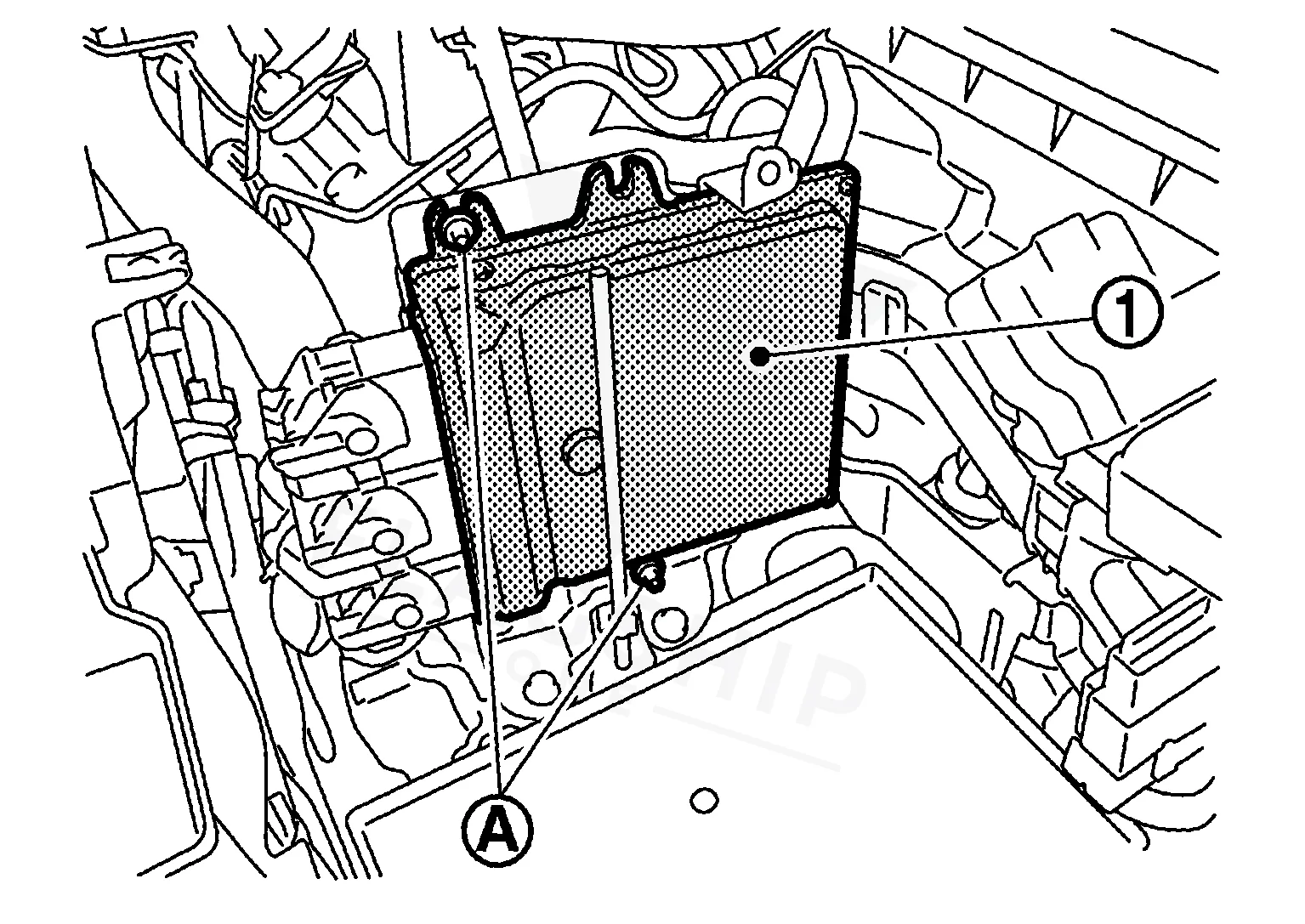
Work with the ignition off, and treat the module as static-sensitive: avoid touching the connector pins at any point.
| Operation | Configuration | Book Time |
|---|---|---|
| Powertrain Control Module R&R | All configurations | 1.0 hr |
| Powertrain Control Module Relearn | All configurations | 0.5 hr |
| Engine Control Module R&R | All configurations | 1.0 hr |
| Engine Control Module Reset | All configurations | 0.3 hr |
| Engine Control Module Relearn | All configurations | 0.5 hr |
Once the new PCM or ECM is installed in the 2018 Nissan Maxima, the factory service routine calls for a relearn or reset operation to synchronize the module with the vehicle’s existing systems. The PCM requires a 0.5‑hour relearn, while the ECM needs a 0.3‑hour reset and a 0.5‑hour relearn. Flagship One supplies a a VIN-programmed replacement unit that arrives already calibrated to the vehicle’s VIN, eliminating the need for those post‑install programming steps on the shop floor.
Typical signs of a failing PCM or ECM in a 2018 Nissan Maxima include an inability to start, intermittent stalling, rough idle, and transmission shift anomalies. Drivers may also notice a loss of power during acceleration or see the check‑engine light illuminate. When the control module cannot process data correctly, diagnostic tools often report a powertrain control module error that points to internal communication issues. In some cases, the vehicle may exhibit reduced fuel efficiency or erratic sensor readings, all of which stem from the module’s compromised functionality.
The following internal trouble codes are commonly logged by the 2018 Nissan Maxima when its control modules experience faults:
| Code | Meaning | Full Guide |
|---|---|---|
| P0605 | Internal ROM error | Full P0605 guide → |
The P0605 code signals a powertrain control module internal communication error, which can affect engine and transmission coordination.
Factory labor guidelines estimate about one hour for removal and installation of the PCM.
Yes, the ECM reset takes roughly 0.3 hours and the relearn adds another 0.5 hours, unless a VIN‑programmed unit is used.
When your 2018 Nissan Maxima needs a new PCM or ECM, you can choose a brand‑new factory‑spec unit or a refurbished replacement that meets original equipment standards. Both options require the same removal steps, but a VIN‑programmed replacement from Flagship One simplifies the final calibration, letting you focus on getting the vehicle back on the road.
Flagship One stocks a refurbished, VIN-programmed PCM for the 2018 Nissan Maxima with a lifetime warranty, free shipping and no core charge. The full Nissan Maxima module lineup covers other engine configurations as well.
Replacing the PCM or ECM in a 2018 Nissan Maxima restores essential engine and transmission functions. Consider a VIN‑programmed unit to reduce post‑install work and ensure reliable performance.