
Last updated on August 25th, 2026 at 01:50 pm
The engine control module in a 1997 Nissan Maxima manages fuel delivery and ignition timing. When this computer fails, it often causes erratic engine performance, sensor errors, or a complete lack of combustion, preventing the vehicle from starting or running smoothly.
Owning a 1997 Nissan Maxima involves maintaining a sophisticated balance of mechanical parts and electronic controls. The heart of this system is the engine computer, which processes data from various sensors to ensure the 3.0L engine operates at peak efficiency. When this component begins to fail, the results are often frustrating and intermittent, ranging from a sudden loss of power to a persistent warning light on the dashboard. Many owners find themselves chasing phantom sensor failures only to discover that the processing unit itself is the root cause. Understanding how this module functions and how to identify its failure is essential for any successful repair. This guide provides a detailed look at the role of the PCM and ECM, the labor involved in replacing them, and how to handle the necessary programming. By the end of this explanation, you will have a clear understanding of the symptoms of failure and the most efficient path toward restoring your vehicle to a reliable operating state.
The Powertrain Control Module or Engine Control Module acts as the primary intelligence for the 1997 Nissan Maxima. It constantly monitors inputs from the crankshaft position sensor, mass airflow sensor, and oxygen sensors to determine the precise amount of fuel and the exact spark timing required for each cylinder. By adjusting these variables in real time, the module optimizes fuel economy and reduces emissions. If the internal circuitry degrades, the computer may send incorrect signals to the fuel injectors or ignition coils, leading to poor performance. Because these components are integrated circuits, they cannot be repaired with traditional tools. Instead, installing replacement engine computers for the 1997 Nissan Maxima is the standard solution for internal hardware failure. This module is critical because it manages the transition between idling and acceleration, ensuring that the engine does not stall or surge. Without a functioning ECM, the vehicle cannot maintain the air-fuel ratio needed for combustion, which effectively renders the powertrain inoperable.
1997 Nissan Maxima
OEM programmed replacements — plug & play, no dealer visit.
Find yours by year, make & model →
Free shipping · Lifetime warranty
The module in the 1997 Nissan Maxima is positioned for accessibility, allowing for a relatively straightforward swap. Based on industry book times, the removal and replacement of the Powertrain Control Module is estimated at 0.7 hours. Similarly, the Engine Control Module R&R is also listed at 0.7 hours. The process generally involves disconnecting the battery to prevent electrical surges and removing the wiring harnesses from the unit. Because the module is sensitive to static and physical damage, careful handling during the extraction is necessary. Once the old unit is removed and the new one is seated, the connectors are secured to ensure a tight seal against moisture and debris. No specific torque values were provided for the mounting hardware, but standard snug fitment is typically required to prevent vibration-induced wear.
| Operation | Configuration | Book Time |
|---|---|---|
| Powertrain Control Module R&R | All configurations | 0.7 hr |
| Powertrain Control Module Relearn | All configurations | 0.5 hr |
| Engine Control Module R&R | All configurations | 0.7 hr |
| Engine Control Module Relearn | All configurations | 0.5 hr |
After a new module is installed in the 1997 Nissan Maxima, the factory requires a specific relearn procedure to synchronize the computer with the engine’s current state. This process is documented to take 0.5 hours for both the PCM and ECM. This step ensures that the idle speed and fuel trims are calibrated correctly for your specific engine. However, the initial VIN configuration is a separate hurdle that often requires specialized dealer equipment. To simplify this, Flagship One provides a VIN-programmed replacement unit that arrives with the vehicle identification number already burned into the memory. This means the complex VIN programming is finished before the part reaches your door, leaving you only with the basic relearn process to complete after installation.
Failure of the engine computer in a 1997 Nissan Maxima often manifests as erratic behavior that mimics other mechanical faults. You may experience a total no-start condition where the engine cranks but never fires, or the vehicle may stall unexpectedly while idling at a stop. In many cases, the scan tool will show no communication with the module, indicating a complete internal power failure. You might also notice the MIL light illuminating due to internal logic errors, such as when the computer triggers a P0300 multi-cylinder misfire despite the ignition system being in good health. Other signs include unpredictable shifting if the PCM is affected, or inconsistent readings from the oxygen sensors. Because the ECM controls the fuel map, a failing unit may cause the engine to run excessively lean or rich, leading to poor fuel economy and a rough idle that cannot be tuned out with traditional adjustments.
Factory service bulletins provide insight into known ECM issues for this model. NTB97024 notes that a 1997 Maxima may display a MIL light with a P0300 multi-cylinder misfire code caused specifically by the ECM. Additionally, NTB98011 describes a situation where a 1997 Maxima shows a MIL light and stores a P0136 rear oxygen sensor code within the ECM. For those with a 1998 Maxima, NTB98053 addresses a MIL light accompanied by a P0137 rear oxygen sensor minimum voltage monitoring code stored in the ECM.
| Bulletin | Subject | What It Addresses |
|---|---|---|
| — | EC – ENGINE CONTROL SYSTEM: 1997 MAXIMA MIL ‘ON’; P0300 (MULTI-CYLINDER MISFIRE) STORED DUE TO | — |
| — | EC – ENGINE CONTROL SYSTEM: 1998 MAXIMA, MIL ‘ON’ WITH REAR OXYGEN SENSOR DTC P0137 (MINIMUM VO | — |
| — | EC – ENGINE CONTROL SYSTEM: 1997 MAXIMA MIL “ON”; DTC P0136 REAR OXYGEN SENSOR ST | — |
The book time for the removal and replacement of the module is 0.7 hours. This does not include the additional time needed for the relearn process.
Yes, a relearn procedure is required and typically takes 0.5 hours. However, the VIN programming is handled by Flagship One prior to shipping.
According to service bulletin NTB97024, internal ECM faults can indeed cause a P0300 multi-cylinder misfire code.
In the 1997 Nissan Maxima, these terms often refer to the same primary engine control unit that manages the powertrain and fuel systems.
If the fault is caused by internal ECM errors as noted in NTB98011, a replacement module may resolve the P0136 or P0137 codes.
When deciding between repairing an existing module and choosing a refurbished replacement, consider the reliability of the internal circuitry. For the 1997 Nissan Maxima, internal component failure is common and often cannot be fixed by soldering. A professionally refurbished unit provides a dependable way to restore factory performance without the cost of a brand-new part, ensuring your engine timing and fuel delivery return to original specifications.
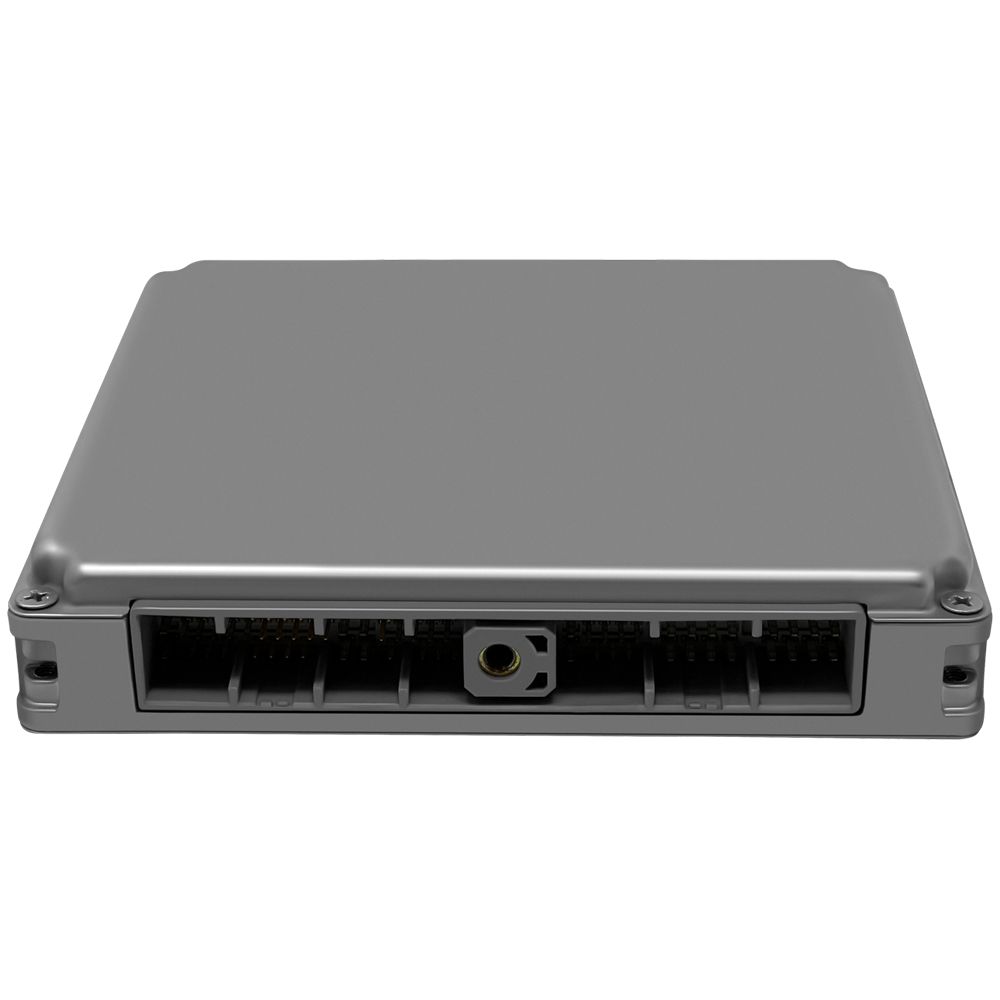
Flagship One stocks a refurbished, VIN-programmed PCM for the 1997 Nissan Maxima with a lifetime warranty, free shipping and no core charge. The full Nissan Maxima module lineup covers other engine configurations as well.
Restoring the electronic brain of your 1997 Nissan Maxima is the most effective way to resolve complex misfires and sensor errors. By understanding the labor involved and the importance of the relearn procedure, you can ensure a professional installation. If you are experiencing persistent MIL lights or starting issues, exploring a programmed replacement module is a logical next step for your 1997 Nissan Maxima.