
Last updated on August 25th, 2026 at 01:50 pm
The Engine Control Module in your 1994 Nissan Quest is the central computer managing the 3.0L V6 engine. It processes sensor inputs and adjusts fuel delivery, timing, and idle speed. Common failure modes include internal short circuits from voltage spikes, heat-related solder joint degradation, and moisture intrusion through connector seals.
When your 1994 Nissan Quest experiences hard starting, intermittent stalling, or no communication with factory scan tools, the Engine Control Module may be the culprit. This module serves as the brain of your vehicle’s engine management system, processing data from multiple sensors to maintain proper air-fuel mixture, ignition timing, and idle speed on the 3.0L V6 engine. Unlike later OBD-II vehicles, the 1994 Quest uses a manufacturer-specific diagnostic system without standardized trouble codes. Understanding what the ECM does, where it lives, and what post-installation steps are required will help you make an informed repair decision and avoid unexpected delays after the replacement is installed.
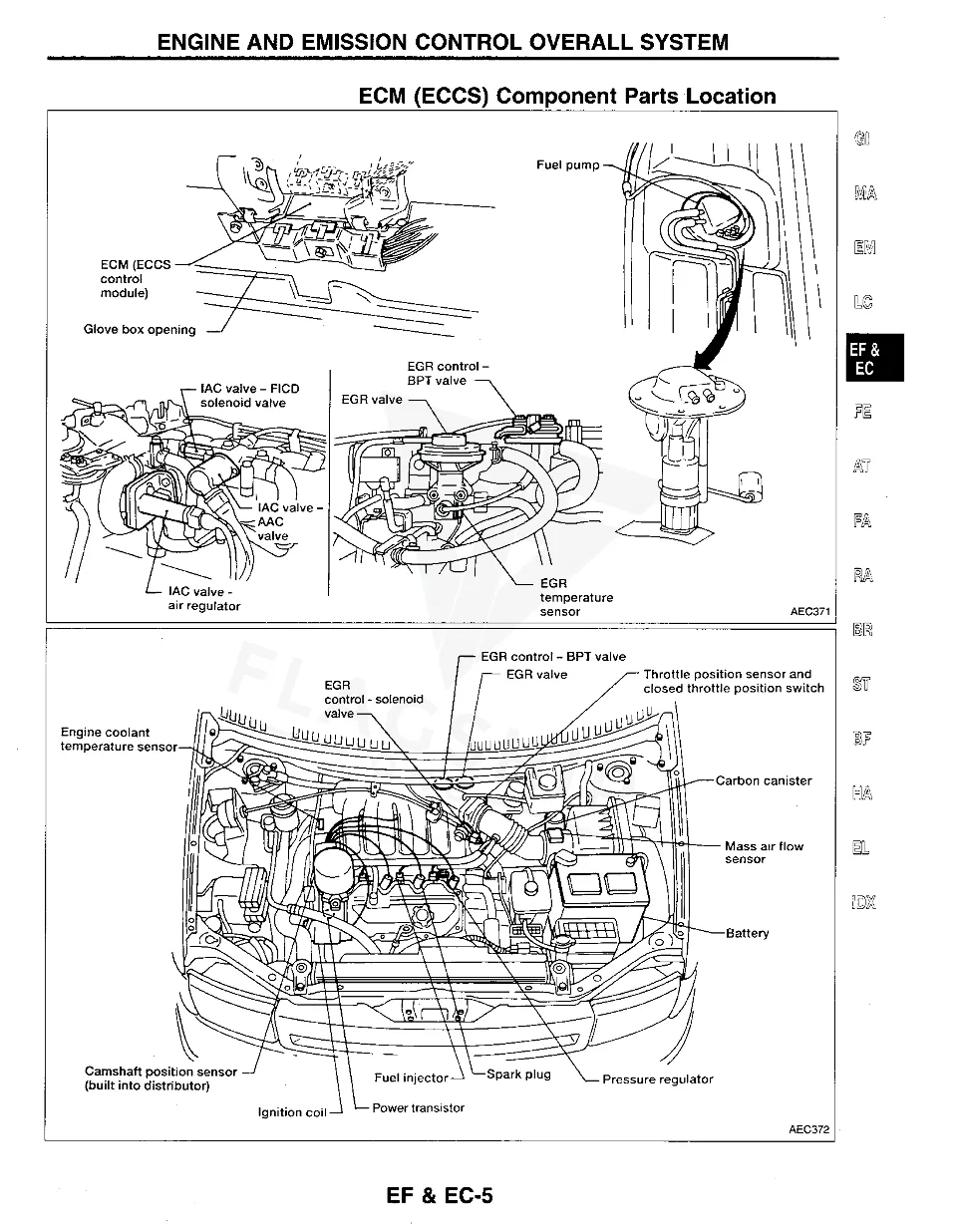
The Engine Control Module in your 1994 Nissan Quest operates within Nissan’s ECCS (Electronic Concentrated Engine Control System), which manages multiple engine functions from a single central computer. The module receives continuous data from the crankshaft position sensor, camshaft position sensor, coolant temperature sensor, mass airflow sensor, and throttle position sensor to calculate real-time fuel injection pulse width and ignition advance angles for the 3.0L V6. It also controls the idle air control valve to maintain stable engine speed at idle and manages the fuel pump relay circuit. Without this module interpreting sensor data and commanding the correct actuator responses, the engine cannot maintain proper combustion. The Quest’s ECM communicates with factory diagnostic equipment through a data link connector, and losing that communication often indicates internal module failure. Replacement engine computers for the Quest are available, but sourcing one that is already configured for your specific vehicle identification number eliminates a critical post-installation step that would otherwise require a dealer visit. This module is mounted inside the engine compartment, which subjects it to heat cycles and vibration that contribute to long-term reliability concerns.
Flagship One keeps Nissan Quest replacement engine computers in stock for exactly this failure pattern.
1994 Nissan Quest
OEM programmed ECM for your 1994 Nissan Quest — plug & play, no dealer visit.
Free shipping · Lifetime warranty
The Engine Control Module on the 1994 Nissan Quest is located inside the engine compartment, typically positioned near the passenger-side firewall or alongside the driver’s side fender apron where it is accessible without removing major components. Physical replacement involves disconnecting the negative battery terminal, removing the module from its mounting bracket, and transferring the electrical connector before installing the new unit. Factory book time for the removal and reinstallation portion of this job is 0.9 hours. After the new ECM is installed, the repair process is not complete. The vehicle requires a reset procedure (book time 0.3 hours) to clear adaptive memory and initialize the new module, followed by a relearn procedure (book time 0.5 hours) that allows the engine management system to calibrate to the replacement computer. A powertrain system diagnosis and testing step (book time 0.5 hours) confirms proper operation. Always torque electrical connectors to factory specifications to ensure reliable communication between the module and vehicle sensors.
| Operation | Configuration | Book Time |
|---|---|---|
| Engine Control Module R&R | All configurations | 0.9 hr |
| Engine Control Module Reset | All configurations | 0.3 hr |
| Engine Control Module Relearn | All configurations | 0.5 hr |
| Powertrain Control System Diagnosis & Testing | All configurations | 0.5 hr |
The factory service procedure for the 1994 Nissan Quest requires specific steps after installing a replacement ECM. These include registering the module to your vehicle identification number and configuring security parameters so the new computer can communicate with other powertrain controllers. The vehicle must complete a reset procedure to clear learned adaptive values from the previous module, then undergo a relearn procedure so the engine management system can establish new calibration data based on your specific engine’s characteristics. If these steps are skipped or performed incorrectly, the engine may run poorly, display incorrect fuel trim values, or fail to start. A VIN-programmed replacement unit arrives from Flagship One with your specific vehicle identification number already configured, meaning those critical registration steps are completed before the module reaches your shop. This allows the post-installation process to proceed directly to the reset and relearn procedures without requiring a separate dealer programming appointment or aftermarket programming tool.
Every VIN-programmed replacement unit from Flagship One arrives with these steps already completed.
When the Engine Control Module fails on your 1994 Nissan Quest, you may notice the engine cranks normally but fails to start due to loss of fuel injection signal. Intermittent stalling while driving is common, particularly at idle when the idle air control function is lost. The engine may run roughly or exhibit hesitation during acceleration if the module stops processing sensor data correctly. In some cases, the check engine light may illuminate even though the vehicle uses a pre-OBD-II diagnostic system without standardized codes. A dead scan tool that cannot communicate with the ECM is a strong indicator of internal module failure rather than a simple sensor issue. Transmission shifting problems may also occur because the TCM depends on engine management data from the powertrain control module to determine shift points and line pressure. If multiple unrelated trouble codes appear simultaneously or the vehicle enters a limited-performance mode, the ECM itself is often the root cause rather than individual sensors.
Nissan has issued service bulletins relevant to Engine Control Module service on the 1994 Quest. NTB95059 provides precautions for testing and diagnosing the ECCS system to avoid causing damage to the ECM during diagnostic procedures. This bulletin addresses the importance of using proper test equipment and following specific procedures when working with the module to prevent accidental damage. NTB95045 covers specifications for the OBD-II ECM connector bolt, addressing proper terminal torque and connection integrity for the module electrical interface. NTB11074 provides guidance on reprogramming procedures using the CONSULT diagnostic tool, which is the factory-approved method for configuring replacement modules. These bulletins reflect the importance of proper handling and configuration when servicing the Engine Control Module on this vehicle.
| Bulletin | Subject | What It Addresses |
|---|---|---|
| — | EC – ENGINE CONTROL SYSTEM: PRECAUTIONS FOR TESTING/DIAGNOSING THE ECCS SYSTEM TO AVOID DAMAGIN | — |
| — | EC – ENGINE CONTROL SYSTEM: OBD-II ECM CONNECTOR BOLT | — |
| — | EC – ENGINE CONTROL SYSTEM: REPROGRAMMING WITH CONSULT | — |
A used ECM may work if it is from the same vehicle identification number, but modules from different VINs will not communicate properly with your vehicle’s security system without dealer reprogramming. Salvage yards rarely offer this service, leaving you with a non-functional part.
Without the relearn procedure, the engine management system retains adaptive fuel data from the failed module, which does not match your new ECM. This can result in poor idle quality, excessive fuel consumption, and incorrect emissions performance during the adaptation period.
If factory scan tools cannot establish communication with the module, internal failure is likely and replacement is necessary. Software updates via CONSULT diagnostic equipment apply to functioning modules experiencing specific calibration concerns documented in service bulletins.
Choosing between repairing your existing ECM and installing a replacement involves weighing diagnostic costs against parts expenses. In most cases involving internal module failure, replacement is more practical than repair, particularly when the vehicle has accumulated significant mileage. A remanufactured unit from a reputable supplier typically carries a warranty and arrives ready for installation. Flagship One replacement modules are VIN-programmed before shipping, eliminating the post-installation dealer visit that adds labor time and expense when using generic refurbished units. Verify that your chosen replacement matches the exact model and year of your Quest, and confirm that your repair facility has access to factory service information for the reset and relearn procedures.
Flagship One stocks a refurbished, VIN-programmed PCM for the 1994 Nissan Quest with a lifetime warranty, free shipping and no core charge. The full Nissan Quest module lineup covers other engine configurations as well.
The Engine Control Module on your 1994 Nissan Quest is essential for managing the 3.0L V6 engine’s fuel delivery, ignition timing, and idle speed functions. When symptoms like no-start conditions, intermittent stalling, or lost scan tool communication point to ECM failure, replacement is often the most practical solution. Flagship One units arrive VIN-programmed to your Quest, eliminating the configuration steps that would otherwise extend repair time. Consult a qualified technician to confirm the diagnosis before proceeding with replacement.