
Last updated on August 25th, 2026 at 01:50 pm
The engine control module (ECM) in your 1995 Nissan Quest manages fuel delivery, ignition timing, and emissions systems. When it fails, you may experience hard starts, stalling, or poor performance. This pre-OBD-II computer requires manual relearn procedures after replacement to restore proper engine operation.
If your 1995 Nissan Quest has been acting up—stalling unexpectedly, refusing to start, or running rough—your engine control module (ECM) may be the culprit. This small but critical computer manages everything from fuel delivery to ignition timing, ensuring your 3.0L V6 runs smoothly. Unlike modern vehicles with self-diagnosing systems, your Quest relies on a simpler, pre-OBD-II setup, which means diagnosing ECM issues can be trickier. Replacing it isn’t just about swapping a part; it involves resetting and relearning procedures to get your minivan back to factory performance. Understanding the role of the ECM, where it’s located, and what to expect during replacement can save you time and frustration. Whether you’re a DIYer or planning to visit a shop, knowing these details helps you make informed decisions about repairs or replacements, ensuring your Quest stays reliable on the road.
1995 Nissan Quest
OEM programmed ECM for your 1995 Nissan Quest — plug & play, no dealer visit.
Free shipping · Lifetime warranty
The engine control module (ECM) in your 1995 Nissan Quest is the brain behind your 3.0L V6 engine’s operation. It continuously monitors inputs from sensors—like the throttle position, coolant temperature, and oxygen sensors—to adjust fuel injection, ignition timing, and idle speed in real time. Without a functioning ECM, your engine may run too rich or too lean, misfire, or fail to start altogether. This module also plays a role in emissions control, ensuring your Quest meets the standards of its era. Over time, heat, vibration, or electrical issues can degrade the ECM’s performance, leading to symptoms like stalling, poor acceleration, or even a complete no-start condition. When replacement becomes necessary, you’ll need replacement engine computers for the Nissan Quest that are compatible with your vehicle’s pre-OBD-II system. These modules must be programmed to your specific VIN to ensure seamless integration with your engine’s sensors and actuators, avoiding further drivability issues.
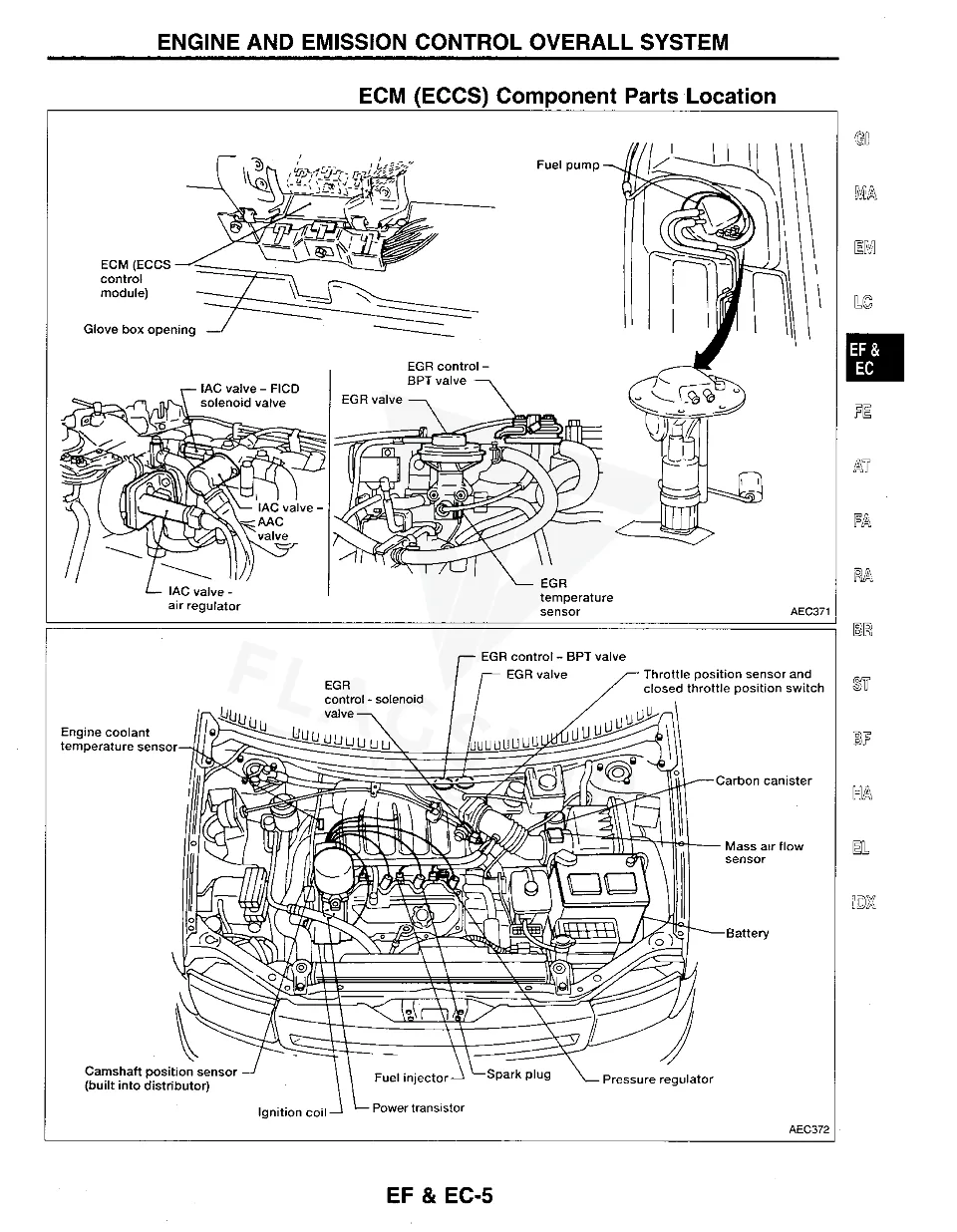
The ECM in your 1995 Nissan Quest is located behind the dashboard on the passenger side, near the glove box. Accessing it requires removing the lower dashboard panel, which may involve disconnecting wiring harnesses and fasteners. Once exposed, the module is secured with a mounting bracket and connected via a multi-pin harness. Replacement involves unplugging the old unit, transferring any necessary components (like the PROM chip if applicable), and installing the new module. According to labor guides, the removal and reinstallation process typically takes 0.9 hours. After installation, the system requires a reset (0.3 hours) and a relearn procedure (0.5 hours) to synchronize the new ECM with your engine’s sensors and actuators. This ensures proper fuel delivery, ignition timing, and idle control. Due to the module’s location, it’s often exposed to heat and vibration, which can contribute to long-term wear.
| Operation | Configuration | Book Time |
|---|---|---|
| Engine Control Module R&R | All configurations | 0.9 hr |
| Engine Control Module Reset | All configurations | 0.3 hr |
| Engine Control Module Relearn | All configurations | 0.5 hr |
| Powertrain Control System Diagnosis & Testing | All configurations | 0.5 hr |
After replacing the ECM in your 1995 Nissan Quest, the factory procedure requires a reset and relearn process to ensure the new module communicates correctly with your engine’s sensors. The reset typically takes 0.3 hours and clears any stored data from the old module, while the relearn procedure (0.5 hours) allows the ECM to adapt to your engine’s specific characteristics, such as fuel trims and idle speed. These steps are critical for restoring smooth operation, as skipping them may result in poor performance or drivability issues. However, if you install a VIN-programmed replacement unit, these post-install steps are already completed, saving you time and reducing the risk of errors. This pre-programming ensures the new ECM is tailored to your Quest’s 3.0L V6, allowing for immediate startup and proper engine management without additional shop visits.
A failing ECM in your 1995 Nissan Quest can manifest in several ways, often mimicking other mechanical or electrical issues. One of the most common signs is a no-start condition, where the engine cranks but refuses to fire, as the ECM may fail to send the correct signals to the fuel injectors or ignition system. Stalling or rough idling is another frequent symptom, particularly if the module struggles to maintain consistent fuel delivery or ignition timing. You might also notice poor acceleration or hesitation under load, as the ECM’s ability to adjust air-fuel ratios in real time becomes compromised. In some cases, the engine may run excessively rich or lean, leading to fouled spark plugs or increased emissions. Another telltale sign is erratic behavior from the transmission, such as harsh or delayed shifts, since the ECM also influences automatic transmission operation. If your Quest exhibits an internal control module memory check sum error, it’s a strong indicator that the ECM’s memory or processing capabilities are failing. Unlike modern vehicles, your Quest won’t always trigger a check engine light for ECM issues, so diagnosing these symptoms often requires a thorough inspection of the module and its connections.
Common signs include a no-start condition, stalling, rough idling, or poor acceleration. Since your Quest lacks OBD-II diagnostics, symptoms may not trigger a check engine light. A scan tool compatible with pre-OBD-II vehicles can help identify ECM-related faults, such as memory errors or communication issues.
Replacement is possible if you’re comfortable working behind the dashboard and handling electrical connections. The process involves removing the lower dashboard panel, unplugging the old module, and installing the new one. However, the factory requires a reset and relearn procedure afterward, which may require specialized tools or a shop visit.
Stalling after replacement often occurs if the new ECM hasn’t been properly reset or relearned. The factory procedure includes a 0.3-hour reset and a 0.5-hour relearn to synchronize the module with your engine’s sensors. Skipping these steps can result in poor idle control or stalling.
A reset clears the ECM’s memory of stored data, such as fuel trims or idle settings, while a relearn allows the module to adapt to your engine’s specific characteristics. Both steps are necessary after replacement to ensure proper performance. The reset takes 0.3 hours, and the relearn takes 0.5 hours.
A used ECM may work, but it must be compatible with your Quest’s 3.0L V6 and may require reprogramming to match your VIN. Without proper programming, the module may not communicate correctly with your engine’s sensors, leading to drivability issues or a no-start condition.
If your 1995 Nissan Quest is experiencing ECM-related issues, you have options for repair or replacement. A refurbished or new ECM can restore reliable performance, but it’s important to choose a unit that’s pre-programmed to your VIN to avoid additional shop time. While some owners opt for used modules, these may require reprogramming and carry the risk of hidden faults. A pre-programmed replacement ensures compatibility and immediate functionality, reducing the hassle of post-install procedures. Consider your budget and long-term reliability needs when deciding between a DIY approach or professional installation.
Flagship One stocks a refurbished, VIN-programmed PCM for the 1995 Nissan Quest with a lifetime warranty, free shipping and no core charge. The full Nissan Quest module lineup covers other engine configurations as well.
The ECM in your 1995 Nissan Quest plays a vital role in keeping your minivan running smoothly, managing everything from fuel delivery to ignition timing. If you’re dealing with no-start conditions, stalling, or poor performance, the ECM may be the culprit. Replacing it involves more than just swapping a part—it requires a reset and relearn procedure to ensure proper operation. By understanding the symptoms, location, and post-install requirements, you can make informed decisions about repairs or replacements. Whether you tackle the job yourself or rely on a professional, addressing ECM issues promptly will help keep your Quest reliable for years to come.