
Last updated on August 25th, 2026 at 01:52 pm
In the 2011 Mitsubishi Galant, the Powertrain Control Module (PCM) and Engine Control Module (ECM) serve as the vehicle’s central computers, managing fuel delivery, ignition timing, and emission controls. Failure of either module can disrupt engine performance, trigger diagnostic trouble codes, and prevent the engine from starting or running smoothly.
When a 2011 Mitsubishi Galant begins to exhibit erratic engine behavior, loss of power, or diagnostic codes, the PCM or ECM may be at fault. Understanding how these control modules operate, what the factory cautions about their replacement, and the steps required to reinstall them can help you make an informed decision. This guide outlines the function of each computer, the physical location, the labor involved, the programming requirements, and practical tips to keep the modules healthy. By the end, you will know what to expect from a repair or a refurbished replacement and how to avoid common pitfalls.
The PCM in the 2011 Mitsubishi Galant acts as the brain for powertrain management, interpreting sensor data to adjust fuel injection, ignition timing, and emission controls. The ECM performs a similar role for engine-specific functions, ensuring smooth combustion and compliance with emissions standards. Together, they enable the vehicle to meet performance and efficiency targets, and any disruption can cause drivability problems. Proper operation of these modules is essential for fuel economy, emissions compliance, and overall reliability. The vehicle relies on encrypted codes to verify authentic components, which is why the factory advises against swapping both units at once. For those seeking replacements, 2011 Mitsubishi Galant replacement computers provide a direct fit and retain the original communication protocols.
2011 Mitsubishi Galant
OEM programmed replacements — plug & play, no dealer visit.
Find yours by year, make & model →
Free shipping · Lifetime warranty
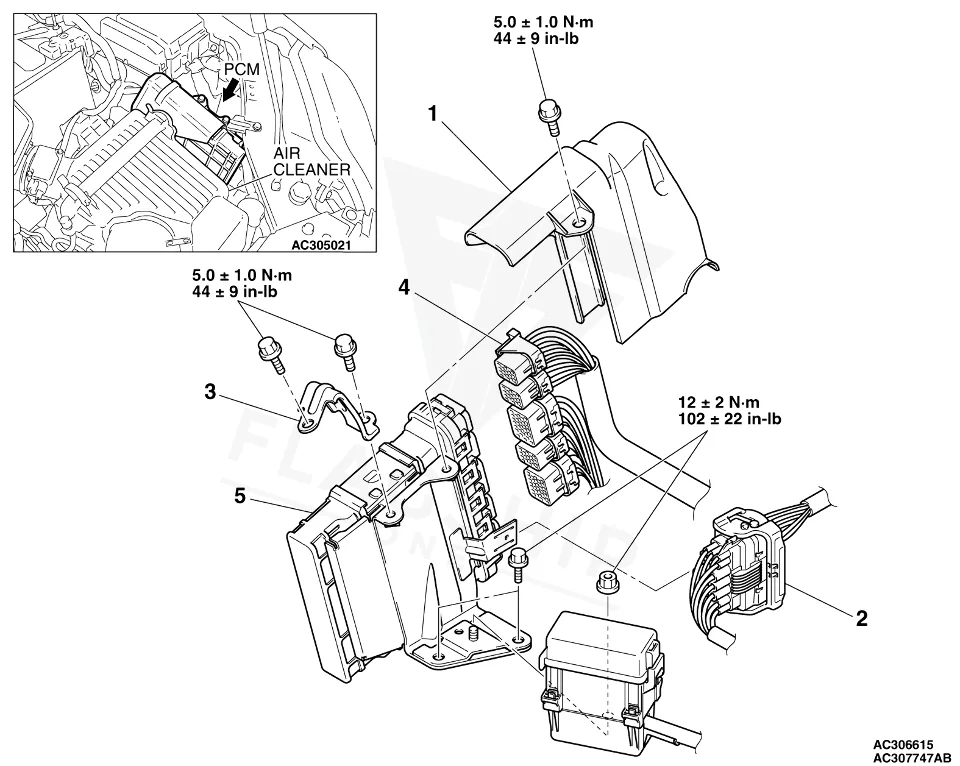
Work with the ignition off, and treat the module as static-sensitive: avoid touching the connector pins at any point.
| Operation | Configuration | Book Time |
|---|---|---|
| Powertrain Control Module R&R | All configurations | 0.5 hr |
| Engine Control Module Relearn | All configurations | 0.5 hr |
| Engine Control Module R&R | All configurations | 0.5 hr |
After installing a new PCM or ECM in the 2011 Mitsubishi Galant, the factory procedure calls for a relearn operation that takes an additional 0.5 hours. This step verifies that the control module correctly registers the vehicle’s encrypted code and synchronizes with other electronic systems. Flagship One units arrive as a VIN-programmed replacement unit so the relearn and code registration are already completed, allowing you to skip the factory programming step and proceed directly to final testing.
When the PCM or ECM begins to fail in a 2011 Mitsubishi Galant, you may notice a range of issues such as engine stalling, rough idle, loss of power, or an inability to start. Diagnostic scans often reveal the internal trouble code powertrain control module error which points to a malfunction within the module itself. Additional symptoms can include erratic transmission shifting, unexpected emission warning lights, and intermittent loss of communication with the scan tool. These signs typically prompt a visit to a qualified technician to confirm the module condition.
The following internal trouble code is documented for the 2011 Mitsubishi Galant’s control modules:
| Code | Meaning | Full Guide |
|---|---|---|
| P0606 | Module processor failure | Full P0606 guide → |
The factory caution advises against swapping both units simultaneously because each requires encrypted code registration. Replace one module first, register its code, then address the second if needed.
The book time for removing and installing the PCM is listed as 0.5 hours, reflecting a relatively quick job when the necessary tools and connectors are accessible.
Factory guidelines call for a 0.5‑hour relearn procedure after ECM installation. A Flagship One VIN‑programmed unit includes this step, so additional programming is not required.
Code P0606 signals an internal fault within the powertrain control module, often requiring inspection, possible replacement, and verification of the encrypted code.
Refurbished units that are VIN‑programmed meet the same functional requirements as new modules, provided they have passed quality testing and proper installation procedures are followed.
When faced with a faulty PCM or ECM in your 2011 Mitsubishi Galant, you can choose a direct repair using a new factory‑spec part or opt for a Flagship One refurbished unit that arrives VIN‑programmed. Both paths aim to restore engine control, but the refurbished option may reduce downtime by eliminating the factory relearn step.
Flagship One stocks a refurbished, VIN-programmed PCM for the 2011 Mitsubishi Galant with a lifetime warranty, free shipping and no core charge. The full Mitsubishi Galant module lineup covers other engine configurations as well.
Addressing PCM or ECM issues in a 2011 Mitsubishi Galant promptly can prevent further drivability problems. Whether you select a new part or a Flagship One replacement, the goal is reliable engine performance and compliance with factory coding requirements.